

SAMP/T NG Air Defense Ukraine: 5 Powerful Reasons France’s New Missile Shield Could Change the War
By Samir Singh 'Bharat': Editor In Chief
 war-times.com
Send an email
16 March 2026
war-times.com
Send an email
16 March 2026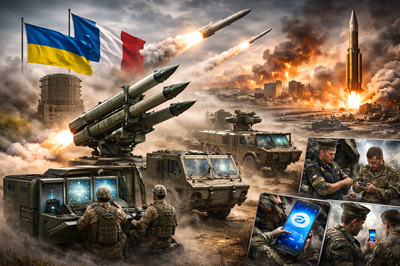
WAR-REPORT : The war in Ukraine continues to evolve technologically and strategically as Western nations seek new ways to strengthen Kyiv’s defenses against increasingly sophisticated Russian attacks. In a significant development, France has reportedly agreed to supply Ukraine with the newest version of its advanced air defense system, the SAMP/T NG, allowing Ukrainian forces to test the system directly against Russian ballistic missiles on the battlefield.
The decision represents a major step in military cooperation between Ukraine and its European partners and underscores the growing urgency of improving Ukraine’s air defense capabilities. At the same time, reports emerging from within Russia suggest internal tensions regarding battlefield communications, with some Russian military units allegedly ordering soldiers to remove the popular messaging application Telegram from their phones and instead switch to a state-controlled platform.
Together, these developments highlight two parallel aspects of the modern conflict: the rapid technological evolution of military systems and the ongoing struggle to control information and communications within wartime environments.
France’s Advanced Air Defense System for Ukraine
According to statements made by Volodymyr Zelensky on March 14, France has committed to providing Ukraine with the newest version of its SAMP/T NG air defense system. The delivery is expected to take place sometime in 2026, although the exact number of systems and the specific delivery timeline have not yet been publicly disclosed.
The SAMP/T NG—short for “Sol-Air Moyenne Portée/Terrestre New Generation”—is an upgraded version of the Franco-Italian air defense platform designed to intercept aircraft, cruise missiles, and most importantly, ballistic missiles. The system represents one of Europe’s most advanced contributions to the integrated air defense network supporting Ukraine.

Zelensky explained that the agreement followed discussions with Emmanuel Macron and emphasized that Ukraine will play a crucial role in evaluating the system’s performance under real combat conditions.
According to Zelensky, France and Ukraine agreed that Kyiv would become the first country to receive operational SAMP/T NG systems if testing confirms that the system effectively intercepts ballistic missiles launched by Russian forces.
Such battlefield testing could provide valuable data not only for Ukraine but also for European defense planners seeking to improve missile defense capabilities in the face of evolving threats.

What Makes the SAMP/T NG Significant
The SAMP/T NG represents the latest iteration of Europe’s medium-range air defense technology. Developed jointly by France and Italy, the system is designed to protect critical infrastructure, military bases, and populated areas from a wide range of aerial threats.
The system uses the Aster family of interceptor missiles, particularly the advanced Aster 30 missile, which is capable of engaging targets at significant distances and altitudes. The SAMP/T NG upgrade introduces improvements in radar capabilities, command-and-control systems, and missile guidance technologies.
These upgrades allow the system to track and intercept more complex threats, including maneuvering ballistic missiles. Ballistic missiles follow high-speed trajectories that make them extremely difficult to intercept, often requiring specialized radar tracking and extremely rapid response times.
If the SAMP/T NG performs as expected, it could significantly strengthen Ukraine’s layered air defense network, which already includes Western systems such as the Patriot missile system and the NASAMS.
The addition of another high-performance interceptor platform would improve Ukraine’s ability to defend cities, energy infrastructure, and military installations from missile strikes.
Russia’s Increasing Use of Ballistic Missiles
The decision to provide Ukraine with new missile defense systems comes at a time when Russia has expanded its use of ballistic missiles in long-range strike operations.
Throughout the conflict, Russian forces have relied on a combination of cruise missiles, ballistic missiles, and drones to conduct large-scale attacks on Ukrainian infrastructure. These strike packages often involve multiple types of weapons launched simultaneously to overwhelm air defense systems.
Ballistic missiles pose a particularly serious challenge for defenders. Unlike drones or cruise missiles, which typically fly at lower speeds and altitudes, ballistic missiles travel at extremely high velocities and descend steeply toward their targets during the final phase of flight.
Intercepting them requires advanced radar detection, precise tracking, and extremely fast interceptor missiles capable of striking the incoming projectile before it reaches its target.
Analysts say Russia has increasingly incorporated ballistic missiles into coordinated strike packages in order to complicate Ukraine’s defensive efforts. By combining drones, cruise missiles, and ballistic missiles in a single attack, Russian forces can stretch Ukrainian air defenses to their limits.
This evolving tactic has made Western air defense assistance one of the most critical forms of military support provided to Ukraine.
Western Support for Ukraine’s Air Defense
Since the start of the war, Western countries have provided Ukraine with a wide range of air defense systems designed to counter various types of threats.
The United States, Germany, Norway, and other NATO partners have supplied equipment ranging from short-range mobile air defense systems to advanced long-range missile interceptors.
These systems have played a vital role in protecting Ukrainian cities from aerial attacks and limiting the effectiveness of Russian missile campaigns.
However, Ukrainian officials have repeatedly emphasized that the country still requires additional capabilities to deal specifically with ballistic missile threats.
The SAMP/T NG system could help address this gap. Its advanced radar and interceptor technology would complement existing Western systems and contribute to a more resilient air defense network.
For European defense industries, Ukraine’s battlefield testing of the system could also provide valuable operational data. Real-world combat environments often reveal strengths and weaknesses that cannot be fully simulated during training exercises.
Strategic Implications for Europe
France’s decision to provide the SAMP/T NG system reflects broader European concerns about missile defense in an era of increasingly sophisticated threats.
Many European countries are reevaluating their air defense strategies in response to the lessons of the Ukraine war. The widespread use of drones, cruise missiles, and ballistic missiles has demonstrated the need for layered defensive systems capable of addressing multiple threat types simultaneously.
By allowing Ukraine to test the newest version of the SAMP/T NG in combat conditions, France and its partners could gain critical insights into how the system performs against real ballistic missile threats.
Such insights could influence future European defense planning and procurement decisions.
Controversy Over Messaging Apps in the Russian Military
While Ukraine continues to receive international military support, reports emerging from Russia suggest that the Russian military may be grappling with internal communication challenges.NG
According to a prominent Russian military blogger, some units within the Russian armed forces have begun ordering servicemembers to delete the messaging application Telegram from their phones.NG
The claim, reported on March 15, contradicts earlier statements from some Russian officials indicating that soldiers would be allowed to continue using Telegram to coordinate certain operational communications.
Telegram has long been popular among Russian troops, journalists, and military bloggers due to its speed, encryption features, and ability to support large communication channels.
Many Russian military units reportedly rely on the platform to share battlefield updates, coordinate logistics, and distribute tactical information.
However, concerns about operational security may now be prompting some commanders to restrict its use.
Russian Military Police Monitoring Phone Usage
According to the blogger’s account, Russian military police have begun inspecting soldiers’ phones to ensure that the Telegram application has been removed.
Servicemembers who are found to still have the app installed may reportedly face disciplinary measures or orders to delete it immediately.
Instead of Telegram, some units are reportedly being directed to use a Russian state-controlled messaging platform known as Max messenger.
The Max application has been promoted by Russian authorities as a secure alternative for official communications.
However, according to the milblogger and other online commentators, many soldiers consider the application inconvenient and difficult to use.
Mixed Implementation Across Russian Units
Reports suggest that enforcement of the new messaging rules varies significantly between different military units.
Some formations appear to be strictly enforcing the order to remove Telegram and adopt the Max platform. Others, however, reportedly continue using Telegram despite the new guidelines.
The milblogger described the implementation as inconsistent and uncoordinated, noting that different units appear to be following different communication policies.
In some cases, elite or special forces units have reportedly banned the Max messenger entirely due to concerns about its reliability or operational effectiveness.
This uneven enforcement highlights the challenges of maintaining secure and efficient communications across a large and diverse military organization operating under wartime conditions.
The Role of Digital Communication in Modern Warfare
The controversy surrounding messaging platforms illustrates the growing importance of digital communications in modern military operations.
In previous conflicts, battlefield communication relied primarily on radios and dedicated military networks. Today, however, soldiers increasingly use smartphones and civilian messaging applications to exchange information quickly and efficiently.
While these platforms offer convenience and speed, they also pose security risks. Enemy intelligence services may attempt to intercept communications, track locations, or exploit vulnerabilities in widely used apps.
For military commanders, balancing operational efficiency with cybersecurity concerns has become a complex challenge.
The Russian military’s apparent attempt to shift soldiers toward a controlled messaging platform reflects efforts to manage these risks. However, the mixed reception among troops suggests that technological changes can be difficult to implement quickly during active combat operations.
Information Warfare and the Battlefield Narrative
Another important aspect of messaging applications such as Telegram is their role in shaping the public narrative of the war.
Military bloggers and independent commentators frequently use Telegram channels to share battlefield updates, analysis, and criticism of military leadership.
These channels have become a significant source of information for both domestic and international audiences following the conflict.
Restricting the use of Telegram among soldiers could therefore have implications not only for operational communications but also for the flow of information from the front lines.
Governments involved in the conflict increasingly recognize that controlling the narrative surrounding military operations is an important component of modern warfare.
The War’s Technological Evolution
The developments surrounding France’s SAMP/T NG system and the Russian military’s communication policies both reflect the broader technological evolution of the war in Ukraine.
From drone warfare and missile defense to digital communications and information control, modern conflicts increasingly depend on advanced technology and data management.
For Ukraine, strengthening air defense capabilities remains one of the most urgent priorities. Systems capable of intercepting ballistic missiles could help protect critical infrastructure and civilian populations from devastating attacks.
For Russia, maintaining secure communications among its forces is essential for coordinating operations and preventing intelligence leaks.
Looking Ahead
As the war continues, technological innovation and international cooperation will likely play increasingly central roles in shaping the conflict’s trajectory.
The potential deployment of the SAMP/T NG system could mark a new phase in Ukraine’s air defense strategy, offering a powerful tool against Russia’s evolving missile tactics.
At the same time, internal debates within the Russian military about communication platforms highlight the ongoing challenges of managing information in the digital age of warfare.
Both developments underscore a broader reality: modern wars are no longer fought solely with tanks and artillery. They are also contests of technology, information, and innovation—fields in which the balance of power can shift rapidly and unpredictably.
war-times.com
Send an email
16 March 2026