

Explosive Taiwan Strait Crisis 2026: China’s Military Escalation Sparks Global Alarm
By Samir Singh 'Bharat': Editor In Chief
 war-times.com
Send an email
2 March 2026
war-times.com
Send an email
2 March 2026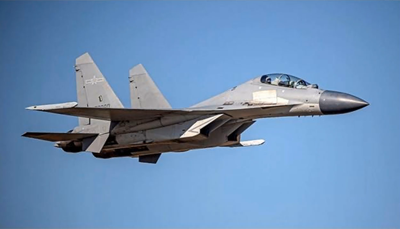
WAR-REPORT : Tensions in the Taiwan Strait are mounting as China intensifies pressure on Taiwan through a mix of military maneuvers, political messaging, and diplomatic signaling. Over recent months, Beijing has ramped up actions aimed at reinforcing its long-standing objective of “reunification” with the self-governed island. These developments, coupled with political discord in Taipei and shifting rhetoric from Washington, have left the delicate status quo between the two sides increasingly fragile.
The situation is unfolding against a backdrop of strategic rivalry between the United States and China, with Taiwan at the center of the contest. While outright conflict remains unlikely in the near term, analysts warn that miscalculation or provocation could trigger a crisis in one of the world’s most sensitive geopolitical flashpoints.
Beijing’s Sharpened Tone
China’s leadership has made no secret of its goal to bring Taiwan under its control. President Xi Jinping has repeatedly emphasized that “reunification” is a historic mission that cannot be indefinitely postponed. In recent speeches, he has tied the Taiwan issue to national rejuvenation, portraying it as a core interest of the Chinese state.
Beijing’s messaging has grown more pointed in 2026. Official statements from the Chinese government and the People’s Liberation Army (PLA) have underscored that Taiwan independence is a “red line.” Chinese officials have accused external forces—widely understood to mean the United States—of emboldening pro-independence elements in Taipei.
Alongside rhetoric, military activity has surged. The PLA has conducted larger and more frequent drills around Taiwan, including joint air and naval exercises simulating blockades and precision strikes. These drills often involve aircraft crossing the median line of the Taiwan Strait, a once largely respected but unofficial boundary that has become increasingly irrelevant.

Military Pressure Intensifies
Taiwan’s Ministry of National Defense reports near-daily incursions by Chinese military aircraft into its Air Defense Identification Zone (ADIZ). Warships from the PLA Navy have also circled the island more regularly, demonstrating China’s capacity to project power and potentially isolate Taiwan from external support.
Military analysts note that the pattern of exercises has evolved. Rather than sporadic displays of force, China’s operations now appear more systematic, rehearsing complex joint operations that could be used in a blockade or invasion scenario. While Beijing maintains these drills are defensive and aimed at deterring separatism, their scale and frequency have heightened anxiety in Taipei.
Taiwan has responded by scrambling jets, deploying naval assets, and strengthening its own defensive capabilities. The island has increased investment in asymmetric warfare systems, including anti-ship missiles and mobile air defense units designed to complicate any potential Chinese assault.


Political Divisions in Taipei
Compounding the external pressure is domestic political discord within Taiwan. The island’s vibrant democracy is often characterized by sharp partisan divisions, and debates over cross-strait policy have intensified in recent months.
The current administration under President Lai Ching-te has sought to maintain a cautious stance, reaffirming commitment to the status quo while resisting Beijing’s demands for political talks under the “One China” framework. Lai has emphasized Taiwan’s democratic identity and pledged to strengthen national defense.
However, opposition parties argue that the government’s approach risks provoking Beijing unnecessarily. Some advocate for renewed dialogue with China to reduce tensions and safeguard economic ties. These internal debates have sometimes spilled into public protests and legislative gridlock, creating an image of political instability that Beijing may perceive as an opportunity.
Washington’s Mixed Signals
The United States remains Taiwan’s most important security partner, bound by the Taiwan Relations Act to provide defensive arms and maintain the capacity to resist coercion. Yet Washington’s messaging has appeared inconsistent.
Former President Donald Trump, who is scheduled to visit Beijing later this year, has alternated between strong statements supporting Taiwan and remarks suggesting a more transactional approach to U.S. commitments. This ambiguity has fueled speculation about whether Washington’s deterrent posture is as firm as in previous years.
Meanwhile, U.S. naval transits through the Taiwan Strait continue, signaling commitment to freedom of navigation. Arms sales to Taiwan remain ongoing, though delivery timelines have sometimes lagged. The Biden administration’s earlier policy of “strategic ambiguity” appears to persist, leaving both Beijing and Taipei uncertain about the precise contours of U.S. intervention in a crisis.
For China, perceived inconsistency in U.S. policy may encourage more assertive moves. For Taiwan, doubts about American resolve underscore the urgency of bolstering self-defense capabilities.
Economic Interdependence and Risk
Despite rising tensions, economic ties between China and Taiwan remain significant. China is Taiwan’s largest trading partner, and many Taiwanese companies maintain manufacturing operations on the mainland. The technology sector, particularly semiconductors, is deeply intertwined across borders.
Any disruption in the Taiwan Strait would have global repercussions. Taiwan is home to major chip manufacturers critical to industries ranging from consumer electronics to automotive production. A blockade or conflict could trigger supply chain chaos and economic shocks worldwide.
Business leaders on both sides have expressed concern about the deteriorating security environment. Some multinational firms are diversifying supply chains to reduce exposure to geopolitical risk, while Taiwanese companies are exploring alternative markets in Southeast Asia and beyond.
The Fragile Status Quo
For decades, the Taiwan Strait has operated under an uneasy equilibrium. Taiwan functions as a self-governing democracy with its own military and foreign relations, while China claims sovereignty over the island and has not renounced the use of force to achieve unification.
This status quo has depended on restraint from all parties. Taiwan has refrained from declaring formal independence; China has avoided direct military action; and the United States has balanced support for Taiwan with acknowledgment of Beijing’s “One China” policy.
Today, that equilibrium appears more tenuous than at any time in recent memory. China’s growing military power has shifted the balance across the Strait. Taiwan’s increasingly distinct identity and skepticism toward unification complicate prospects for peaceful political settlement. U.S.-China strategic rivalry adds another layer of volatility.
Strategic Calculations in Beijing
From Beijing’s perspective, time may be both an asset and a liability. China’s military capabilities are expanding rapidly, potentially giving it greater leverage in future negotiations. Yet demographic and economic challenges at home could create pressures that encourage more assertive nationalism.
Chinese officials frequently assert that reunification is inevitable, framing it as a historical necessity. However, they also recognize the risks of military conflict, including international sanctions, economic disruption, and possible confrontation with the United States.
For now, Beijing appears to favor a strategy of sustained pressure short of war—using military drills, diplomatic isolation, cyber operations, and economic incentives to shape Taiwan’s choices.
Taiwan’s Defense Strategy
Taiwan has embraced a “porcupine strategy,” aiming to make any invasion prohibitively costly. The island is investing in mobile missile systems, naval mines, and improved reserve training. Efforts are also underway to extend compulsory military service and enhance civil defense preparedness.
Public opinion in Taiwan strongly supports maintaining the status quo, with only a small minority favoring immediate unification. Surveys indicate growing identification as Taiwanese rather than Chinese, a trend that complicates Beijing’s narrative of shared national destiny.
Yet there is also wariness about provoking China. Many citizens fear the economic and human costs of escalation, creating pressure on political leaders to tread carefully.
The International Dimension
Regional actors are closely watching developments. Japan has expressed concern about stability in the Taiwan Strait, recognizing that any conflict could spill over into its own security environment. Southeast Asian nations are wary of being forced to choose sides in a U.S.-China confrontation.
European governments have emphasized the importance of peace and stability in the Indo-Pacific. While few are willing to commit military support to Taiwan, many would likely impose economic sanctions on China in the event of aggression.
The global community broadly favors maintaining the status quo. Yet the absence of formal diplomatic relations between Taiwan and most countries limits its ability to build international coalitions.
Avoiding Provocation
With Donald Trump’s anticipated visit to Beijing approaching, analysts urge restraint from all sides. High-profile diplomatic engagements can heighten sensitivities and create incentives for symbolic gestures that may be misinterpreted.
Beijing may seek to project strength ahead of the visit, while Washington could emphasize support for allies to avoid appearing weak. Taipei, meanwhile, faces the challenge of safeguarding its interests without becoming a pawn in broader great-power competition.
Diplomats stress that crisis communication channels remain vital. Direct lines between military commanders and political leaders can reduce the risk of accidental escalation during close encounters at sea or in the air.
A Precarious Path Forward
The Taiwan Strait stands at a crossroads. China’s intensified pressure campaign reflects confidence in its growing power, but also impatience with the slow pace of political progress. Taiwan’s democratic resilience remains strong, yet its security environment is deteriorating. The United States continues to play a balancing role, though questions linger about the consistency of its commitments.
The stakes are immense—not only for the 23 million people of Taiwan and the 1.4 billion citizens of China, but for global stability and economic prosperity. Any misstep could reverberate far beyond East Asia.
For now, the most likely scenario remains continued tension without outright conflict. Yet the margin for error is narrowing. Maintaining peace will require disciplined leadership, clear communication, and a shared recognition that war in the Taiwan Strait would carry catastrophic consequences.
As the region braces for the coming months, one reality is clear: the fragile status quo that has preserved stability for decades is under unprecedented strain. Whether it can endure will depend on the choices made in Beijing, Taipei, and Washington—and on the willingness of all parties to prioritize prudence over provocation.
war-times.com
Send an email
2 March 2026