

Union Textile Minister Giriraj Singh Inaugurates Centre of Excellence for Handloom Technology at IIT Delhi
New Centre aims to modernize India’s handloom sector through AI, digital innovation, sustainability, and skill development while preserving the nation’s rich weaving heritage.
 war-times.com
Send an email
4 August 2026
war-times.com
Send an email
4 August 2026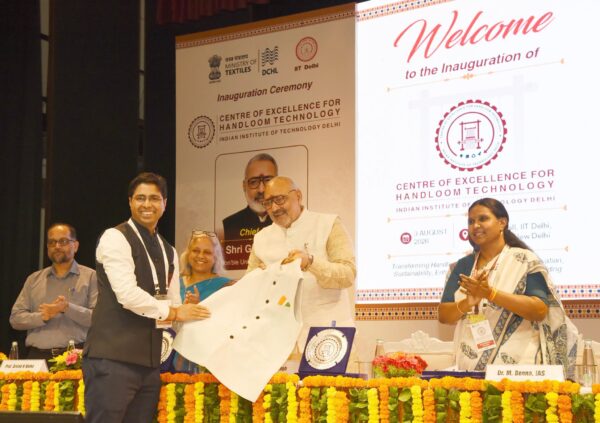
New Delhi I Special Correspondent : In a significant step towards modernizing India’s traditional handloom industry, Union Minister of Textiles Shri Giriraj Singh inaugurated the Centre of Excellence for Handloom Technology (CoE-HT) at IIT Delhi. The initiative is expected to bridge India’s centuries-old weaving traditions with emerging technologies, creating a future-ready and globally competitive handloom ecosystem.
Speaking at the inaugural ceremony, the Union Minister said the Centre of Excellence reflects the Government of India’s commitment to preserving the country’s rich handloom heritage while embracing technological innovation to enhance productivity, sustainability, and market competitiveness.
Blending Tradition with Technology
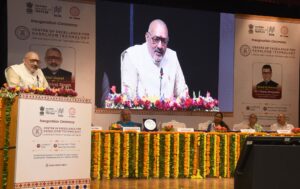
Addressing academicians, researchers, industry representatives, and handloom stakeholders, Shri Giriraj Singh emphasized that India’s handloom sector has long been a symbol of the nation’s cultural identity and craftsmanship. He said the newly established Centre will serve as a platform where traditional weaving practices will be integrated with advanced technologies such as Artificial Intelligence (AI), digital solutions, and sustainable production methods.
“The Centre of Excellence represents the government’s vision of combining India’s rich weaving heritage with cutting-edge technologies to create a future-ready handloom ecosystem,” the Minister said.

Focus on Innovation and Sustainable Growth
Highlighting the future roadmap for the sector, the Minister stressed that innovation, entrepreneurship, digital transformation, and environmentally sustainable technologies will play a pivotal role in strengthening the handloom industry.
He noted that the Centre will help improve productivity, expand market access for artisans, encourage value addition, and ultimately ensure better livelihoods for millions of handloom weavers across the country.
According to the Ministry, the initiative aligns with India’s broader objective of promoting sustainable manufacturing while preserving traditional crafts.

Research Across Multiple Advanced Technologies
The Centre of Excellence will undertake interdisciplinary research in several critical areas, including:
- Loom modernization and advanced weaving technologies
- Ergonomics for improving working conditions of weavers
- Artificial Intelligence and Machine Learning applications
- Sustainable textile production
- Functional textile innovation
- Digital technologies for handloom development
The Centre will also work closely with researchers, industry experts, startups, and academic institutions to create practical solutions that can directly benefit artisans and handloom entrepreneurs.
Creation of National Handloom Knowledge Repository
One of the Centre’s major initiatives will be the development of a National Repository of Handloom Knowledge, which will digitally preserve India’s diverse weaving traditions, technical expertise, indigenous practices, and research findings.
Officials said the repository will become an important resource for policymakers, researchers, designers, students, entrepreneurs, and future generations interested in India’s handloom heritage.
AI-Powered Tools for Weavers
The Centre also plans to develop Artificial Intelligence-enabled digital tools that will assist weavers in improving design capabilities, production efficiency, quality control, and market intelligence.
Technology transfer mechanisms will ensure that innovations developed through research are effectively implemented at the grassroots level, allowing traditional artisans to directly benefit from modern technological advancements.
Boost for Innovation and Startups
Recognizing the growing role of startups in transforming traditional industries, the Centre will actively support innovation-driven enterprises working in the handloom sector.
It will facilitate technology transfer, incubation, product development, and entrepreneurship opportunities, enabling young innovators to collaborate with artisans and industry stakeholders in developing next-generation handloom solutions.
Skill Development for the Handloom Ecosystem
As part of its long-term vision, the Centre aims to train at least 1,000 weavers, faculty members, researchers, and handloom professionals over the next five years.
The training programmes will focus on modern weaving technologies, digital skills, sustainable production techniques, entrepreneurship, product innovation, and market readiness.
Officials believe this capacity-building initiative will significantly strengthen India’s handloom workforce and improve its global competitiveness.
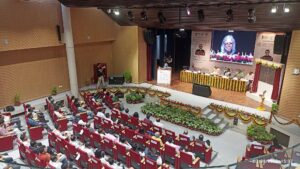
Distinguished Dignitaries Attend the Ceremony
The inauguration ceremony witnessed the presence of several senior government officials, academic leaders, and representatives from the textile industry.
Among those present were Smt. Neelam Shami Rao, Secretary, Ministry of Textiles; Dr. M. Beena, Development Commissioner (Handlooms); Smt. Amrit Raj, Development Commissioner (Handicrafts); Prof. Arvind K. Nema, Deputy Director (Operations), IIT Delhi; Prof. Ashwini Agrawal, Dean (Research & Development); and Prof. Bipin Kumar from the Department of Textile and Fibre Engineering, IIT Delhi.
Senior officials from the Ministry of Textiles, faculty members, researchers, startup founders, representatives of the handloom industry, and weavers from different parts of the country also participated in the event.
Towards a Future-Ready Handloom Sector
The establishment of the Centre of Excellence for Handloom Technology marks a major milestone in India’s efforts to modernize one of its oldest industries while preserving its cultural legacy. By combining research, innovation, digital transformation, sustainability, and skill development, the Centre is expected to accelerate the growth of India’s handloom sector and empower artisans with the tools and technologies needed to compete in the evolving global textile market.
The initiative also reinforces the Government’s commitment to creating an innovation-driven, technology-enabled, and inclusive handloom ecosystem that generates sustainable livelihoods while showcasing India’s rich weaving traditions on the global stage.

war-times.com
Send an email
4 August 2026