

Calls Grow in Ukraine for Lukashenko to Face Legal Scrutiny Over Russia’s Invasion
Kyiv Seeks Prosecutorial Review of Belarusian Leader’s Role, While Questions Grow Over His Support for Moscow

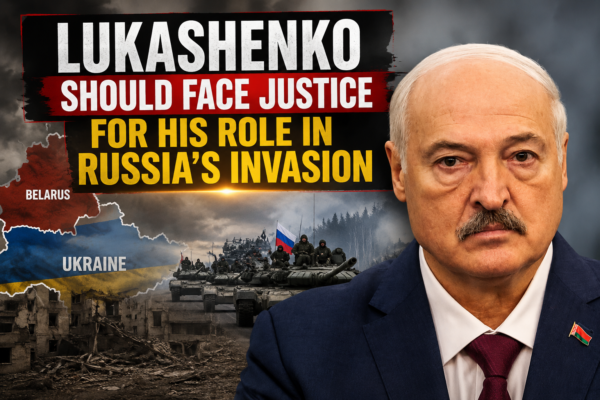
Kyiv: Pressure is mounting on Belarusian President Alexander Lukashenko over his government’s role in supporting Russia’s full-scale invasion of Ukraine, with Ukraine’s presidential office reportedly asking the Prosecutor General’s Office to consider whether criminal proceedings should be initiated against him.
The latest development follows an appeal from the Belarusian democratic opposition seeking a legal investigation into Lukashenko’s alleged involvement in international crimes connected with Russia’s war against Ukraine. According to Reuters, the appeal accuses the Belarusian leader of facilitating Russia’s military campaign, while also raising allegations concerning the transfer of Ukrainian children to Belarus.
The move does not mean that Lukashenko has been convicted of any crime. Rather, it represents a request for Ukrainian authorities to examine whether there are sufficient grounds for criminal proceedings. Any eventual charges would have to be assessed through the applicable Ukrainian legal process and supported by evidence.
Belarus Became a Key Platform for Russia’s 2022 Offensive
Belarus has consistently rejected the characterization that it directly entered the war with its own forces. Belarusian troops have not officially participated in Russia’s ground offensive inside Ukraine.
However, Belarus played a significant strategic role during the opening phase of Russia’s full-scale invasion in February 2022. Russian troops and military equipment were positioned in Belarus before the invasion, and Russian forces subsequently used Belarusian territory as a route for the offensive toward northern Ukraine and Kyiv.

Analysts have described Belarus as an important staging ground for Russia’s attempt to seize the Ukrainian capital. The country’s geographic position offered Russian forces a shorter route toward Kyiv from the north, while Belarusian military infrastructure and transportation networks provided logistical advantages.
The significance of that role was especially visible during the early weeks of the war, when Russian forces advanced toward areas including Hostomel, Bucha and Irpin before eventually withdrawing from northern Ukraine.
The use of Belarusian territory has therefore become one of the central issues in the debate over Lukashenko’s responsibility.

Ukraine Seeks Legal Examination of Lukashenko
The recent appeal submitted by representatives of the Belarusian democratic opposition asks Ukrainian authorities to examine Lukashenko’s actions under several provisions of Ukrainian criminal law.
The appeal alleges that Belarusian territory, military infrastructure, logistical routes and other state resources were made available to Russian forces. It also asks Ukrainian authorities to investigate allegations involving war crimes, aggression and the transfer of Ukrainian children.
Ukraine’s presidential office has forwarded the request to the Prosecutor General’s Office for consideration, according to Reuters. Ukrainian officials have indicated that the matter will be examined rather than automatically treated as an established criminal case.
This distinction is important. The allegations are serious, but a legal determination requires an investigation, evidence and judicial procedures.
The “Launchpad” Question
One of the most important arguments made by critics of Lukashenko is that Russia’s northern offensive would have been significantly more difficult without access to Belarusian territory.
Russia had already moved substantial military forces and equipment into Belarus before the invasion under the framework of joint military exercises. When the full-scale war began, Russian forces were able to use Belarus as a platform for operations against Ukraine.
The strategic value was considerable. Kyiv is located relatively close to the Belarusian border, allowing Russian forces to approach the Ukrainian capital from the north rather than relying exclusively on routes from Russia itself.
The Council on Foreign Relations has described Belarus as providing Russia with a significant strategic advantage during the initial assault on Kyiv.
Other security assessments have similarly noted that Russia used Belarusian territory for military operations, including ground movements and air and missile strikes, while Belarusian troops themselves did not directly participate in combat operations in Ukraine.
Lukashenko’s Position
Lukashenko has repeatedly maintained that Belarus is not a direct participant in the war and has not sent its armed forces into Ukraine.
That distinction remains central to Minsk’s position.
Nevertheless, Belarus has remained one of Russia’s closest military and political allies. The country has allowed Russian forces to operate from its territory and has continued to provide military-related infrastructure and logistical support.
Analysts have therefore drawn a distinction between direct military participation by Belarusian troops and state support that enables Russian military operations.
The question now emerging in Ukraine is whether the latter can create individual criminal responsibility for Lukashenko under Ukrainian and international law.
Allegations Over Ukrainian Children
Another particularly sensitive issue concerns Ukrainian children transferred to Belarus from areas affected by the war.
The Belarusian authorities have described such transfers in humanitarian terms. However, Ukrainian authorities and international observers have raised concerns over the circumstances surrounding the movement of children and their treatment after arriving in Belarus.
The Belarus Democratic Forum’s 2026 appeal alleges that more than 2,400 Ukrainian children were transferred to Belarus and asks Ukrainian authorities to investigate the circumstances. Reuters also cited research from Yale’s Humanitarian Research Lab concerning the transfer of Ukrainian children.
The issue is particularly sensitive because international investigations into the forced transfer and deportation of Ukrainian children have become a major element of accountability efforts related to the war.
Freedom House has separately documented allegations that the Belarusian regime participated in the displacement, re-education and militarization of Ukrainian children.
Determining whether individual transfers constituted unlawful deportation or forcible transfer, however, requires case-by-case investigation and legal assessment.
Belarusian Infrastructure and Russia’s War Effort
The controversy surrounding Lukashenko extends beyond the initial invasion.
Belarus has maintained military cooperation with Russia throughout the conflict. Its territory has remained strategically important to Moscow, while the two countries have deepened their military relationship.
Belarus hosts Russian military facilities and has allowed Russian military activities and infrastructure to operate from its territory. A recent assessment by Latvia’s Constitution Protection Bureau said Belarus continues to be regarded as a close Russian military ally and has allowed Russia to use its territory for military operations, logistics and support.
Chatham House has likewise described Belarus as a platform for Russian aggression, emphasizing the importance of Belarusian territory and infrastructure to Russia’s military posture.
These developments have made Belarus an important part of the broader security architecture surrounding Russia’s war against Ukraine.
Why the Legal Question Matters
The debate over Lukashenko is not simply about whether Belarusian soldiers crossed into Ukraine.
It raises a broader question of state responsibility and individual accountability: Can a political leader be held legally responsible for enabling another state’s military aggression by providing territory, infrastructure, logistics or other forms of assistance?
That question is complicated under international law and would depend on the precise conduct, intent, evidence and applicable legal provisions.
The Belarusian democratic opposition argues that Lukashenko’s role should be examined precisely because the Belarusian state allegedly provided material and strategic assistance to Russia.
Ukraine’s decision to refer the matter for prosecutorial consideration could therefore become an important step in determining whether the allegations warrant a formal investigation.
From Military Ally to Potential Legal Liability
Lukashenko’s relationship with Russian President Vladimir Putin has become increasingly close over the years.
The Belarusian leader has relied heavily on Moscow for political, economic and security support, while Russia has gained an important strategic partner on its western flank.
The relationship became particularly significant after Russia’s full-scale invasion in 2022.
Belarus’s location gives Russia access to a strategic corridor toward northern Ukraine and provides Moscow with additional military depth. The country’s infrastructure also offers logistical and operational advantages.
This relationship has consequently generated continuing concern in Kyiv and among Western governments.
A Difficult Path to Prosecution
Even if Ukrainian prosecutors determine that there are grounds for a criminal case, bringing Lukashenko before a Ukrainian court would be extremely difficult.
He remains president of Belarus and is based outside Ukrainian jurisdiction. There is also little immediate prospect of his voluntarily appearing before Ukrainian authorities.
Reuters reported that the likelihood of Lukashenko appearing before a Ukrainian court remains low, but suggested that a potential case could nevertheless increase political and international pressure on the Belarusian leader.
A criminal investigation could also contribute to a broader historical and legal record concerning Belarus’s role in the war.
Accountability Beyond the Battlefield
The debate reflects an increasingly broad understanding of wartime accountability.
Responsibility is not necessarily limited to individuals physically present on a battlefield. International criminal investigations can also examine political decision-makers, military commanders and others whose actions allegedly facilitate or contribute to unlawful conduct.
That does not mean every act of political or military support automatically constitutes an international crime. The legal threshold is much more demanding and requires evidence establishing the relevant elements of an offence.
For that reason, the Ukrainian prosecutor’s examination could be significant regardless of its eventual outcome.
What Happens Next?
The immediate next step is for Ukraine’s Prosecutor General’s Office to assess the allegations and determine whether they meet the threshold for further legal action.
If an investigation is opened, prosecutors could examine Belarus’s role in the 2022 invasion, the use of Belarusian territory and infrastructure by Russian forces, military and logistical assistance, and allegations concerning Ukrainian children.
Such an investigation could also involve gathering documentary evidence, military records, witness testimony, satellite imagery and other information relevant to determining individual responsibility.
The process could take considerable time.
A Question of Responsibility
For Ukraine, the central argument is straightforward: although Belarusian troops did not officially invade Ukraine, Belarusian territory was used by Russia to launch and support military operations.
For Lukashenko and his government, the distinction between direct participation and support remains fundamental.
The legal question is whether the evidence establishes that Lukashenko personally committed, ordered, facilitated or otherwise contributed to crimes within the jurisdiction of Ukrainian courts.
That question cannot be settled by political statements alone.
Conclusion
The call for legal scrutiny of Alexander Lukashenko marks another development in Ukraine’s continuing effort to establish accountability for Russia’s full-scale invasion.
Belarus did not send its army into Ukraine as a formal combat force. Yet evidence and independent assessments establish that Russian forces used Belarusian territory and infrastructure during the opening phase of the invasion, particularly in the assault toward Kyiv.
Now, following an appeal from Belarusian democratic opposition representatives, Ukraine’s presidential office has asked prosecutors to consider whether criminal proceedings against Lukashenko should be pursued. The allegations include claims relating to Russia’s aggression, the use of Belarusian territory and the transfer of Ukrainian children.
Whether those allegations ultimately result in charges, prosecution or conviction remains uncertain. But the development underscores a central principle of wartime accountability: responsibility must be determined through evidence and law, including when alleged assistance comes from political leaders who did not personally deploy troops across a battlefield.
For Ukraine and many Belarusian opposition figures, the issue is therefore not merely about who crossed the border. It is about who enabled the machinery of war—and whether those actions should ultimately be examined in a court of law.