

NHRC India Advocates Stronger Regional Human Rights Cooperation at First SCO Consultative Meeting
By Doruvu Paul Jagan Babu: Assistant Chief Editor

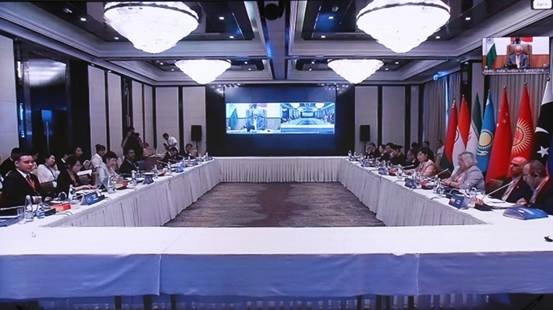
New Delhi-Bishkek: National Human Rights Commission (NHRC) Chairperson Justice V. Ramasubramanian has called for deeper cooperation among human rights institutions across Shanghai Cooperation Organisation (SCO) member states, emphasizing dialogue, mutual learning, and coordinated action to address emerging socio-economic and geopolitical challenges. Speaking virtually at the First Consultative Meeting of National Human Rights Institutions (NHRIs), state bodies, and other organizations responsible for protecting human rights and freedoms in SCO member countries, Justice Ramasubramanian highlighted the importance of sustained regional engagement and reaffirmed NHRC India’s commitment to strengthening human rights cooperation within the SCO framework.

Justice Ramasubramanian commends Kyrgyz Republic’s initiative
The consultative meeting, held in Bishkek under the chairmanship of the Kyrgyz Republic, brought together human rights leaders, ombudspersons, experts, and senior representatives from SCO member nations, including Russia, China, Iran, Pakistan, Uzbekistan, Kazakhstan, Tajikistan, and Belarus.
Justice Ramasubramanian lauded the Kyrgyz Republic for convening the inaugural consultation and described the proposal for regular engagement among national human rights institutions as both timely and forward-looking. He said such interactions would foster meaningful dialogue, strengthen mutual understanding, and encourage practical cooperation on contemporary challenges affecting societies across the region.

Human rights institutions key to social stability
Addressing the gathering, the NHRC Chairperson underscored the critical role played by national human rights institutions in building trust between governments and citizens.
He observed that effective human rights mechanisms contribute significantly to social harmony and stability by promoting accountability, transparency, and public confidence in governance structures.

Call for cooperation based on sovereignty and mutual respect
Justice Ramasubramanian stressed that regional cooperation in the human rights sphere should be guided by universally accepted principles, including respect for state sovereignty, non-interference in internal affairs, equality among nations, and consideration of each country’s national interests.
He welcomed the objectives outlined in the draft protocol before the meeting, particularly provisions relating to information sharing, exchange of best practices, expert collaboration, and the development of coordinated approaches to common human rights concerns.
According to him, regular institutional exchanges would create valuable opportunities for mutual learning and improve the effectiveness of human rights bodies across the SCO region.
NHRC showcases India’s capacity-building initiatives
Highlighting India’s contribution to strengthening human rights institutions globally, Justice Ramasubramanian drew attention to NHRC India’s Indian Technical and Economic Cooperation (ITEC) Capacity Building Programme for national human rights institutions.
He emphasized that structured training, professional dialogue, and cross-border engagement have become important tools for enhancing institutional capacity and improving responses to human rights challenges.
Proposal for regular training and knowledge sharing
Participating in a session focused on the future of consultative cooperation within the SCO framework, Justice Ramasubramanian suggested that human rights institutions organize regular seminars, training programmes, workshops, and interactions in online, offline, and hybrid formats.
He noted that such platforms would facilitate the exchange of experiences, promote the adoption of best practices, and strengthen professional collaboration among member states.
NHRC India’s three-decade experience highlighted
The NHRC Chairperson also highlighted the extensive experience accumulated by NHRC India since its establishment in 1993.
He informed the participants that the Commission has handled nearly 2.37 million cases of alleged human rights violations over the past 32 years, making it one of the most experienced human rights institutions in the region.
Justice Ramasubramanian said this institutional experience could be shared with fellow SCO member states, while also acknowledging that other participating countries possess valuable expertise from which India could learn.
Commitment to a lasting SCO human rights framework
Reaffirming NHRC India’s support for enhanced regional engagement, Justice Ramasubramanian expressed confidence that the consultative mechanism launched in Bishkek would evolve into a durable and effective platform for cooperation among human rights institutions.
He said the initiative has the potential to create a practical framework based on mutual respect, shared experiences, and a common commitment to protecting human dignity and fundamental freedoms throughout the SCO region.
Senior NHRC officials participate
NHRC India Secretary General Bharat Lal and Joint Secretary Samir Kumar also participated in the virtual meeting. The event witnessed the participation of senior representatives from national human rights institutions and related organizations across SCO member states, reflecting growing interest in institutional cooperation on human rights issues at the regional level.
A step toward stronger regional human rights engagement
The first consultative meeting is being viewed as a significant step toward institutionalizing cooperation among SCO member states on human rights matters. Participants expressed optimism that continued engagement would strengthen regional partnerships and contribute to more effective protection and promotion of human rights across the SCO community.