


Japan Moves to Establish First Central Intelligence Agency Since World War II
Japan is taking a historic step toward strengthening its national security

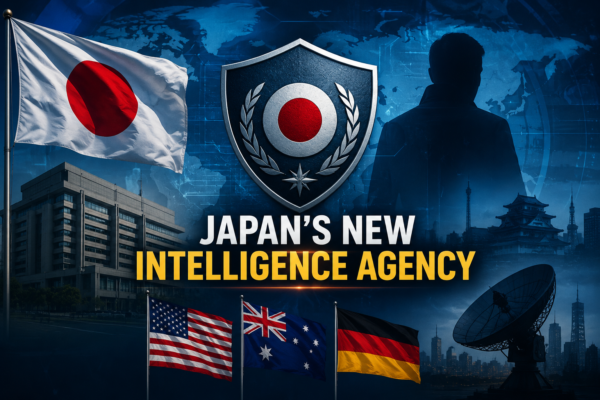
War-Report : Tokyo: Japan is taking a historic step toward strengthening its national security by developing its first centralized intelligence agency since the end of World War II. The initiative reflects Tokyo’s growing focus on countering espionage, enhancing cyber defense, and protecting critical national interests amid rising geopolitical tensions in the Indo-Pacific region.
According to recent reports, Japan has sought guidance from Germany, the United States, and Australia on building the new intelligence organization. Consultations have focused on key areas such as intelligence technology, staffing structures, operational priorities, and coordination among security agencies. Until now, Japan’s intelligence responsibilities have been distributed across multiple government departments, including the Ministry of Foreign Affairs and other security institutions.
Strengthening Counterintelligence Capabilities
The proposed intelligence agency is expected to improve Japan’s ability to detect and respond to foreign espionage, cyber threats, and industrial intelligence operations. U.S. officials have reportedly shared expertise on cybersecurity, counterintelligence practices, protection against industrial espionage, and mechanisms for screening foreign investments that could pose national security risks.
Japan is also working to establish an investment-screening framework similar to the Committee on Foreign Investment in the United States (CFIUS). Such a mechanism would allow authorities to review foreign investments in sensitive sectors and block transactions that could compromise national security.
Concerns Over Espionage Activities
Japanese officials have acknowledged an increasing need to strengthen intelligence capabilities following reports that the country has become vulnerable to foreign intelligence operations. Recent investigations have highlighted concerns about alleged espionage activities involving foreign actors, including Russia, as well as the unauthorized movement of dual-use technologies through third countries.

Reports have also suggested that certain electronic components manufactured in Japan have appeared in Russian military equipment despite Japan’s export restrictions. Experts believe that intermediary countries may be facilitating the transfer of such technologies, raising concerns about export control enforcement.
In addition to Russian intelligence concerns, Japan has expressed caution regarding intelligence collection activities linked to China. Japanese leaders have previously emphasized the importance of protecting sensitive technologies, research institutions, and critical infrastructure from foreign intelligence operations.
Response to Regional Security Challenges
The creation of a unified intelligence organization comes as Japan continues to modernize its defense and security policies in response to an increasingly complex regional security environment. Tokyo has expanded defense spending, strengthened cybersecurity capabilities, and deepened strategic cooperation with key allies.

Security analysts believe a centralized intelligence agency would improve information sharing among government departments, accelerate threat assessments, and enhance coordination during national security emergencies.
Closer Cooperation with Allies
Japan’s collaboration with the United States, Australia, Germany, and other security partners demonstrates its commitment to strengthening intelligence cooperation among like-minded democracies. These partnerships are expected to improve information exchange, cyber resilience, and joint responses to emerging security threats.
The move also reflects Japan’s broader strategy of working closely with regional and global allies to maintain stability in the Indo-Pacific while protecting its economic and technological interests.
A Historic Shift in Security Policy
The establishment of a centralized intelligence agency would mark one of the most significant changes in Japan’s post-war security architecture. By consolidating intelligence functions under a unified structure, the Japanese government aims to improve national preparedness against espionage, cyberattacks, foreign interference, and economic security risks.
If implemented successfully, the new agency is expected to play a pivotal role in safeguarding Japan’s national interests while reinforcing cooperation with international partners in an increasingly competitive global security environment.