


Bihar verdict exposes a new electoral reality driven by welfare timing
By Doruvu Paul Jagan Babu: Assistant Chief Editor

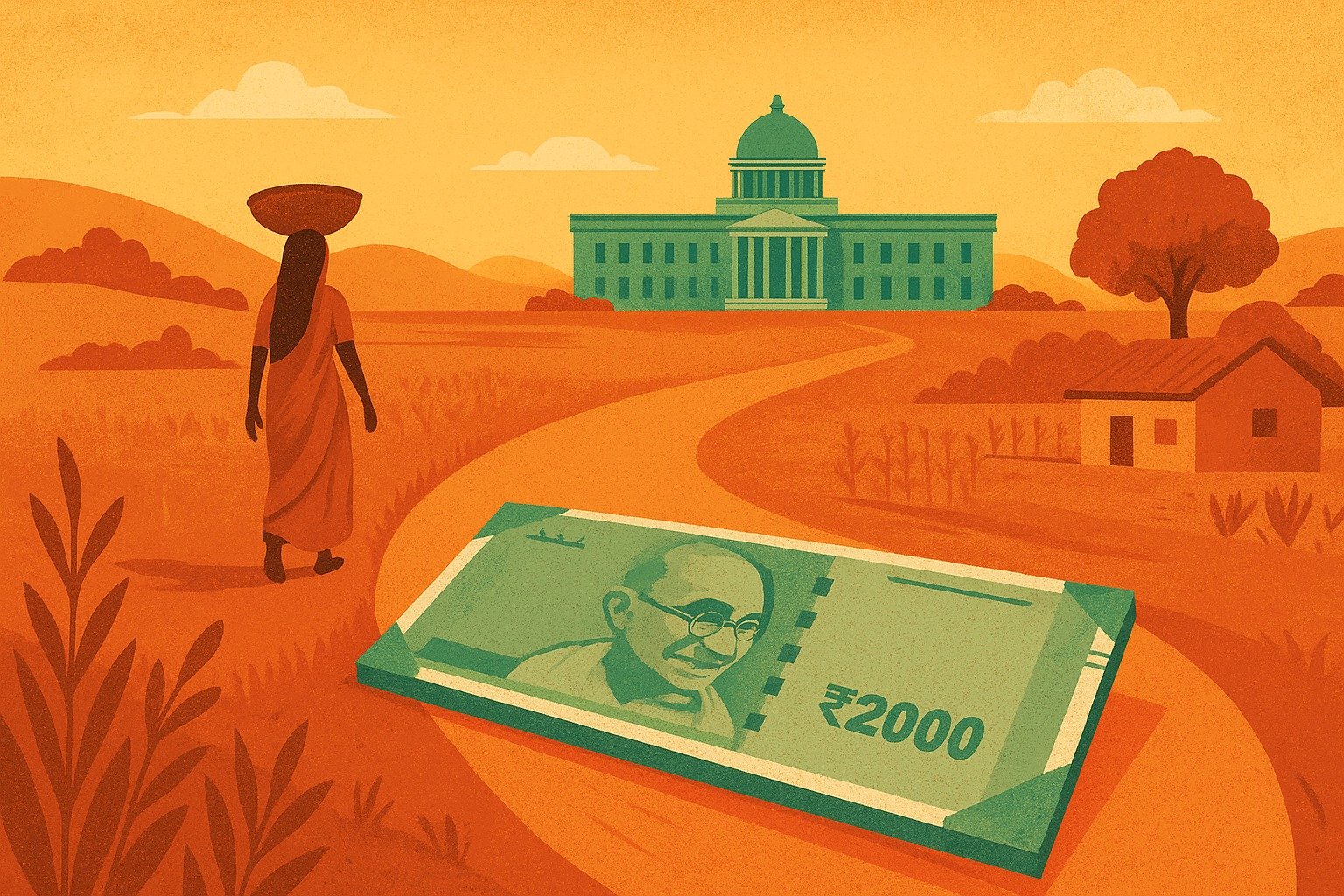
The Bihar election outcome has sparked a wider debate on the changing nature of Indian democracy, where targeted welfare timing appears to overshadow ideology, governance, and political accountability. Public Intellectual L K Mruthyunjaya reflects on what this shift reveals about the electoral psyche and the system that fuels it.
A welfare scheme that redefined an entire election
The Bihar verdict, analysts say, cannot be confined to caste arithmetic or campaign strategy. The turning point was a single welfare initiative — a Mahila Welfare Project — that disbursed Rs 10,000 each to nearly 1.5 crore women. What followed resembled a political landslide.
Campaign speeches, manifestos, and party narratives became background noise. The only message voters seemed to internalize was simple: “Money has reached my bank account.” It was not merely a promise; it was a transaction completed before polling day.
Beyond caste: When economics replaces sociology

While many political observers framed the result as a function of caste dynamics, Mruthyunjaya challenges this reading. Both major rivals came from the same dominant social grouping, he notes. “This election was not about caste,” his analysis suggests. “It was about economics — more precisely, a state-sponsored financial incentive timed with surgical precision.”
The scheme acted as a legal, visible, systematized form of influencing voter behaviour — blending public policy with political strategy in a way that raises difficult questions about electoral ethics.
Legal, visible, yet politically potent — the new vote mechanism

In a departure from clandestine or illegal vote-buying practices, the welfare transfer operated within administrative boundaries and could be justified as social support.
Yet, the effect was identical.
No hidden cash packets
No intermediaries
No covert distribution
No risk of exposure
Instead, it was state machinery delivering financial relief that aligned perfectly with electoral timing. “Public money was routed back to the public,” Mruthyunjaya observes, “but in a manner that mimics vote-buying while remaining legally defensible.”
An electorate exhausted, struggling, and conditioned by hardship
The deeper issue, he argues, lies not just with politicians but with the conditions in which voters live. Economic precarity, household stress, and chronic uncertainty mean that immediate survival outweighs long-term governance. A direct deposit today feels more real than promises of development tomorrow.
One of the stark lines of his analysis: “Survival is immediate; governance is abstract.” This reveals an uncomfortable truth:
A population battling daily hardship becomes vulnerable to well-timed relief, even when it shapes political outcomes more than performance records.
*If there are takers, there will always be givers
Mruthyunjaya poses a provocative question that shifts the responsibility from politicians alone to society at large: “Why blame only the politicians? If there were no takers, there would be no givers.”
Instant gratification, he argues, has repeatedly proven more influential than long-term accountability. Political actors, reading this pattern, adapt accordingly. It is a cycle where both sides reinforce each other — and democracy becomes the casualty.
A democracy reshaped in broad daylight
The Bihar election underscores a sobering shift:
Electoral choices shaped by cash transfers, not governance
Welfare becoming an instrument of political engineering
Voters responding to immediate benefits, not long-term public good
Elections turning into transactions, wrapped in the language of welfare
“This is not cynicism; it is reality,” he concludes — a reality in which democracy is not abolished but quietly altered, reshaped by incentives rather than ideals.