

US-Iran Deal Faces Uncertainty as Both Sides Offer
Editorial
 war-times.com
Send an email
16 June 2026
war-times.com
Send an email
16 June 2026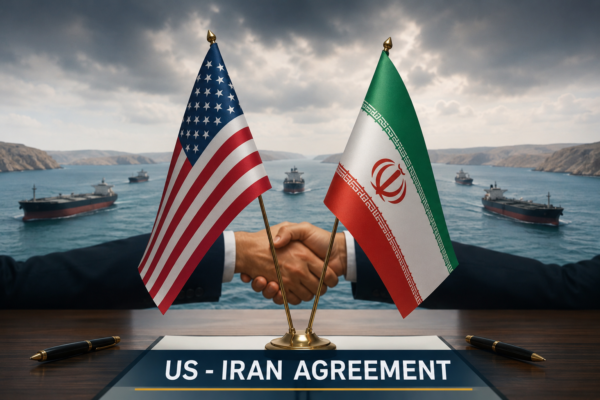
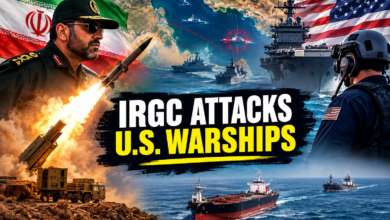
WAR-REPORT : Washington-Tehran: Fresh questions have emerged over the implementation of the recently announced United States-Iran agreement as officials from both countries continue to present sharply different interpretations of several key provisions. The full text of the agreement has not yet been made public, making it difficult for observers to determine the exact commitments made by either side.
The agreement, reached on June 14, is intended to bring an end to ongoing hostilities and is expected to be formally signed in Geneva on June 19. According to reports, the deal includes a ceasefire across all fronts, provisions for reopening the strategically important Strait of Hormuz, and the lifting of the U.S. naval blockade on Iranian ports. However, disagreements over the details have already begun to surface.
Dispute Over Strait of Hormuz
One of the most contentious issues revolves around the future administration of the Strait of Hormuz, a critical global shipping route through which a significant portion of the world’s oil trade passes.
U.S. Vice President JD Vance stated that Washington expects the strait to remain permanently open and accessible without transit charges. Iranian media affiliated with the Islamic Revolutionary Guard Corps (IRGC), however, reported that Iran has only agreed to temporarily suspend fees on vessels for a 60-day period and may resume collecting what it describes as “service charges” afterward.
Iranian Foreign Ministry spokesperson Esmail Baghaei further emphasized that Iran and neighboring Oman would jointly manage maritime traffic through the waterway and oversee related services. Iranian state-linked outlets have also claimed that the agreement recognizes an expanded role for Tehran and Muscat in administering the strategic passage.

These statements contrast sharply with the U.S. position that the strait should remain open under internationally accepted maritime norms, raising concerns about how the agreement will be implemented in practice.
Sanctions Relief Remains a Point of Contention
Another major area of disagreement concerns sanctions relief and access to Iranian assets frozen abroad.
Iranian media reports have suggested that the agreement includes provisions for the release of a portion of Iran’s frozen assets and the easing of some economic restrictions. U.S. officials, including President Donald Trump and Vice President Vance, have rejected these claims, insisting that any sanctions relief will depend on Iran fulfilling its commitments under the agreement.

Washington has maintained that the release of assets and economic concessions will occur only after Iran demonstrates compliance with agreed-upon conditions, while Iranian outlets have portrayed these measures as immediate benefits of the accord.
Nuclear Negotiations Still Ahead
The agreement does not appear to resolve long-standing disputes over Iran’s nuclear program. Instead, both sides have indicated that further negotiations will continue during the 60 days following the formal signing of the deal.
American officials have suggested that future discussions will focus on Iran’s nuclear activities and broader regional security concerns. Iranian authorities, however, have emphasized that their interpretation of the current agreement does not involve new restrictions on missile development or regional policies.
Analysts believe that the differing public narratives being promoted by Washington and Tehran could complicate upcoming negotiations and create additional challenges in maintaining the fragile agreement.
Strategic Importance of the Strait
The Strait of Hormuz remains at the center of regional and global security concerns. For Iran, maintaining influence over the waterway has long been viewed as a key strategic objective. Iranian officials have repeatedly argued that the country’s geographic position gives it an important role in ensuring security and navigation in the region.
Security experts note that even if Iran refrains from imposing direct transit tolls, retaining any form of administrative authority over the strait could provide Tehran with significant leverage over international trade and energy supplies.
For the United States and its allies, unrestricted access to the waterway remains essential to global commerce and energy security. Any future disagreement over management of the strait could therefore become a major source of tension.
Shipping Industry Remains Cautious
Despite announcements regarding the reopening of the strait, global shipping companies are reportedly taking a cautious approach.
President Trump stated that some vessels have already resumed movement through designated international shipping lanes. However, maritime operators remain concerned about lingering security risks, including the possibility of naval mines and renewed military threats.
Adding to the uncertainty, the IRGC Navy recently stated that it had not issued transit permissions over the previous several days and warned vessels against entering areas under Iranian control until further notice. Such statements have raised questions about whether normal maritime traffic can safely resume in the near future.
Industry sources indicate that many shipping companies are waiting for formal security guarantees and confirmation that mine-clearing operations have been completed before fully restoring commercial routes through the region.
Challenges Ahead
As the June 19 signing date approaches, the agreement is being viewed as an important step toward reducing regional tensions. However, the conflicting interpretations being offered by U.S. and Iranian officials highlight the significant challenges that remain.
Diplomatic observers warn that unless both sides reach a common understanding of the agreement’s provisions, disputes over sanctions, maritime access, and future negotiations could undermine its implementation. The coming weeks are expected to be crucial in determining whether the accord becomes a foundation for lasting stability or another source of renewed diplomatic friction in the Middle East.

war-times.com
Send an email
16 June 2026