

Iran Rejects Hormuz Transit Proposal, Reinforces Strategic Grip on Key Global Shipping Route
Tehran Refuses Maritime Arrangement Limiting Its Authority as Strait of Hormuz Tensions Escalate

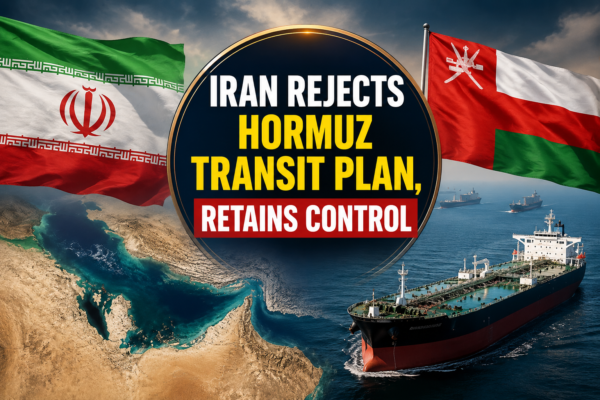
Tehran-Muscat | War-Report : Iran has reaffirmed its determination to retain full authority over the Strait of Hormuz, rejecting a new maritime proposal backed by Oman that sought to facilitate safer international shipping while reducing regional tensions. The decision underscores Tehran’s view that control of the world’s most strategically significant energy corridor remains central to its national security and geopolitical influence.
The latest diplomatic discussions took place in Muscat, Oman, where senior Iranian and Omani officials met to explore mechanisms for ensuring the uninterrupted movement of commercial vessels through the narrow waterway. However, the talks ended without an agreement after Iran declined to endorse the proposed transit arrangement.
Oman’s Two-Corridor Proposal
According to reports, Oman presented a plan consisting of two separate navigation corridors designed to enhance maritime safety.
The first corridor would pass through Omani territorial waters, allowing commercial ships to navigate freely under conditions similar to those before the recent regional conflict.
The second corridor would operate through Iranian territorial waters, requiring vessels to obtain prior approval from Iranian authorities but without imposing transit fees.

The proposal was intended to balance international shipping interests with regional security concerns while reducing the risk of military confrontation in one of the world’s busiest maritime chokepoints.
Iran Rejects Reduced Control
Iranian officials rejected the proposal, maintaining that any arrangement diminishing Tehran’s influence over the Strait of Hormuz would be unacceptable.
Iranian policymakers argue that alternative shipping mechanisms operating outside Iranian oversight could weaken the country’s strategic leverage and undermine its security interests.

Following discussions in Muscat, Iranian Foreign Minister Abbas Araghchi reportedly returned the proposal to Tehran for additional internal consultations after failing to secure approval during the negotiations.
Strategic Importance of the Strait
The Strait of Hormuz connects the Persian Gulf to the Gulf of Oman and the Arabian Sea, serving as one of the world’s most critical maritime trade routes.
A significant share of global crude oil and liquefied natural gas exports passes through the narrow passage each day, making stability in the area essential for international energy markets and global trade.
Because of its economic significance, developments in the Strait are closely monitored by governments, shipping companies, and financial markets worldwide.
Control Seen as National Security Priority
Iranian leaders continue to portray control over the Strait as an issue extending beyond maritime management.
Senior officials have repeatedly described the waterway as a cornerstone of Iran’s sovereignty, national defense, and long-term strategic deterrence.
Iranian political and military leaders have argued that relinquishing influence over the Strait would significantly reduce the country’s geopolitical leverage in the Gulf region.
Military Activity Continues
Despite ongoing diplomatic efforts, military tensions in and around the Strait remain elevated.
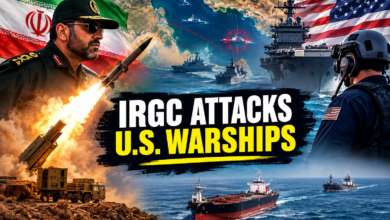
Recent reports indicate that Iran’s Islamic Revolutionary Guard Corps (IRGC) Navy continues to demonstrate its capability to conduct maritime operations in the region.
Individual attacks or security incidents, even if limited in scale, can have a significant impact on commercial shipping by increasing insurance costs, altering shipping schedules, and influencing risk assessments made by vessel operators.
United States Expands Military Response
The United States has continued military operations aimed at reducing Iran’s ability to threaten commercial shipping.
According to U.S. military statements, strikes have targeted missile launch sites, drone facilities, naval infrastructure, surveillance systems, radar installations, and air-defense assets associated with Iranian military capabilities.
Additional operations reportedly focused on coastal military positions near the Strait as well as selected facilities further inside Iran.
U.S. officials maintain that these actions are intended to protect international freedom of navigation and reduce risks to commercial maritime traffic.
Regional Security Remains Fragile
Security analysts note that while military strikes may reduce some operational capabilities, isolated attacks can still disrupt shipping because commercial operators remain highly sensitive to security risks.
Even limited incidents can prompt shipping companies to reroute vessels, increase insurance premiums, or temporarily suspend operations through the Strait.
As a result, diplomatic negotiations remain an important element of broader efforts to maintain stability in the Gulf.
Global Economic Implications
Any prolonged disruption in the Strait of Hormuz has the potential to affect global energy prices, supply chains, and international trade.
With millions of barrels of oil transported through the passage every day, governments and energy markets continue to closely monitor developments between Iran, regional Gulf states, and international naval forces.
Diplomatic Efforts Continue
Although the latest discussions in Muscat failed to produce an agreement, diplomatic engagement between Iran, Oman, and other regional stakeholders is expected to continue.
Observers believe that balancing maritime security, national sovereignty, international law, and freedom of navigation will remain one of the most complex diplomatic challenges facing the Gulf region.
As geopolitical tensions persist, the Strait of Hormuz is likely to remain at the center of both regional security calculations and global economic concerns, making future negotiations critical for maintaining stability in one of the world’s most strategically important waterways.