


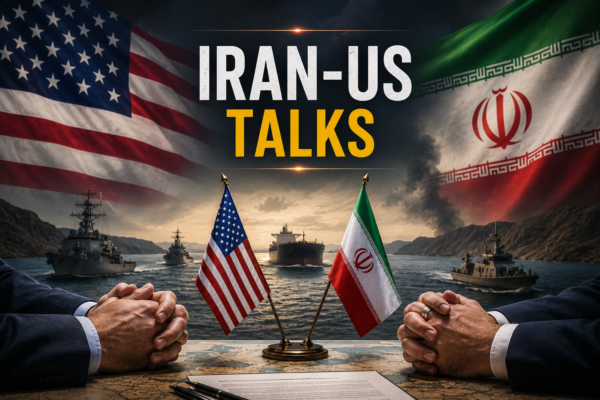
Tehran-Washington-New Delhi: Internal divisions within Iran’s leadership continue to shape the country’s approach toward negotiations with the United States, as competing factions appear sharply divided over what concessions, if any, Tehran should accept in a potential agreement.
Reports emerging from Iranian media circles indicate that influential hardline figures within Iran’s establishment continue to push for a negotiating framework that protects Tehran’s strategic interests while avoiding any appearance of compromise.
At the center of this debate are senior figures associated with Iran’s security establishment, who are believed to favor maintaining a firm position on national sovereignty, regional influence, and economic recovery.
Hardline Position Reflects Maximum Demands
Recent reports circulating through several Iranian media platforms described a proposed framework for a possible understanding between Iran and the United States that reportedly includes broad Iranian expectations.
According to these accounts, Iran seeks continued influence over the strategic Strait of Hormuz, access to frozen financial assets abroad, and broader economic recovery initiatives.

The publication and circulation of such proposals by outlets aligned with influential Iranian circles have fueled speculation that powerful voices inside the country continue to advocate a negotiation model centered on preserving Tehran’s regional and strategic priorities.
Observers note that such positions suggest sections of Iran’s leadership remain reluctant to accept conditions that could be interpreted domestically as a retreat from long-held national policies.
Contrasting Narratives Highlight Distance Between Both Sides
Public messaging from Washington and Tehran appears to reveal significant differences in how each side describes the possible framework of discussions.

Reports attributed to senior US officials suggest that American expectations include stronger limitations related to Iran’s nuclear activities and broader regional commitments.
Meanwhile, several Iranian media reports have emphasized that issues related to missile capabilities and regional alliances are not considered part of the current discussion process and would remain outside the scope of future talks.
Iranian commentary has also indicated that no additional commitments regarding its nuclear position are currently being publicly acknowledged within the proposed understanding.
These conflicting public narratives underline how far apart both countries remain on several strategic issues.
Strait of Hormuz Emerges as a Critical Strategic Issue
One of the most closely watched elements of the reported discussions remains the future administration and operation of the Strait of Hormuz — one of the world’s most important maritime energy corridors.
Some diplomatic accounts have suggested that future arrangements could include restoring normal shipping operations and reducing barriers to commercial maritime traffic.
At the same time, Iranian state-linked commentary has continued to emphasize Tehran’s intention to maintain an administrative and operational role in the waterway.
Reports have also referenced the possibility of regional coordination mechanisms involving neighboring countries regarding future maritime arrangements.
Strategic analysts believe that the long-term question extends beyond shipping access and concerns broader influence over regional maritime governance.
Economic Pressures Continue to Influence Calculations
Iran’s economy remains under pressure from years of sanctions, restricted financial access, and regional instability.
Analysts suggest that economic recovery incentives may play an important role in encouraging negotiations, while political leadership remains cautious about appearing to compromise national interests.
The release of frozen assets and international economic engagement continue to be viewed as key priorities inside Iran.
At the same time, domestic political considerations make it difficult for any leadership faction to publicly support major concessions.
Future Outlook: Negotiations Face Complex Road Ahead
Despite public messaging and reports of possible frameworks, uncertainty continues to surround the actual content and progress of discussions.
Political observers believe that any eventual understanding would require balancing strategic security concerns, economic needs, and domestic political expectations on both sides.
The coming weeks are expected to provide greater clarity on whether negotiations move toward a formal agreement or remain constrained by competing priorities and public posturing.
For now, the evolving debate inside Iran reflects a broader challenge: how to pursue economic and diplomatic opportunities while maintaining internal political unity and regional influence.