

Europe Under Pressure as EU and NATO Confront Escalating War in Iran 2026
By Samir Singh 'Bharat': Editor In Chief

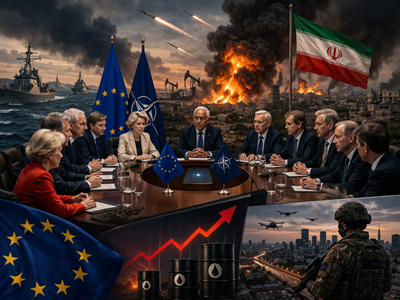
WAR-REPORT : The outbreak of war involving Iran has placed unprecedented strain on the political, economic, and security frameworks of both the European Union and the NATO alliance. As the conflict expands across the Middle East and disrupts global systems, European and transatlantic partners are struggling to define a coherent response. The crisis has exposed deep divisions, strategic limitations, and competing priorities among member states, raising fundamental questions about the future of European security and alliance unity.
A War with Global Reach
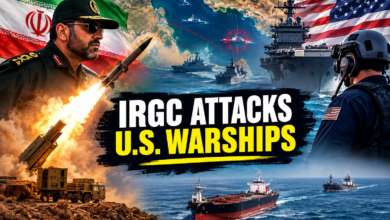
The war in Iran has rapidly evolved into a multi-front conflict with regional and global implications. Military operations have extended beyond Iranian territory, affecting key areas across the Persian Gulf and targeting infrastructure and military assets in multiple countries.
For Europe, the conflict is not a distant geopolitical issue but an immediate threat to stability. Disruptions to energy supplies, particularly through the Strait of Hormuz, have created severe economic risks. The strait is a critical artery for global oil shipments, and any interruption has immediate consequences for European economies heavily dependent on imported energy.
The war has also heightened fears of cyberattacks, terrorism, and migration pressures, all of which have direct implications for European domestic security.
Economic Shockwaves Across Europe
The economic consequences of the Iran war are already being felt across the eurozone. The International Monetary Fund has warned that even a short conflict could significantly slow economic growth, with projections for 2026 downgraded as energy prices rise and supply chains face disruption.

Inflationary pressures are also mounting. Rising oil prices, driven by instability in the Gulf, have pushed up the cost of transportation, manufacturing, and household energy consumption. In more severe scenarios, analysts warn that prolonged conflict could trigger a global recession.
The aviation sector provides a clear example of the immediate impact. European airlines have warned of potential jet fuel shortages due to disrupted supply routes and airspace closures. Industry groups have called on European authorities to implement emergency measures, including coordinated fuel monitoring and joint procurement strategies.
These economic pressures are forcing European governments to balance domestic stability with foreign policy considerations, complicating efforts to respond decisively to the conflict.

A Fragmented European Response
Despite the seriousness of the crisis, the European Union has struggled to present a unified strategy. Member states differ significantly in their approaches to the conflict, reflecting varying national interests, political priorities, and levels of dependence on external actors.
European leaders have broadly called for de-escalation, protection of civilians, and adherence to international law. However, beyond these general principles, consensus has been difficult to achieve.
One major point of contention is the question of military involvement. While some policymakers have argued for a stronger European role in protecting shipping routes and regional stability, many governments have firmly rejected participation in military operations.
This reluctance reflects both political caution and strategic calculation. European countries are wary of being drawn into a broader conflict, particularly one that could escalate unpredictably and strain already limited military resources.
NATO Under Pressure
The crisis has also placed significant strain on NATO, the cornerstone of transatlantic security. The alliance, traditionally focused on collective defense, has struggled to define its role in a conflict that falls outside its core geographic area and mandate.
Calls from the United States for greater allied involvement have been met with hesitation from European members. Many NATO countries have resisted efforts to frame the conflict as a NATO mission, emphasizing that it does not constitute a direct threat to alliance territory.
This divergence has highlighted underlying tensions within NATO. While the alliance remains formally united, differences in strategic priorities and risk tolerance have become more pronounced.
The situation has also raised broader questions about the future of transatlantic relations. European leaders are increasingly concerned about reliance on United States leadership, particularly in conflicts where European interests may not fully align with American objectives.
Strategic Dilemmas for Europe
European governments face a series of difficult choices in responding to the war in Iran. On one hand, they have strong incentives to maintain stability in the Middle East, given its importance for energy supplies and regional security. On the other hand, direct involvement carries significant risks.
One key dilemma is how to protect maritime trade without escalating the conflict. Ensuring the safe passage of oil and gas shipments is critical for European economies, yet military action to secure these routes could provoke further escalation.
Another challenge is balancing relations with the United States and maintaining strategic autonomy. While the United States remains Europe’s primary security partner, disagreements over the handling of the Iran conflict have exposed differences in approach.
European policymakers are also grappling with the broader implications of the war for global order. The conflict has underscored the fragility of international norms and the difficulty of enforcing them in a multipolar world.
Energy Security at Risk
Energy security has emerged as one of the most immediate concerns for Europe. The disruption of oil flows through the Gulf has led to sharp price increases and heightened uncertainty in energy markets.
European countries, many of which rely heavily on imported energy, are particularly vulnerable to such shocks. The experience of previous energy crises has highlighted the need for diversification and resilience, but the current situation demonstrates that vulnerabilities remain.
Efforts to mitigate these risks include increasing strategic reserves, seeking alternative suppliers, and accelerating the transition to renewable energy. However, these measures take time to implement and may not provide immediate relief.
Limited Influence on the Ground
Another challenge facing Europe is its limited ability to influence events on the ground. Unlike regional actors or the United States, European countries have relatively constrained military and political leverage in the Middle East.
This limitation has contributed to a sense of frustration among European policymakers. While the European Union has significant economic and diplomatic tools, these are often insufficient to shape the course of a fast-moving conflict.
As a result, Europe finds itself in a reactive position, responding to developments rather than shaping them.
The Risk of Regional Spillover
The war in Iran carries the risk of broader regional escalation, which could further complicate Europe’s position. Neighboring countries may become more directly involved, and existing conflicts could intensify.
Such developments would increase the likelihood of disruptions to global trade, energy supplies, and migration patterns. For Europe, the consequences could include economic instability, increased security threats, and political pressure from domestic populations.
Calls for Coordination and Restraint
In response to these challenges, European leaders have emphasized the importance of international coordination and restraint. Official statements have called on all parties to avoid escalation and to prioritize diplomatic solutions.
However, translating these principles into effective action remains a significant challenge. The complexity of the conflict and the diversity of interests involved make coordinated responses difficult to achieve.
A Test of European Unity
Ultimately, the war in Iran represents a critical test of European unity and strategic capacity. The ability of the European Union to respond effectively will have implications not only for the current crisis but also for its role in future global challenges.
The conflict has highlighted both strengths and weaknesses within the European system. While there is broad agreement on the need for stability and adherence to international law, differences in approach have limited the effectiveness of collective action.
Our Media Opinion
The war in Iran has created a complex and challenging environment for both the European Union and NATO. As economic pressures mount and security risks increase, member states are grappling with difficult decisions that will shape the future of European policy and transatlantic relations.
The crisis underscores the need for greater coordination, clearer strategic priorities, and enhanced resilience in the face of global shocks. At the same time, it highlights the limits of European influence in a rapidly changing geopolitical landscape.
Whether Europe can navigate these challenges successfully remains an open question. What is clear, however, is that the war in Iran will have lasting consequences for the region and for the global order in which Europe operates.