

US-Iran Ceasefire Collapses as Persian Gulf Conflict Intensifies,
Strait of Hormuz Crisis Deepens
 Samir Singh 'Bharat'-Editor-in-Chief
Send an email
14 July 2026
Samir Singh 'Bharat'-Editor-in-Chief
Send an email
14 July 2026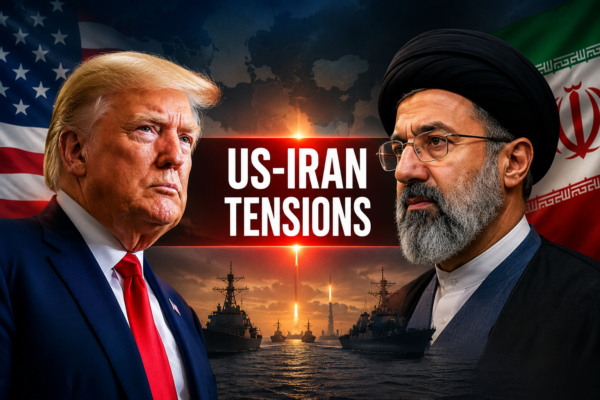
War-Report : The fragile ceasefire between the United States and Iran has effectively collapsed, ushering in a new phase of military confrontation in the Persian Gulf. Over the past several days, both sides have dramatically escalated military operations through naval attacks, airstrikes, missile launches, and renewed economic pressure, raising fears that the region could once again be on the brink of a broader conflict.
While the current hostilities remain geographically more limited than the large-scale military campaign witnessed in March and April 2026, analysts warn that the intensity of recent attacks and the restoration of the U.S. naval blockade signal the formal end of the ceasefire that had temporarily reduced tensions.
IRGC Announces Closure of Strait of Hormuz
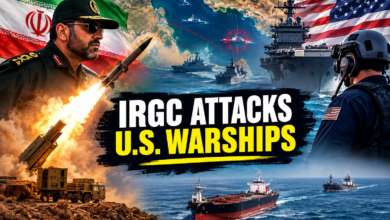
The latest escalation began when Iran’s Islamic Revolutionary Guards Corps (IRGC) Navy announced on July 11 that it had closed the strategically vital Strait of Hormuz, one of the world’s most important maritime trade routes.
According to Iranian military statements, the IRGC targeted a Cyprus-flagged commercial vessel before attacking another unidentified ship on July 12. Iranian officials described the actions as part of their response to continued U.S. military operations and what Tehran considers foreign interference in regional security.
The Strait of Hormuz carries nearly one-fifth of the world’s seaborne oil exports. Any disruption to shipping through the narrow waterway immediately raises concerns across global energy markets and international shipping industries.

Massive U.S. Military Response
In response to the Iranian naval actions, the United States launched dozens of coordinated strikes against Iranian military facilities on July 12.
According to U.S. defense officials, the operations were specifically designed to degrade Iran’s military capabilities and reduce its ability to threaten international shipping lanes in the Persian Gulf.

American military sources indicate that more than 300 precision strikes have been carried out across Iran since July 10, targeting:
- Missile launch facilities
- Naval bases
- Drone storage sites
- Radar installations
- Revolutionary Guard military infrastructure
- Logistics centers supporting maritime operations
Most of the strikes have concentrated on southern Iran, particularly along the Persian Gulf coastline, although several attacks reportedly targeted military infrastructure deeper inside Iranian territory.
Iran Expands Retaliatory Operations
Iran responded quickly by expanding its military operations beyond its own borders.
On July 12, Iranian forces reportedly launched missiles and drones against U.S. military facilities located in:
- Jordan
- Bahrain
- Kuwait
Military analysts believe these strikes were intended less as attempts to inflict heavy casualties and more as strategic warnings to Gulf nations hosting American forces.
By targeting U.S. installations inside allied countries, Tehran appears to be signaling that any nation permitting American military operations from its territory could become part of the conflict.
Radar Facility in Oman Allegedly Targeted
Iran also claimed that it attacked a U.S.-operated radar installation in Oman on July 13.
Neither the United States nor Omani authorities immediately confirmed or denied the reported strike.
The lack of official confirmation has fueled speculation regarding the effectiveness of the attack and whether both governments are attempting to avoid further escalation through public silence.
U.S. Naval Blockade Returns
One of the most significant developments is Washington’s decision to restore its naval blockade against Iranian ports.
The United States announced that the blockade would resume on July 14 at 4:00 PM Eastern Time, once again restricting maritime access to Iranian commercial ports.
The renewed blockade represents not only an economic measure but also a strategic military tool designed to pressure Tehran by limiting its international trade and energy exports.
Fighting Smaller Than Spring Campaign
Although military activity has intensified sharply over recent days, defense experts note that the current conflict remains smaller than the widespread campaign fought during March and April 2026.
During that earlier confrontation:
- Thousands of military targets were struck.
- Large portions of Iranian military infrastructure were damaged.
- Israel participated extensively alongside the United States.
- Civilian infrastructure across several Gulf states also became targets.
By comparison, the present fighting remains primarily focused on military objectives.
Nevertheless, analysts caution that the rapid increase in strikes suggests the conflict could expand significantly if diplomatic efforts fail.
Three Hundred Strikes in Three Days
The scale of recent American operations is still substantial.
Military analysts estimate that approximately 300 U.S. airstrikes have been conducted within only three days.
Although this represents roughly one-third of the strike volume recorded during the peak of the joint U.S.-Israel campaign earlier this year, it nevertheless reflects one of the largest sustained American military operations in the Middle East in recent years.
The precision attacks have reportedly focused on weakening Iran’s:
- Missile capabilities
- Naval operations
- Drone warfare infrastructure
- Revolutionary Guard command facilities
Iran Broadens Regional Pressure
Unlike earlier phases of the conflict, Iran has increasingly expanded the geographic scope of its retaliation.
Instead of concentrating solely on American assets, Tehran has directed attacks toward multiple Gulf states hosting U.S. military forces.
So far, however, Iran has notably refrained from:
- Launching direct attacks against Israel.
- Conducting widespread strikes on civilian infrastructure across Gulf countries.
- Expanding operations into major urban centers.
This restraint contrasts sharply with the March–April conflict, when civilian infrastructure, including energy facilities and transportation networks, became major targets.
Strategic Importance of the Strait of Hormuz
The Strait of Hormuz remains at the center of the current confrontation.
Connecting the Persian Gulf with the Gulf of Oman and the Arabian Sea, the narrow passage serves as one of the world’s most critical maritime chokepoints.
Approximately 20 percent of global oil shipments pass through the strait every day.
Any military confrontation affecting maritime traffic could significantly disrupt:
- Global oil supplies
- Natural gas exports
- International shipping routes
- Energy prices
- Insurance costs for commercial vessels
Several shipping companies are already reportedly reviewing alternative routes amid growing security concerns.
Naval Blockade as an Economic Weapon
Military experts believe the U.S. naval blockade is designed to impose economic pressure rather than achieve immediate battlefield gains.
By restricting Iranian shipping and reducing export capacity, Washington hopes to increase domestic economic challenges inside Iran while limiting resources available for military operations.
Previous sanctions have already strained Iran’s economy through reduced oil exports, inflation, and currency depreciation.
The renewed blockade could intensify these pressures considerably.
Earlier Ceasefire Shaped by Economic Pressure
Reports emerging after the June ceasefire suggest that economic factors played a major role in persuading Tehran to negotiate.
According to multiple reports, Iranian President Masoud Pezeshkian reportedly warned the country’s leadership that continued confrontation combined with the U.S. naval blockade was rapidly worsening Iran’s economic conditions.
Growing inflation, declining revenues, and pressure on essential imports reportedly increased concerns within the Iranian government.
Memorandum of Understanding
The ceasefire reached on June 18 was based on a Memorandum of Understanding (MoU) intended to reduce military tensions while allowing diplomatic negotiations to continue.
However, the agreement remained fragile from the outset.
According to reports, Iran’s leadership accepted the arrangement only under strict conditions, including assurances that Iranian negotiators would not compromise on issues considered essential to national sovereignty.
The renewed fighting now appears to have effectively ended that agreement.
Military Strategy Appears Carefully Calibrated
Defense analysts observe that both Washington and Tehran appear to be pursuing carefully calibrated strategies.
The United States continues emphasizing military targets while attempting to maintain freedom of navigation in international waters.
Iran, meanwhile, appears focused on demonstrating its ability to threaten regional security without triggering an uncontrollable regional war.
This balance, however, remains extremely delicate.
Any significant casualties involving American personnel or attacks on civilian infrastructure could rapidly expand the conflict.
International Concern Grows
Governments across Europe, Asia, and the Middle East are closely monitoring developments.
Many countries depend heavily on uninterrupted energy supplies from the Gulf.
Shipping companies, energy markets, and financial institutions have also expressed concern over the growing instability surrounding one of the world’s busiest maritime corridors.
Diplomatic efforts aimed at restoring communication between Washington and Tehran are expected to intensify in the coming days.
Regional Implications
Beyond military operations, the renewed confrontation carries major geopolitical implications.
Neighboring Gulf states hosting American forces now face increasing security risks.
International shipping companies may experience higher insurance premiums and operational costs.
Global oil markets could become increasingly volatile should military operations continue near key export terminals.
Uncertain Path Ahead
With the ceasefire effectively over, the Persian Gulf once again finds itself at the center of one of the world’s most dangerous geopolitical flashpoints.
Although both sides currently appear focused on military rather than civilian targets, the rapid escalation demonstrates how quickly regional tensions can intensify.
Whether diplomacy can prevent another prolonged confrontation remains uncertain. Much will depend on future military decisions by both Washington and Tehran, as well as the willingness of regional and international powers to facilitate renewed negotiations before the conflict expands into a wider Middle East crisis.