

Putin’s Narrative vs Battlefield Reality
Russia’s Information War Faces Mounting Challenges in Ukraine
 Samir Singh 'Bharat'-Editor-in-Chief
Send an email
30 June 2026
Samir Singh 'Bharat'-Editor-in-Chief
Send an email
30 June 2026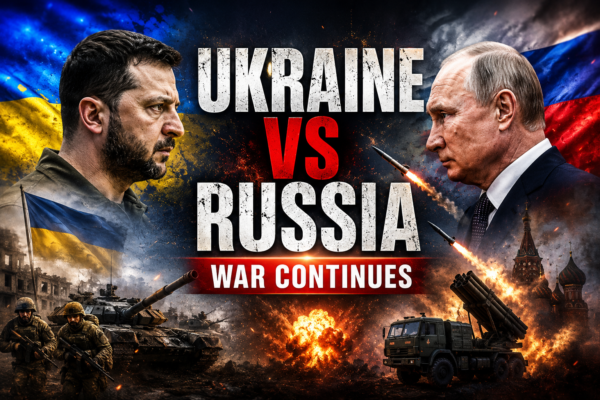
WAR-REPORT: Russian President Vladimir Putin is increasingly relying on a carefully managed political and media narrative to convince both domestic and international audiences that a Russian victory in Ukraine is inevitable. While Moscow continues to project confidence, the realities on the battlefield, the strain on Russia’s economy, and Ukraine’s evolving military capabilities present a far more complex picture.
Recent remarks by Putin regarding the failed August 2025 Alaska Summit with the United States reveal a strategic shift in Russia’s diplomatic messaging. Rather than admitting military setbacks or political failures, the Kremlin is attempting to reshape public perception by portraying negotiations as stalled due to external circumstances while insisting that Russia remains committed to its original war objectives.
The gap between official rhetoric and ground realities is becoming one of the defining features of the Russia-Ukraine conflict in 2026.
A Carefully Constructed Narrative
Putin’s latest public statements demonstrate a deliberate effort to maintain the image of Russian strength despite increasing military and economic pressure.
Speaking in a carefully staged interview with Kremlin journalist Pavel Zarubin, Putin acknowledged for the first time that the August 2025 Alaska Summit between Russia and the United States produced no formal agreements.

Although he admitted that no documents were signed, Putin argued that discussions established principles that Russia remains willing to pursue.
This messaging serves several political objectives.
First, it allows Moscow to deny diplomatic failure.

Second, it portrays Russia as open to negotiations while shifting responsibility for stalled diplomacy elsewhere.
Third, it reinforces the idea that Russia’s strategic goals remain unchanged despite battlefield developments.
The Alaska Summit: Expectations vs Reality
The Alaska Summit had initially generated significant international attention.
Many observers hoped that high-level discussions between Washington and Moscow might produce a framework for ending the war.
Instead, negotiations concluded without any legally binding agreement.
US Secretary of State Marco Rubio later confirmed that discussions produced proposals rather than official commitments.
Putin’s recent acknowledgment aligns with those statements but also attempts to preserve Russia’s diplomatic credibility.
By emphasizing Russia’s willingness to continue talks based on previous proposals, the Kremlin is seeking to revive negotiations under conditions more favorable to Moscow.
Battlefield Conditions Have Changed Dramatically
One major challenge facing Putin’s diplomatic strategy is that military realities have evolved substantially since August 2025.
Ukraine has successfully:
- Stabilized key defensive sectors.
- Liberated additional occupied territory.
- Slowed Russian offensive operations.
- Expanded long-range drone attacks.
- Increased precision strikes against Russian military infrastructure.
- Forced Russia to divert significant resources toward homeland defense.
These developments make it increasingly difficult for Russia to negotiate from the same position of strength it enjoyed during earlier phases of the conflict.
Ukraine’s Expanding Long-Range Strike Capability
Perhaps the most important military transformation has been Ukraine’s growing ability to strike deep inside Russian territory.
Long-range drones and precision weapons have repeatedly targeted:
- Military airfields
- Ammunition depots
- Fuel storage facilities
- Command centers
- Radar installations
- Industrial defense complexes
These operations have forced Russia to expand air defense coverage across vast geographic areas.
Instead of concentrating resources at the front, Moscow now faces the expensive challenge of defending strategic infrastructure hundreds of kilometers behind its own lines.
Russian Offensive Momentum Slows
Although Russia continues offensive operations along several sectors, progress has slowed considerably.
The war has increasingly become one of attrition.
Russian forces continue to capture small settlements, but these gains often come after weeks or months of intense fighting and significant casualties.
Military analysts note that territorial advances now occur at a much slower pace than Moscow anticipated.
Economic Pressure Continues to Mount
Behind the military narrative lies another growing concern: Russia’s economy.
Although Russia has demonstrated resilience under sanctions, the long-term costs of sustaining the war are becoming increasingly visible.
Major challenges include:
- Rising defense expenditures.
- Labor shortages.
- Inflationary pressures.
- Higher borrowing costs.
- Industrial strain.
- Dependence on wartime production.
The Russian government has redirected enormous financial resources toward defense manufacturing.
While this supports military operations in the short term, it also reduces investment in civilian sectors.
The Cost of a Wartime Economy
Russia’s economy increasingly resembles a wartime production system.
Factories producing:
- Tanks
- Missiles
- Artillery shells
- Drones
- Military vehicles
receive priority funding.
Civilian industries, however, face shortages of skilled workers and investment.
Long-term economic growth may suffer as productive resources remain concentrated on military needs.
Information Control as a Strategic Weapon
Information management remains one of Putin’s most powerful political tools.
State-controlled television, official media outlets, and government messaging consistently emphasize:
- Russian battlefield successes.
- Ukrainian losses.
- Western divisions.
- NATO fatigue.
- Russian resilience.
Reports of economic hardship or military setbacks receive limited coverage.
This tightly controlled information environment helps sustain domestic support for the war.
Domestic Political Stability
Maintaining public confidence is essential for the Kremlin.
The Russian government continues to frame the conflict as:
- A defensive struggle.
- Protection of Russian-speaking populations.
- Resistance against NATO expansion.
- Defense of national sovereignty.
These themes resonate with portions of the domestic audience and help justify prolonged military operations.
Diplomacy Remains Part of Russia’s Strategy
Despite continuing military operations, Moscow has not abandoned diplomacy.
Instead, negotiations appear designed to complement battlefield objectives.
Russia continues advocating talks while insisting on conditions that include:
- Recognition of occupied territories.
- Ukrainian neutrality.
- Security guarantees favorable to Moscow.
- Reduced Western military support for Kyiv.
Ukraine and many Western governments reject these conditions.
Ukraine’s Position Has Strengthened
Ukraine enters any future negotiations from a stronger position than during earlier diplomatic efforts.
Several factors contribute to this shift:
- Improved domestic defense production.
- Continued Western military assistance.
- Better battlefield adaptation.
- Enhanced intelligence cooperation.
- Expanded drone warfare capabilities.
These improvements have complicated Russian military planning.
Western Support Remains Critical
Military assistance from Western allies continues to play a decisive role.
Support includes:
- Air defense systems.
- Precision-guided munitions.
- Intelligence sharing.
- Financial assistance.
- Training programs.
- Advanced drone technology.
Continued international support enables Ukraine to sustain defensive operations while conducting increasingly sophisticated strikes.
The Strategic Importance of Public Messaging
Modern warfare extends far beyond the battlefield.
Winning public opinion has become nearly as important as winning military engagements.
Russia seeks to convince:
- Domestic audiences.
- Neutral countries.
- Developing nations.
- Western populations.
that continued resistance by Ukraine is ultimately futile.
Ukraine, meanwhile, emphasizes resilience, international law, and defense of sovereignty.
Negotiations Face Significant Obstacles
Several issues continue to block meaningful peace negotiations:
- Territorial disputes.
- Security guarantees.
- Future NATO relationships.
- Sanctions.
- Reconstruction funding.
- Prisoner exchanges.
- War accountability.
Without compromise on these core issues, diplomatic progress remains difficult.
The Future Military Outlook
The coming months are likely to focus on:
- Continued drone warfare.
- Precision missile strikes.
- Defensive fortifications.
- Electronic warfare.
- Industrial production.
- Economic sustainability.
Neither side currently appears capable of achieving a rapid decisive victory.
Instead, the conflict increasingly resembles a prolonged war of endurance.
Global Economic Implications
The Russia-Ukraine conflict continues affecting global markets.
Its consequences include:
- Energy price volatility.
- Shipping disruptions.
- Food security concerns.
- Defense spending increases.
- Supply chain adjustments.
Many countries continue adapting their economic and security policies to the prolonged conflict.
Strategic Analysis
Putin’s recent statements demonstrate that information management has become a central pillar of Russian strategy.
By acknowledging the absence of formal agreements at the Alaska Summit while simultaneously presenting Russia as committed to diplomacy, the Kremlin attempts to preserve both domestic legitimacy and international leverage.
However, battlefield conditions have changed significantly.
Ukraine’s improved military effectiveness, expanded strike capabilities, and continued Western support complicate Russia’s objective of imposing its preferred settlement.
Meanwhile, economic pressures continue accumulating inside Russia despite government efforts to shield the population from the full costs of the war.
Our Media Opinion
The Russia-Ukraine war has entered a phase where military operations, diplomacy, economic endurance, and information warfare are deeply interconnected.
President Vladimir Putin continues projecting confidence and inevitability regarding Russia’s objectives, but evolving battlefield realities present increasing challenges to that narrative.
Ukraine’s ability to slow Russian advances, conduct long-range strikes, and maintain international support has altered the strategic balance compared with the situation following the 2025 Alaska Summit.
While negotiations remain possible in the future, any meaningful settlement will likely require significant compromises from all parties—compromises that currently appear politically difficult. Until then, the conflict is expected to remain a prolonged contest of military endurance, economic resilience, and competing narratives on the global stage.