

Beti Bachao Beti Padhao Marks 11 Years of Progress in Advancing Girl Child Welfare
By Doruvu Paul Jagan Babu: Assistant Chief Editor

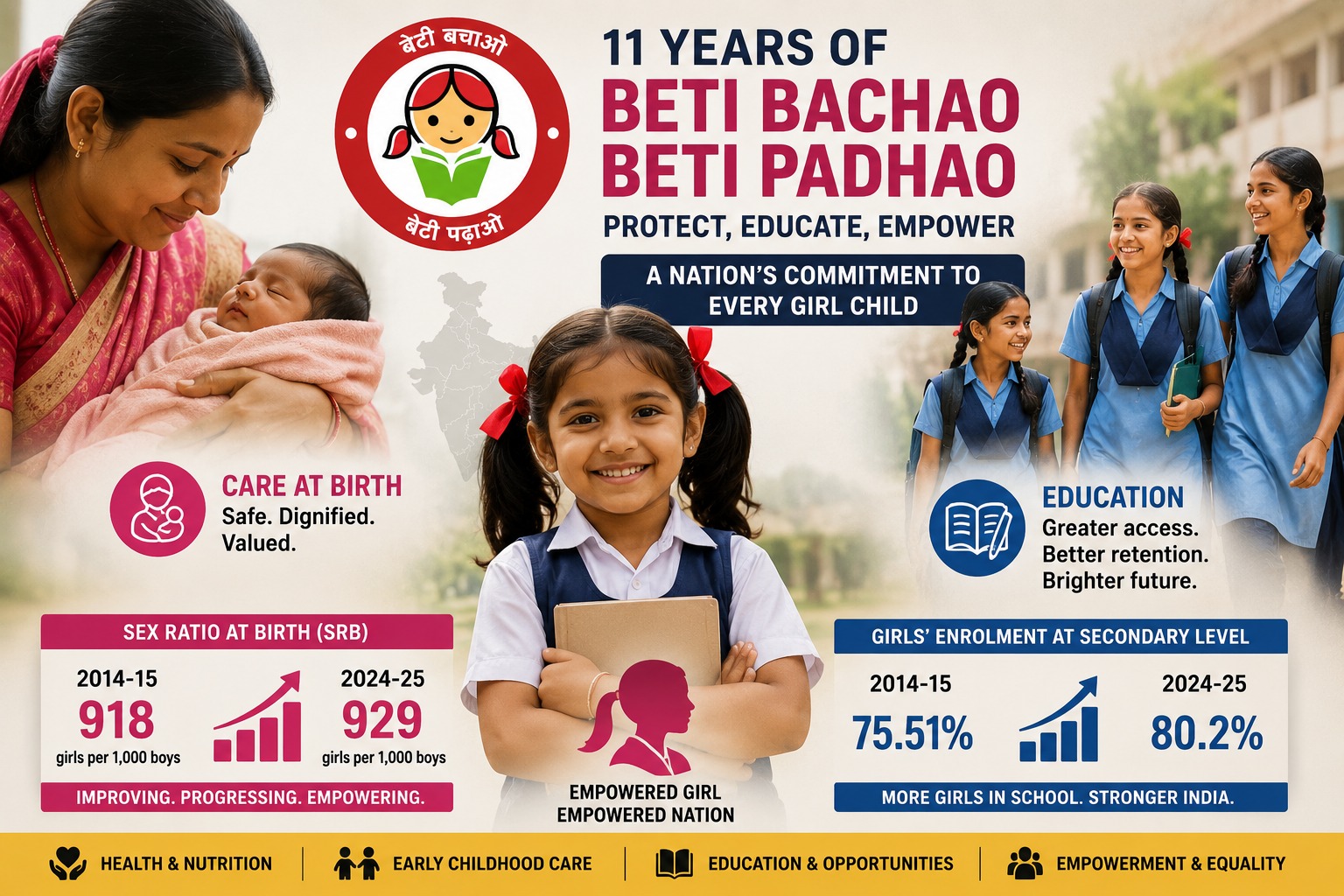
Delhi: As India continues to strengthen maternal and child welfare systems, the Beti Bachao Beti Padhao (BBBP) initiative has emerged as a key driver of change in promoting the survival, education, protection, and empowerment of girls. Completing eleven years since its launch in 2015, the flagship programme has contributed to notable improvements in the Sex Ratio at Birth and girls’ school enrolment, reflecting the impact of sustained efforts to address gender discrimination and support the holistic development of the girl child.
From policy initiative to national movement
Launched on January 22, 2015, the Beti Bachao Beti Padhao programme was introduced in response to concerns over the declining Child Sex Ratio and persistent gender-based discrimination. Implemented jointly by the Ministry of Women and Child Development, the Ministry of Health and Family Welfare, and the Ministry of Education, the initiative seeks to ensure that every girl is valued, protected, educated, and empowered.
Over the past decade, the programme has expanded beyond a policy intervention into a nationwide movement involving governments, civil society organisations, educational institutions, media, and local communities.
Improvement in Sex Ratio at Birth

One of the key achievements highlighted under the programme is the improvement in the national Sex Ratio at Birth (SRB).
According to data from the Health Management Information System (HMIS) of the Ministry of Health and Family Welfare, the SRB has increased from 918 girls per 1,000 boys in 2014–15 to 929 in 2024–25. Officials attribute this progress to continued efforts to curb gender-biased sex selection, promote institutional deliveries, and raise awareness about the value of the girl child.
Greater access to education for girls
The programme has also played a significant role in encouraging girls’ education and improving school retention rates.
Data from the Unified District Information System for Education (UDISE) indicates that girls’ enrolment at the secondary level increased from 75.51 per cent in 2014–15 to 80.2 per cent in 2024–25. The improvement reflects enhanced access to education, greater community awareness, and efforts to reduce barriers preventing girls from continuing their studies.
Focus on a lifecycle approach
BBBP follows a comprehensive lifecycle approach that begins with ensuring safe and dignified birth, followed by access to nutrition, early childhood care, education, and opportunities for empowerment.
The programme places strong emphasis on behavioural change through awareness campaigns, community participation, and coordinated action among ministries, state governments, and Union Territories.
Commitment to women-led development
The Ministry of Women and Child Development has reaffirmed its commitment to further strengthening the BBBP framework and expanding its reach across the country.
Officials stated that ensuring the protection, education, and empowerment of every girl child remains central to the vision of women-led development, with the programme continuing to serve as a catalyst for gender equality and social transformation in India.