


1 Critical Shift Sparks Concern as US Prioritizes China Over North Korea
By Samir Singh 'Bharat': Chief Editor

WAR-REPORT : The United States signaled a sharper strategic focus on countering the People’s Republic of China (PRC) during a recent high-level visit to South Korea, underscoring a potential shift in the mission and posture of US Forces Korea (USFK). US Under Secretary of Defense for Policy Elbridge Colby used his January 26 visit to emphasize deterrence against China within the framework of Washington’s Indo-Pacific strategy, while notably omitting direct references to North Korea in his public remarks.
Colby’s statements come at a time of intensifying geopolitical competition in East Asia, where the United States is seeking to strengthen alliances and enhance military coordination to deter potential Chinese aggression, particularly across the strategically vital First Island Chain (FIC). The FIC stretches from Japan through Taiwan and the Philippines and forms a key line of defense in US regional planning.

A Strategy Centered on the First Island Chain
During his visit, Colby reiterated that the United States’ Indo-Pacific strategy is centered on “deterrence by denial” along the First Island Chain. This approach seeks to convince Beijing that any attempt to use force to alter the regional status quo—particularly against Taiwan or other US allies—would be prohibitively costly and unlikely to succeed.
Colby emphasized the development of resilient and survivable forces in Japan, the Philippines, and the Korean Peninsula. According to his remarks, the overarching objective is to make aggression across the First Island Chain “an unattractive option” for the PRC.

The emphasis on resilience reflects growing US concerns about China’s expanding missile capabilities, naval power, and ability to project force in the Western Pacific. By strengthening forward-deployed forces and enhancing allied cooperation, Washington aims to complicate Chinese military planning and reduce vulnerabilities in the event of a crisis.
Colby’s comments suggest that South Korea may play a more significant role in broader regional contingencies involving China, beyond its traditional focus on deterring North Korean aggression.
Expanding the Role of US Forces Korea
US Forces Korea currently supports the Combined Forces Command (CFC), the joint US–South Korea military headquarters responsible for deterring and, if necessary, defeating external aggression against South Korea. The structure and composition of USFK have historically reflected a peninsular focus, primarily oriented toward countering threats from North Korea.

USFK’s force structure consists largely of combat brigade teams optimized for land operations, reflecting decades of planning centered on potential conflict on the Korean Peninsula. However, this structure lacks robust maritime capabilities—an essential component for contingencies within the First Island Chain, where naval and air power would play decisive roles.
Colby’s emphasis on the First Island Chain and broader regional deterrence indicates potential discussions within the US defense establishment about adapting USFK’s mission. Such an adaptation could involve integrating USFK more directly into US planning for a possible conflict involving China, including scenarios related to Taiwan or the South China Sea.
While no formal announcement of structural changes was made during the visit, Colby’s messaging suggests that Washington is encouraging allies to consider their roles within a more integrated regional defense architecture.
“Shared Responsibility” in Alliance Policy
In his remarks, Colby also highlighted what he described as the Trump administration’s alliance policy principle of “shared responsibility” rather than “one-sided dependence.” He praised South Korea as a “model ally” for its commitment to increasing defense spending and investing in its own military capabilities.
The Lee Jae Myung administration has announced a 7.5 percent increase in defense spending for fiscal year 2026, bringing the total to approximately $44.8 billion. The increase reflects South Korea’s continued efforts to modernize its military, including investments in advanced missile systems, naval assets, and indigenous defense industries.
South Korea has expanded its domestic defense production capabilities in recent years, emerging as a significant exporter of military equipment. Increased spending aligns with US calls for allies to shoulder a greater share of the financial and operational burden in maintaining regional security.
Colby’s praise for South Korea’s defense investments underscores Washington’s expectation that allies will contribute more actively to collective deterrence efforts, particularly in the face of China’s growing military power.
Notable Absence of North Korea in Remarks
One of the most striking aspects of Colby’s speech was the absence of any direct mention of North Korea. Traditionally, US defense officials visiting South Korea reaffirm extended deterrence commitments, including the US nuclear umbrella designed to deter North Korean aggression.
Colby did not explicitly reiterate US extended deterrence during his visit, a departure from the messaging often delivered by senior US defense officials in Seoul. Extended deterrence assurances are typically central to US–South Korea security discussions, particularly amid ongoing North Korean missile development.
The omission could be interpreted in various ways. It may reflect a deliberate effort to shift the narrative toward broader regional challenges, especially China. However, it could also raise concerns in Pyongyang—and potentially in Seoul—about US strategic priorities.
North Korea may interpret the absence of explicit extended deterrence language as a weakening of US resolve to defend South Korea, although no policy change has been announced.
North Korea Responds with Missile Launch
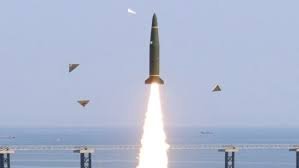
One day after Colby’s visit, North Korea reportedly launched four short-range ballistic missiles (SRBMs) on January 27. The launches were described by North Korean state media as a test of an advanced 600mm multiple-launch rocket system (MLRS).
The test appears to serve multiple purposes. Analysts suggest it may have been intended to signal Pyongyang’s disapproval of US–South Korean diplomatic engagement, reinforce the regime’s narrative of self-reliance ahead of an upcoming Workers’ Party Congress, and demonstrate enhanced missile capabilities—potentially to Russia.
North Korean state media reported that Workers’ Party of Korea General Secretary Kim Jong Un personally oversaw the launch, accompanied by his daughter, Kim Ju Ae. The presence of Kim’s daughter at military events has drawn attention in recent years, with some observers viewing it as symbolic of regime continuity.
According to North Korean media, the test evaluated an “advanced large-caliber rocket system” equipped with a new “autonomous precision guided flight system.” The system is reportedly designed to counter GPS jamming and improve targeting accuracy.
North Korea stated that four missiles were launched and flew approximately 358.5 kilometers (222.8 miles), striking Alsom Island in the East Sea, also known as the Sea of Japan.
However, South Korea’s Joint Chiefs of Staff and Japan’s Ministry of Defense reported detecting only two missiles, which traveled approximately 350 kilometers and 340 kilometers respectively. The discrepancy in reported numbers and distances is not uncommon in North Korean missile testing announcements.
Strategic Implications of the MLRS
The 600mm multiple-launch rocket system represents a significant component of North Korea’s short-range strike capabilities. Unlike traditional artillery systems, the MLRS can deliver guided munitions over extended distances with improved precision.
Military analysts note that the system is capable of striking key military assets within the Seoul metropolitan area, including Camp Humphreys—the headquarters of US Forces Korea. Camp Humphreys is the largest US overseas military base and plays a central role in US–South Korea combined operations.
By enhancing the precision and survivability of its short-range systems, North Korea aims to increase its ability to threaten high-value targets in the event of a conflict. The development of counter-GPS jamming capabilities suggests a focus on operating effectively in electronically contested environments.
The timing of the test, immediately following Colby’s visit, may indicate an effort by Pyongyang to assert its relevance amid shifting US strategic messaging. As Washington increasingly frames regional security in terms of competition with China, North Korea may seek to remind regional actors of its own evolving capabilities.
Balancing Dual Threats
The evolving dynamic highlights the complexity of US strategy in Northeast Asia. While China is increasingly viewed in Washington as the primary long-term strategic competitor, North Korea remains an immediate and persistent security threat to South Korea and Japan.
Efforts to integrate US allies into a broader regional framework aimed at deterring China must be balanced against the enduring requirement to deter and, if necessary, respond to North Korean aggression.
For South Korea, the challenge lies in navigating these dual imperatives. Seoul must maintain readiness against North Korea while also considering its potential role in contingencies involving China—a sensitive issue given South Korea’s significant economic ties with Beijing.
The Lee administration’s defense spending increase reflects recognition of the evolving threat environment. However, deeper integration into US regional planning could have diplomatic and economic implications.
A Region in Strategic Transition
Colby’s visit underscores a broader transition in US defense policy in the Indo-Pacific. The emphasis on “deterrence by denial,” resilient force posture, and shared responsibility among allies signals a long-term effort to adapt to China’s growing military capabilities.
At the same time, North Korea’s continued missile development and testing serve as a reminder that the Korean Peninsula remains a flashpoint.
The interplay between US efforts to counter China and North Korea’s pursuit of advanced missile systems will likely shape the strategic landscape in Northeast Asia in the coming years. Whether USFK’s mission formally expands to encompass broader regional contingencies remains to be seen, but Colby’s remarks suggest that discussions about such a shift are underway.
As regional powers adjust to shifting priorities and evolving capabilities, the balance of deterrence in East Asia is entering a new phase—one defined by overlapping challenges and an increasingly interconnected security environment.