

US Israel Iran War Strikes: 8 Shocking Impacts on Iran’s Military and Security Network
By Samir Singh 'Bharat': Editor In Chief

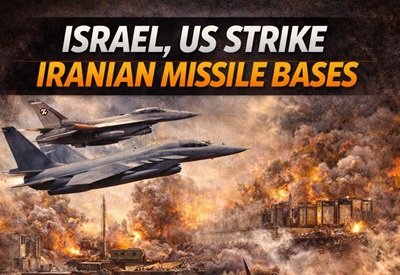
WAR-REPORT : The United States and Israel have intensified their coordinated military campaign against Iran, targeting a wide range of internal security facilities, missile bases, and military infrastructure across the country. The expanding operation reflects a strategic effort to weaken Iran’s military capabilities, disrupt its internal security apparatus, and limit its ability to launch further missile and drone attacks against regional adversaries.
Officials in both Washington and Tel Aviv have indicated that the campaign is designed not only to reduce Iran’s offensive capabilities but also to weaken the internal security institutions that maintain control over major population centers, particularly the capital, Tehran. As the conflict escalates, analysts warn that the strikes could significantly reshape the regional balance of power and trigger further instability across the Middle East.

Strikes on Internal Security Infrastructure
One of the most significant aspects of the recent operations has been the targeting of Iran’s internal security infrastructure. The Israel Defense Forces (IDF) confirmed that it conducted a series of airstrikes against facilities linked to Iran’s domestic security apparatus in Tehran and other regions.
Among the primary targets was the “internal security riot control headquarters” located in western Tehran. This facility is believed to coordinate responses to civil unrest and protests in the Iranian capital. Security analysts say the destruction or disruption of such facilities could weaken the government’s ability to rapidly mobilize forces during internal disturbances.
Israeli aircraft also targeted two Basij Resistance regional bases located within Tehran’s municipal districts. The 8th Tehran Municipality Beheshti Basij Resistance Regional Base and the 14th Tehran Municipality Mahalati Basij Resistance Regional Base were reportedly struck during air raids conducted on March 3. These bases are part of the paramilitary structure linked to the Islamic Revolutionary Guard Corps and are widely used to mobilize pro-government forces during periods of unrest.

Satellite imagery captured on March 4 confirmed that another facility—the 2nd Tehran Municipality Bahoner Basij Resistance Regional Base—had also been hit in the strikes. The three bases operate under the authority of the IRGC Ground Forces’ Sarallah Headquarters, a command structure responsible for maintaining security in Tehran and the surrounding region.
Sarallah Headquarters has historically played a central role in suppressing protests and controlling demonstrations within the capital. During previous waves of unrest, the organization coordinated deployments of security forces, Basij militias, and riot police to maintain order.
Military analysts suggest that targeting such facilities may serve a dual purpose. On one hand, it weakens Iran’s ability to maintain internal control during wartime conditions. On the other, it disrupts the command structure responsible for coordinating emergency responses across the capital region.

Additional Strikes on Law Enforcement Facilities
The air campaign has also extended beyond Tehran to include other law enforcement and internal security facilities throughout the country.
According to military reports and satellite imagery, a separate internal security headquarters in Tehran was targeted as part of the same wave of strikes. Analysts believe this facility may have been associated with the Border Guard command of Iran’s national police force.
Satellite images taken on March 4 revealed that several buildings at the Law Enforcement Command (LEC) headquarters in Ilam Province had been destroyed. The LEC serves as Iran’s national police organization and plays a key role in maintaining internal security and border control.
Damage assessments indicate that multiple administrative and operational structures at the Ilam facility were heavily impacted by the airstrikes.
In addition, an Israeli open-source intelligence (OSINT) account circulated an image showing large plumes of smoke rising from a building believed to be the East Azerbaijan LEC headquarters in Tabriz. While the image suggested possible damage to the site, independent verification has not yet been confirmed.
Nevertheless, the spread of these reports has highlighted the broad geographic scope of the campaign, which now appears to cover several provinces across Iran.
Degrading Iran’s Missile and Drone Capabilities
Alongside the attacks on internal security facilities, the United States and Israel have continued their effort to destroy Iran’s missile and drone infrastructure.
Speaking on March 3, Admiral Brad Cooper, commander of United States Central Command, stated that the combined forces had already “severely degraded” Iran’s air defense network and destroyed hundreds of ballistic missiles, drones, and launch platforms.
According to Cooper, the campaign has focused on eliminating launchers, storage facilities, and support infrastructure used to deploy Iran’s long-range weapons.
Military planners believe that removing these systems will significantly limit Iran’s ability to conduct retaliatory strikes against Israel or U.S. assets in the region.
Israeli Air Force Night Operations
The Israeli Air Force reported that it conducted a series of coordinated overnight attacks between March 3 and March 4 targeting several missile storage and defense facilities.
These strikes reportedly hit key military installations in multiple provinces, including Esfahan, Khuzestan, and East Azerbaijan.
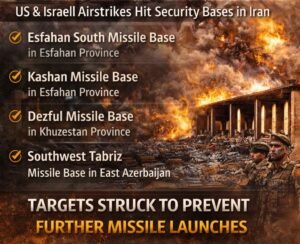
Satellite imagery confirmed damage at several locations, including:
-
Esfahan South Missile Base in Esfahan Province
-
Kashan Missile Base in Esfahan Province
-
Dezful Missile Base in Khuzestan Province
-
Southwest Tabriz Missile Base in East Azerbaijan Province
These installations are believed to house various missile units and support structures used for storing, assembling, and launching ballistic missiles.
Military experts say that the simultaneous targeting of multiple bases indicates a coordinated effort to cripple Iran’s missile network across several regions.
Strategic Importance of Kashan Missile Base
One of the most strategically significant targets was the Kashan Missile Base located in Esfahan Province.
The base lies close to the 840th Missile Group headquarters in the Aran va Bidgol region and is believed to store various medium-range ballistic missiles.
By striking this site, Israeli forces may have disrupted an important logistical hub responsible for supplying missile units throughout central Iran.
Defense analysts note that Kashan’s location makes it an important link between several missile brigades operating within the country’s central plateau.
Ghadr Missile Storage Facility Destroyed
Another critical strike targeted a missile storage facility at the Esfahan North Missile Base.
According to Israeli officials, the facility housed Ghadr ballistic missiles—an advanced variant of Iran’s long-range missile arsenal.
The Ghadr missile is believed to have a range of approximately 1,600 kilometers and is capable of carrying conventional or potentially unconventional warheads.
Iran has reportedly used these missiles in previous attacks against Israeli targets during the ongoing conflict.
By destroying the storage facility, Israeli forces aim to prevent further launches and limit Iran’s ability to conduct long-range strikes.
Strategic Goals of the Campaign
The current military campaign appears to be guided by several strategic objectives.
First, the United States and Israel aim to eliminate Iran’s missile launch capabilities before Tehran can launch large-scale retaliatory barrages.
Second, the destruction of missile storage facilities and launch sites reduces the need for costly interceptor missiles used in defensive systems.
Third, targeting internal security institutions may disrupt Iran’s ability to maintain control within major urban centers during wartime conditions.
Together, these goals reflect a strategy designed to weaken Iran’s military capabilities while simultaneously increasing pressure on the country’s internal security structure.
Regional Implications
The ongoing air campaign has raised concerns across the Middle East about the potential for further escalation.
Several neighboring countries have increased security measures around key infrastructure and diplomatic facilities amid fears of retaliatory attacks.
Oil markets and global shipping routes have also experienced heightened volatility as tensions in the region continue to rise.
Security analysts warn that if Iran responds with large-scale missile strikes or activates allied militias across the region, the conflict could expand beyond the current theater.
International Reactions
The international community has reacted with mixed responses to the escalating conflict.
Some Western governments have expressed support for efforts to prevent Iran from expanding its missile capabilities.
However, several countries have urged restraint, warning that continued escalation could lead to a broader regional war.
Diplomatic efforts to de-escalate the crisis remain ongoing, though progress has been limited as military operations continue.
Outlook for the Conflict
As the air campaign continues, the coming weeks will likely determine whether Iran retains enough missile and drone capabilities to sustain its military response.
The destruction of major missile bases and security headquarters suggests that the combined U.S.-Israeli operation has already inflicted significant damage.
However, Iran possesses a large and dispersed network of military infrastructure, making it difficult to fully eliminate its strategic capabilities.
For now, the conflict appears to be entering a critical phase, with both sides seeking to gain a decisive advantage while avoiding an uncontrolled regional escalation.
The evolving situation will remain closely watched by governments, military analysts, and global markets alike, as the consequences of this confrontation extend far beyond the borders of Iran.