

2 Days of Talks, 1 Standoff: Ukraine War Diplomacy Faces New Russian Pushback
By Samir Singh 'Bharat': Chief Editor

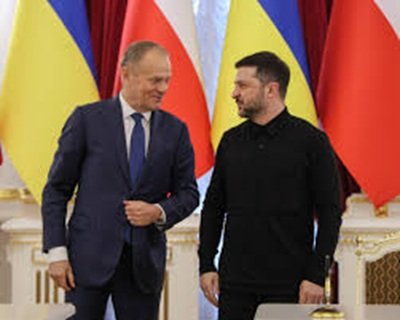
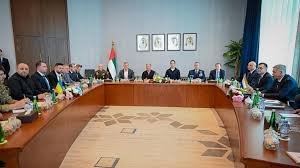
WAR-REPORT : Diplomatic efforts surrounding the war in Ukraine continued on February 5 as United States, Ukrainian, and Russian delegations reconvened in Abu Dhabi for a second day of trilateral consultations. The talks, which follow a similar round of discussions held on February 4, are being closely monitored by international observers amid mounting tensions over proposed Western security guarantees for Ukraine and Russia’s increasingly forceful opposition to them.
Ukrainian Defense Council Secretary Rustem Umerov confirmed that the February 5 meetings followed the same format as the previous day’s engagements, consisting of trilateral consultations and working groups. While specific details of the discussions remain undisclosed, Ukrainian Presidential Office Head Kyrylo Budanov described the negotiations as “constructive,” suggesting at least a willingness among the parties to maintain dialogue despite deep and persistent disagreements.

The Institute for the Study of War (ISW) stated that it will continue monitoring reports concerning the February 4–5 negotiations in Abu Dhabi. The outcome of these discussions could significantly influence the trajectory of diplomatic efforts and security arrangements related to the ongoing conflict and any potential post-war settlement framework.
Kremlin Pushes Back Against Western Security Guarantees
As diplomatic discussions continue, the Kremlin has intensified its campaign against proposed Western security guarantees for Ukraine. Russian Foreign Minister Sergei Lavrov used a February 4 interview with Russian state media outlet Russia Today (RT) to reiterate Moscow’s longstanding rejection of such guarantees, while also introducing new narratives aimed at discouraging the United States and European allies from finalizing any security arrangement with Kyiv.

Lavrov referred to a recent Financial Times report describing ongoing discussions between the United States, European countries, and Ukraine over a multi-layered security guarantees agreement. The reported framework is designed to deter future Russian aggression against a post-war Ukraine by establishing mechanisms for rapid military assistance, defensive support, and long-term cooperation.
In his remarks, Lavrov characterized the reported agreement as “practically an ultimatum” directed at Russia. He argued that the security guarantees were confrontational in nature and claimed that Ukraine might stage a false flag attack—blaming Russia in order to obtain what he described as a “carte blanche” from Western partners to resume large-scale hostilities.
Lavrov’s assertions reflect the Kremlin’s broader rhetorical strategy in recent months. Russian officials have consistently labeled Western security guarantees as “unacceptable” and have warned that the deployment of foreign troops to Ukraine—even in a non-combat or training capacity—would constitute “legitimate” military targets for Russian forces.

Escalating Rhetoric and New Narratives
While Moscow’s opposition to Western involvement in Ukraine is not new, recent statements suggest that the Kremlin is actively developing additional narratives to dissuade Western governments from formalizing security commitments.
On February 2 and 3, Russian officials began advancing claims that the presence of foreign troops in Ukraine could trigger a direct military confrontation between nuclear powers, potentially escalating into a third world war. This framing appears designed to heighten fears among Western policymakers and publics about the risks of deeper military engagement in Ukraine.
Lavrov’s February 4 allegation regarding a potential Ukrainian false flag operation may represent another attempt to cast doubt on Kyiv’s intentions and undermine support for Western security arrangements. By suggesting that Ukraine could manipulate events to provoke renewed conflict, Russian officials seek to present themselves as responding defensively rather than acting as aggressors.
RT, the platform used for Lavrov’s interview, is a Russian state-controlled media outlet with global reach in multiple languages. The Kremlin’s decision to disseminate these messages through RT indicates an effort to influence international audiences, including policymakers and citizens in the United States and Europe. Moscow appears intent on shaping perceptions abroad as negotiations over security guarantees reportedly move closer to completion.
Ceasefire Debate and Russian Concerns
Lavrov also rejected the idea of implementing a ceasefire before achieving a comprehensive peace agreement. He argued that a temporary halt in hostilities would allow Western countries to continue supplying Ukraine with advanced weapons and training, thereby strengthening Kyiv’s position for a renewed conflict.
Russian officials have frequently voiced this concern, asserting that ceasefires without political concessions would merely “freeze” the conflict and enable Ukraine to rebuild its military capacity. This position reflects Moscow’s longstanding demand for legally binding guarantees that limit Ukraine’s military partnerships and strategic orientation.
The Kremlin’s stance suggests that Russia views Western security guarantees not merely as defensive measures but as instruments that would permanently shift the balance of power in Eastern Europe against Russian interests. From Moscow’s perspective, any agreement that integrates Ukraine more deeply into Western security structures—even short of NATO membership—would undermine Russia’s strategic objectives.
The Question of Ukrainian “Neutrality”
In addition to rejecting Western security guarantees, Lavrov used his February 4 interview to elaborate on Russia’s demand that Ukraine adopt a position of “neutrality.” While the term has been central to Moscow’s rhetoric since the early stages of the conflict, Lavrov’s remarks provided further insight into what the Kremlin appears to mean by neutrality.
Lavrov stated that the only Ukraine Russia is “prepared to see as a long-term, eternal neighbor” would be one that is “friendly,” “neutral,” and “benevolent.” He emphasized that such a Ukraine would not necessarily have to be a formal ally of Russia but would need to maintain a non-hostile posture toward Moscow.
These comments suggest that Russia’s concept of neutrality extends beyond a simple prohibition on NATO membership. Instead, it appears to encompass broader political alignment and policy orientation. A “friendly” and “benevolent” Ukraine, as described by Lavrov, would likely entail a government in Kyiv that pursues policies compatible with Russian strategic interests and refrains from deep integration with Western institutions.
Implications of a “Friendly” Ukraine
Lavrov’s remarks imply that Russia’s objectives may include transforming Ukraine into a de facto proxy state, even if Moscow does not exercise direct territorial control over the entire country. By insisting on political alignment as part of neutrality, the Kremlin signals that it seeks influence over Ukraine’s domestic and foreign policy decisions.
Analysts have drawn parallels between this vision and Russia’s relationship with Belarus. Although Belarus maintains its own borders, government structures, and international representation, it has become heavily dependent on Russia economically, politically, and militarily. Observers assess that Moscow has effectively achieved a level of de facto annexation in terms of strategic control, despite the absence of formal incorporation.
A similar model applied to Ukraine would fundamentally alter the country’s sovereignty and limit its ability to determine its own security partnerships. Such an outcome would likely face strong resistance from Ukrainian society and leadership, both of which have consistently emphasized independence and integration with Western institutions.
Diplomatic Crossroads
The trilateral talks in Abu Dhabi take place against this backdrop of competing visions for Ukraine’s future. While Ukrainian officials have described the discussions as constructive, the fundamental disagreements remain profound.
For the United States and European partners, security guarantees are viewed as essential to preventing renewed aggression and ensuring long-term stability in Eastern Europe. For Russia, however, these guarantees represent an unacceptable encroachment on what it considers its sphere of influence.
The coming weeks may prove decisive. If the United States, Ukraine, and European governments finalize a comprehensive security guarantees agreement, Moscow is likely to intensify its rhetorical and diplomatic opposition. Conversely, if negotiations stall or falter, questions will arise about the durability of Western commitments and the prospects for sustainable peace.
Information Warfare and Global Messaging
The Kremlin’s communication strategy underscores the broader information dimension of the conflict. By framing Western security guarantees as provocative ultimatums and invoking the specter of nuclear confrontation, Russian officials aim to shape international debate and potentially exploit divisions within Western societies.
RT’s global reach allows Moscow to broadcast its narratives beyond domestic audiences, seeking to influence public opinion and political discourse in multiple countries. The emphasis on risks of world war and alleged Ukrainian provocations appears tailored to resonate with audiences concerned about escalation and prolonged conflict.
At the same time, Western governments and Ukrainian officials continue to present security guarantees as defensive and stabilizing measures designed to deter aggression rather than provoke it. The competing narratives reflect a broader struggle over legitimacy, responsibility, and the interpretation of events.
Uncertain Path Forward
As of February 5, no concrete outcomes from the Abu Dhabi talks have been publicly disclosed. Diplomatic engagements of this nature often proceed incrementally, with working groups addressing technical details while senior officials negotiate broader political principles.
The characterization of the talks as constructive suggests that dialogue remains possible. However, bridging the gap between Russia’s demands for neutrality and Western plans for security guarantees will require significant compromise—if compromise is possible at all.
The future of Ukraine’s security architecture remains at the center of the debate. Whether through formal alliances, bilateral agreements, or multilateral guarantees, the arrangements ultimately adopted will shape not only Ukraine’s trajectory but also the broader European security order.
For now, international observers await further information from Abu Dhabi. ISW and other monitoring organizations are expected to analyze developments closely, as even incremental shifts in rhetoric or policy could signal larger strategic changes.
The stakes remain high. The decisions made in the coming months will determine whether diplomacy can produce a framework for lasting peace—or whether competing visions for Ukraine’s future will prolong instability in the region.