

Trump Delays Xi Summit Amid Iran Crisis as US–China Trade Tensions 2026
By Samir Singh 'Bharat': Editor In Chief

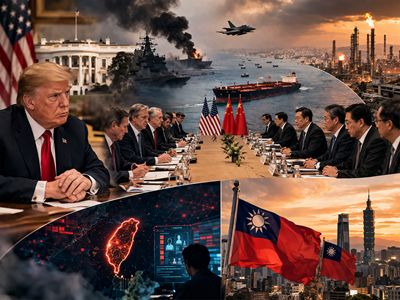
WAR-REPORT : In a significant development reflecting the increasingly complex global geopolitical landscape, US President Donald Trump announced on March 17 that he would postpone his anticipated summit with Chinese leader Xi Jinping, prioritizing the escalating conflict in Iran over high-stakes trade negotiations with China. The decision underscores the mounting pressure on Washington as it attempts to balance simultaneous crises—ranging from instability in the Middle East to intensifying economic rivalry with Beijing.
The delay, expected to last “five or six weeks,” signals not only a shift in diplomatic scheduling but also highlights the strategic recalibration underway within the United States’ foreign policy apparatus. While the postponement may appear procedural on the surface, it carries profound implications for global trade, regional stability, and the fragile relationship between the world’s two largest economies.

Iran Conflict Forces Strategic Reprioritization
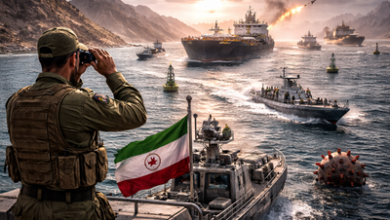
The Trump administration’s decision to delay the summit comes against the backdrop of escalating tensions in Iran, which have increasingly drawn US attention and resources. The Middle East crisis, particularly concerns surrounding energy infrastructure and maritime security in the Strait of Hormuz, has emerged as a top priority for Washington.
The Strait of Hormuz—a critical chokepoint through which a significant portion of the world’s oil supply flows—has once again become a focal point of global concern. Any disruption in this region not only threatens energy markets but also has cascading effects on global trade and economic stability. For both the United States and China, whose economies are deeply intertwined with global energy flows, the stakes are exceptionally high.
By delaying the summit with Xi, Trump has effectively acknowledged that the Iran crisis demands immediate and sustained diplomatic and strategic focus. The move also reflects broader concerns within the US administration about maintaining stability in the Middle East while avoiding further escalation that could draw in additional regional or global powers.

Trade Negotiations Continue Amid Uncertainty
Despite the postponement of the Trump-Xi summit, lower-level diplomatic engagements between the United States and China have continued. On March 15 and 16, US Treasury Secretary Scott Bessent met with Chinese Vice Premier He Lifeng to discuss a range of economic issues, including bilateral trade and investment frameworks.
The talks, described by both sides as “productive,” centered on the possibility of establishing a “Board of Trade”—a proposed mechanism aimed at managing and stabilizing economic relations between the two nations. Such a body could serve as a platform for addressing trade imbalances, resolving disputes, and fostering cooperation in key sectors.
However, despite the positive tone, the meetings yielded no concrete agreements or new commitments. This lack of tangible progress underscores the persistent challenges that have defined US-China economic relations in recent years. Deep-seated disagreements over market access, intellectual property rights, and industrial policy continue to hinder meaningful breakthroughs.

The delay of the summit further complicates the situation, extending a period of uncertainty that has already weighed heavily on global markets. Businesses and investors, both in the United States and internationally, are left navigating an unpredictable environment where policy shifts and geopolitical tensions can rapidly alter economic prospects.
Section 301 Investigations Add Fuel to the Fire
Adding another layer of complexity to the already strained relationship are recent trade actions initiated by the United States. On March 11, US Trade Representative Jamieson Greer announced new Section 301 investigations into what Washington describes as unfair trade practices by several countries, including China.
Section 301 of the US Trade Act allows the government to investigate and respond to foreign practices that are deemed harmful to American commerce. These investigations could pave the way for the imposition of new tariffs, further escalating trade tensions.
China’s response was swift and unequivocal. The Ministry of Commerce rejected the investigations on March 13, criticizing them as unilateral and unjustified. During his meetings with Bessent, He Lifeng reiterated Beijing’s concerns over these measures, as well as broader US trade restrictions.
The introduction of potential new tariffs threatens to derail any progress made in recent negotiations. It also reinforces the perception that both sides remain entrenched in their positions, with little willingness to compromise on core issues.
Strategic Implications of the Summit Delay
The postponement of the Trump-Xi summit is likely to have far-reaching consequences beyond the immediate trade dispute. For one, it prolongs a period of strategic ambiguity in US-China relations, leaving key questions unresolved.
China, for its part, may view the delay as an opportunity. Analysts suggest that Beijing could leverage the United States’ preoccupation with the Iran conflict to strengthen its negotiating position. By highlighting the economic and political costs of prolonged instability in the Middle East, China may seek to extract more favorable terms in future trade discussions.
At the same time, the delay could exacerbate domestic pressures within the United States. Economic uncertainty, coupled with concerns about energy prices and global supply chains, may fuel political discontent. Such dynamics could, in turn, influence the administration’s approach to both the Iran crisis and trade negotiations with China.
Taiwan Report Raises Alarm Over Cognitive Warfare
Compounding these challenges are new revelations concerning Chinese activities in Taiwan. A report published on March 4 by the Taiwanese think tank Doublethink Lab has shed light on what it describes as a व्यापक and systematic effort by a Chinese state-affiliated firm to influence Taiwanese public opinion and elections.
According to the report, the firm GoLaxy compiled an extensive database containing information on tens of thousands of prominent Taiwanese individuals and organizations. The database reportedly includes detailed profiles of 170 politicians, as well as records of academics, business leaders, religious figures, and civic organizations.
Among those listed are key political figures such as President William Lai Ching-te, former president Tsai Ing-wen, Foreign Minister Lin Chia-lung, and Taiwan People’s Party founder Ko Wen-je. The scope of the database is striking, encompassing approximately 23 million household registration records—effectively covering Taiwan’s entire population.
The data was reportedly categorized based on various criteria, including ideological leanings and attitudes toward China. Such capabilities would enable targeted messaging and influence operations, particularly during election periods.
Evidence of Coordinated Influence Campaigns
The leaked documents underlying the Doublethink Lab report, obtained by Vanderbilt University in August 2025, provide further insight into the nature of these activities. They indicate that GoLaxy produced weekly reports analyzing Taiwanese public opinion in the lead-up to the January 2024 presidential and legislative elections.
These findings suggest a high degree of coordination and sophistication in China’s approach to influence operations. By leveraging large-scale data collection and analysis, Beijing appears to be refining its ability to shape narratives and sway public sentiment in Taiwan.
The implications of these revelations are profound. They not only raise concerns about the integrity of Taiwan’s democratize processes but also highlight the broader challenge of countering information warfare in the digital age.
Growing Concerns Over Regional Stability
The intersection of these developments—the Iran conflict, US-China trade tensions, and Chinese activities in Taiwan—paints a picture of an increasingly volatile global environment. Each issue, while distinct, is interconnected in ways that amplify their overall impact.
For instance, instability in the Middle East can influence global energy markets, which in turn affects economic conditions in both the United States and China. These economic pressures can shape domestic politics and foreign policy decisions, including approaches to trade and regional security.
Similarly, tensions over Taiwan have the potential to escalate into a broader confrontation, particularly if they intersect with existing US-China rivalries. The revelations about cognitive warfare add a new dimension to this dynamic, underscoring the importance of non-traditional forms of conflict.
The Road Ahead
As the world awaits a new date for the Trump-Xi summit, the path forward remains uncertain. The delay has created a window in which both sides may reassess their strategies, but it has also prolonged a period of instability that carries significant risks.
For the United States, the challenge lies in managing multiple crises without overextending its resources or undermining its strategic objectives. For China, the focus will likely be on leveraging the current situation to strengthen its դիր in negotiations while continuing to pursue its broader geopolitical goals.
Ultimately, the outcome of these developments will depend on a complex interplay of factors, including diplomatic engagement, economic conditions, and domestic political dynamics. What is clear, however, is that the decisions made in the coming weeks will have lasting implications for the global order.
Our Media Opinion
The postponement of the Trump-Xi summit is more than a scheduling adjustment—it is a reflection of the shifting priorities and mounting challenges facing global leaders. As the United States grapples with the Iran crisis and ongoing trade tensions with China, new concerns over influence operations in Taiwan further complicate an already intricate geopolitical landscape.
In this atmosphere of uncertainty, the need for careful diplomacy and strategic foresight has never been greater. Whether through renewed negotiations, confidence-building measures, or efforts to address underlying grievances, the choices made by Washington and Beijing will shape not only their bilateral relationship but also the future of international stability.
As events continue to unfold, the world watches closely, aware that the balance between cooperation and conflict remains as delicate as ever.