

Syrian Government, SDF Consider Extending US-Mediated Ceasefire Amid Ongoing Negotiations
By Samir Singh 'Bharat': Chief Editor

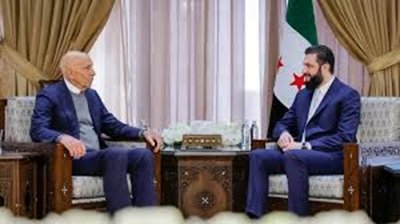
WAR-REPORT : The Syrian government and the Syrian Democratic Forces (SDF) may agree to extend the US-mediated ceasefire that took effect on January 20, according to Kurdish political sources and regional mediators. The temporary truce was initially designed to give SDF Commander Mazloum Abdi four days to secure consensus among SDF leadership on Syrian President Ahmed al Shara’s proposed terms, which call for the integration of the SDF and its remaining territory into the Syrian state.
As of January 23, Abdi had approximately 24 hours remaining under the ceasefire to develop and present a detailed plan for the SDF’s integration. Kurdish political sources affiliated with both the SDF and the Iraqi Kurdistan Regional Government (KRG) told Qatari-owned, UK-based media that Abdi and US Ambassador to Turkey and Special Envoy to Syria Tom Barrack reached an “understanding” to extend the truce. The two officials met in Erbil on January 22, where they reportedly exchanged “mutual assurances” that hostilities would not resume.

The meeting was facilitated by KRG President Nechirvan Barzani. A spokesperson for Barzani said on January 22 that he has urged US mediators and Syrian officials to extend the ceasefire, warning that a pause of only “two to four days” is insufficient to resolve complex political and security issues. The spokesperson added that Abdi and Ilham Ahmed, the co-chair of foreign affairs for the Autonomous Administration of North and East Syria, support extending the ceasefire.
Turkey has also signaled potential openness to prolonging the truce. Turkish Foreign Minister Hakan Fidan told Turkish media on January 23 that an extension “may be considered,” citing the ongoing US-led transfer of Islamic State in Iraq and al Sham (ISIS) detainees from Syria to Iraq. His remarks suggest that Ankara could support an extended ceasefire under current conditions.
Despite these signals, significant uncertainty remains. Abdi may struggle to secure unanimous support from SDF leadership for Shara’s terms, even with additional time. Analysts assessed on January 21 that the most likely outcome involves Abdi and more moderate SDF leaders accepting the integration proposal, while hardline factions refuse and potentially continue armed resistance. It is also unclear whether Damascus supports extending the ceasefire. A Syrian government official told Reuters on January 23 that no discussions have taken place regarding a ceasefire extension and that the government has not yet received a response from Abdi on the proposed integration plan.


The ceasefire has enabled US forces to continue transferring ISIS detainees from Syria to Iraq and has facilitated Syrian government deployments to secure detention facilities and camps for internally displaced persons (IDPs) that house ISIS supporters. According to Syrian media, detainee transfers have continued since January 20. US Central Command has stated that up to 7,000 ISIS detainees could be relocated to Iraqi-controlled facilities. These transfers reduce the risk of mass escapes or disruptions that could undermine counter-ISIS efforts, though completing the process will likely require more time than the remaining duration of the current ceasefire.
An extended truce would also allow Syrian government forces to strengthen security at IDP camps in northeastern Syria. On January 21, Syrian Interior Ministry forces deployed to al Hol camp, which hosts approximately 14,500 Syrians, 3,700 Iraqis, and 6,000 third-country nationals, many of whom are ISIS supporters. Portions of al Hol are reportedly under de facto ISIS control. The lack of coordination between the SDF and Syrian government during the handover led to security breakdowns, with the camp’s director stating that “many” detainees escaped amid the Syrian army’s advance.

The SDF continues to control al Roj camp, which holds about 2,500 detainees. A senior Syrian official said on January 21 that Damascus is in discussions with the United States regarding a coordinated handover of the facility. As of January 23, Syrian government forces had advanced to within 24 kilometers of al Roj camp. US efforts to prevent the Syrian government’s offensive from undermining counter-ISIS objectives will depend heavily on sustained stability on the ground, reinforcing the importance of a ceasefire extension.