

A Hormuz Initiative to Protect Global Food Security
By Samir Singh 'Bharat': Editor In Chief

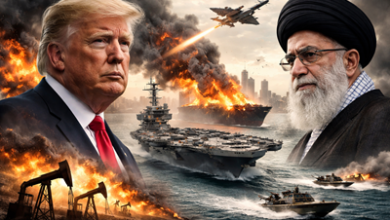
WAR-REPORT : The Strait of Hormuz, a narrow yet vital maritime passage linking the Persian Gulf to international waters, has once again become a focal point of global concern. In the wake of escalating tensions following a U.S.-Israeli military campaign that began on 28 February, Iran has conducted a series of maritime attacks along its southern coastline. These actions have significantly disrupted traffic through the strait, sending shockwaves across global supply chains.
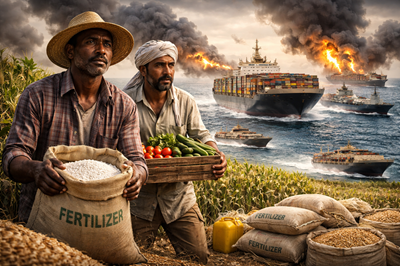
While much of the attention has centered on energy markets, the implications extend far beyond oil and gas. A lesser-discussed but equally critical consequence is the disruption of the global fertiliser trade. Approximately one-third of the world’s fertiliser shipments pass through the Strait of Hormuz, making it an essential artery for agricultural production worldwide.

As disruptions intensify, the effects are being felt not only by major economies but also by vulnerable populations—particularly smallholder farmers in low-income countries. In response, policy experts, including the International Crisis Group, have called for a coordinated international initiative modeled on the 2022 Black Sea Grain Deal. The goal: to ensure the continued flow of food, fertiliser, and agricultural inputs through one of the world’s most strategically sensitive waterways.
Table of Contents
ToggleThe Strait of Hormuz: Lifeline of Trade and Agriculture
The Strait of Hormuz is among the most critical maritime corridors in the world. Roughly a fifth of global oil consumption passes through this narrow channel, but its importance extends into agriculture as well. Fertilisers—particularly nitrogen, phosphorus, and potassium-based products—are heavily transported via this route from major producers in the Gulf region.
When maritime traffic is disrupted, the ripple effects are immediate and far-reaching. Shipping delays, increased insurance costs, and rerouted vessels all contribute to higher prices and reduced availability of key agricultural inputs.

This disruption has created a dual crisis: energy insecurity and food insecurity. While rising fuel prices dominate headlines, the fertiliser shortage threatens to undermine agricultural production on a global scale.
Fertiliser: The Invisible Backbone of Food Production
Fertilisers play a crucial role in modern agriculture, significantly boosting crop yields and ensuring food supply for a growing global population. For many farmers—especially in developing countries—fertiliser accounts for a substantial portion of production costs.
When prices rise or supplies diminish, farmers are forced to make difficult decisions. Many reduce fertiliser use or leave land uncultivated altogether. The consequences are predictable:

- Lower crop yields
- Reduced food availability
- Increased market prices
These outcomes disproportionately affect regions already facing food insecurity. Countries struggling with conflict, economic instability, or climate challenges are particularly vulnerable.
The Human Impact: Small Farmers on the Frontline
The burden of fertiliser disruptions falls most heavily on smallholder farmers. In many low-income nations, these farmers operate on thin margins, with limited access to credit or subsidies.
In regions such as Sudan, where ongoing conflict has already devastated agricultural systems, the situation is especially dire. Reduced access to fertiliser could lead to further declines in food production, exacerbating hunger and malnutrition.
For these communities, the crisis is not abstract—it is immediate and deeply personal. Fewer crops mean less income, reduced food availability, and increased vulnerability to economic shocks.
Global Food Security at Risk
The interconnected nature of modern supply chains means that disruptions in one region can have global consequences. As fertiliser supplies tighten, agricultural output declines not only in affected regions but across multiple continents.
This creates a cascading effect:
- Reduced Harvests → Lower global food supply
- Rising Prices → Increased cost of basic commodities
- Market Volatility → Uncertainty for producers and consumers
These dynamics contribute to a broader food security crisis, affecting both developing and developed nations. Even countries with strong agricultural sectors are not immune, as higher input costs translate into increased consumer prices.

Lessons from the Black Sea Grain Deal
In 2022, the international community faced a similar challenge when conflict disrupted grain exports from Ukraine. The response was the Black Sea Grain Initiative, a diplomatic agreement that allowed for the safe passage of grain shipments through contested waters.
This initiative demonstrated that even in the midst of conflict, cooperative frameworks can be established to address humanitarian and economic concerns. By prioritizing food security, the agreement helped stabilize global markets and prevent a deeper crisis.
The proposed Hormuz initiative draws inspiration from this model, seeking to replicate its success in a different but equally critical context.
A Hormuz Initiative: Concept and Objectives
The proposed initiative would aim to ensure the uninterrupted flow of food-related commodities through the Strait of Hormuz. Its key objectives would include:
1. Safe Maritime Corridors
Establishing designated routes for vessels carrying fertiliser, food, and agricultural inputs, protected by international guarantees.
2. Neutral Oversight Mechanism
Creating a monitoring framework involving neutral parties to oversee compliance and ensure transparency.
3. Confidence-Building Measures
Encouraging communication and coordination among involved actors to reduce the risk of miscalculation.
4. Humanitarian Prioritization
Framing the initiative as a humanitarian effort, separate from broader geopolitical disputes.
Challenges to Implementation
While the concept is compelling, implementing such an initiative presents significant challenges.
Geopolitical Tensions
Deep mistrust among regional and global powers complicates efforts to reach agreement. Conflicting interests and strategic priorities may hinder cooperation.
Security Concerns
Ensuring the safety of maritime corridors in an active conflict zone is inherently difficult. Any breach could undermine confidence in the initiative.
Enforcement Mechanisms
Establishing credible enforcement measures without escalating tensions requires careful balancing.
Political Will
Sustained commitment from all parties is essential for success. Without it, the initiative risks becoming ineffective.
The Role of International Actors
A successful Hormuz initiative would require the involvement of multiple stakeholders, including governments, international organizations, and private sector entities.
Organizations like the United Nations could play a central role in facilitating negotiations and providing legitimacy. Regional actors would also need to be actively engaged, given their direct stake in the outcome.
Shipping companies, insurers, and agricultural stakeholders would contribute practical expertise, ensuring that the initiative addresses real-world challenges.
Economic Stabilization Through Cooperation
Beyond its humanitarian impact, a Hormuz initiative could help stabilize global markets. By ensuring the continued flow of fertiliser and food-related goods, it would reduce uncertainty and mitigate price volatility.
This, in turn, would benefit both producers and consumers, supporting economic stability in a time of heightened uncertainty.
Avoiding a Broader Crisis
The stakes are high. Without intervention, the current disruptions could trigger a chain reaction of food shortages, price spikes, and social unrest.
History has shown that food insecurity can have far-reaching consequences, including political instability and migration pressures. Preventing such outcomes requires proactive measures and international cooperation.
A Window of Opportunity
Despite the challenges, there is a window of opportunity to act. The shared interest in preventing a global food crisis provides a basis for cooperation, even among adversaries.
By focusing on humanitarian objectives, the proposed initiative offers a pathway to de-escalation and practical problem-solving.
Our Media Opinion : Securing the Future of Food
The situation in the Strait of Hormuz underscores the fragility of global systems in an era of geopolitical tension. What begins as a regional conflict can quickly evolve into a global crisis, affecting millions of lives.
A Hormuz initiative to protect food security represents both a pragmatic and a moral imperative. It acknowledges the interconnected nature of today’s world and the need for collective action in the face of shared challenges.
The path forward will not be easy. It will require diplomacy, compromise, and sustained effort. But the alternative—a deepening global food crisis—is far more costly.
In a time of uncertainty, ensuring the flow of food and agricultural inputs is not just an economic necessity—it is a commitment to stability, resilience, and human well-being.