

Shia Sunni Conflict 2026: 7 Explosive Flashpoints Fueling Middle East Instability
By Samir Singh 'Bharat': Editor In Chief

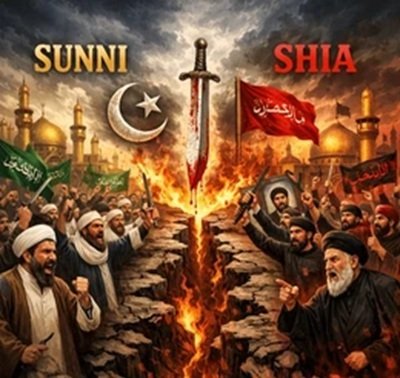
WAR-REPORT : The Middle East is once again witnessing a dangerous intensification of sectarian tensions often described as the Shia Sunni conflict. While the divide between the two major branches of Islam dates back more than 1,300 years, its modern political and military manifestations have reshaped regional geopolitics, fueled proxy wars, and deepened humanitarian crises from Iraq to Yemen. Today, the fault lines are visible not only in battlefields but also in diplomatic corridors, social media discourse, and regional alliances.
At its theological core, the Shia Sunni split emerged after the death of the Prophet Muhammad in 632 CE over the question of rightful leadership. Sunnis supported the election of Abu Bakr as the first caliph, while Shias believed leadership should have passed to Ali ibn Abi Talib, the Prophet’s cousin and son-in-law. Over centuries, these differences evolved into distinct religious traditions with their own jurisprudence, rituals, and political histories.

In the contemporary Middle East, however, sectarian identity has become deeply intertwined with state power and geopolitical rivalry. The modern Shia–Sunni confrontation is less about theology and more about influence, governance, and regional dominance.
Iran and Saudi Arabia: Rival Centers of Power
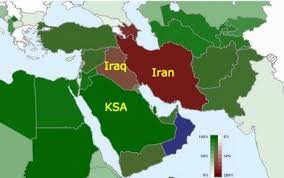
At the heart of the current sectarian tension lies the rivalry between Iran, a predominantly Shia nation, and Saudi Arabia, the leading Sunni power. Since the 1979 Islamic Revolution in Iran, Tehran has positioned itself as the defender of Shia communities across the region. Riyadh, in contrast, sees itself as the guardian of Sunni Islam and the custodian of Islam’s holiest sites.
This rivalry has played out through proxy conflicts rather than direct warfare. Both nations have supported allied groups and governments across the Middle East, turning local disputes into regional power struggles.

Iraq: A Battleground of Influence
The 2003 U.S.-led invasion of Iraq fundamentally altered the regional balance. The overthrow of Saddam Hussein, a Sunni ruler, paved the way for Shia political dominance in Baghdad. Since then, Iraq has struggled to stabilize its political system amid sectarian violence and militia activity.
Iran-backed Shia militias have gained significant influence within Iraq’s security apparatus, while Sunni communities have often felt marginalized. The rise of extremist groups such as ISIS exploited these divisions, leading to years of brutal conflict that devastated cities like Mosul and Fallujah.
Although ISIS has been largely defeated territorially, sectarian mistrust continues to hinder national reconciliation efforts.
Syria: Civil War with Sectarian Dimensions
The Syrian civil war, which began in 2011, quickly took on sectarian overtones. President Bashar al-Assad, a member of the Alawite sect with Shia roots, received military and financial backing from Iran and Lebanon’s Hezbollah. Sunni-majority opposition groups were supported by various regional powers, including Saudi Arabia and Turkey.
The war transformed Syria into a theater for regional and international intervention. Iranian Revolutionary Guard units and allied militias played a key role in propping up Assad’s government. Meanwhile, Sunni extremist factions emerged within the opposition, complicating the narrative and further polarizing communities.
The conflict has killed hundreds of thousands and displaced millions, leaving deep sectarian scars.
Yemen: A Humanitarian Catastrophe
In Yemen, the conflict between the Houthi movement—aligned with Shia Islam—and the Sunni-backed government escalated into a full-scale war in 2015. A Saudi-led coalition intervened militarily to counter what it viewed as expanding Iranian influence.
The war in Yemen has become one of the world’s worst humanitarian crises, with widespread famine, disease, and infrastructure collapse. Both sides deny that the war is purely sectarian, but the regional framing often emphasizes the Shia–Sunni divide.
Despite intermittent ceasefires and peace talks, a lasting political solution remains elusive.
Lebanon: Fragile Balance
Lebanon’s political system is explicitly sectarian, allocating power among religious communities. Hezbollah, a powerful Shia political and military organization backed by Iran, holds significant influence in the country. Sunni political factions, some historically aligned with Saudi Arabia, represent another major bloc.
Economic collapse and political paralysis have worsened Lebanon’s instability. Although large-scale sectarian violence has been avoided in recent years, tensions simmer beneath the surface, especially during regional escalations involving Israel or Syria.
The Role of Extremism
Extremist groups have exploited sectarian narratives to recruit fighters and justify violence. Sunni extremist organizations such as ISIS have targeted Shia civilians, mosques, and shrines. In response, some Shia militias have engaged in retaliatory violence against Sunni populations.
This cycle of vengeance has entrenched divisions and made reconciliation more difficult. Religious leaders from both sects have repeatedly called for unity, but their voices often struggle to compete with militant propaganda.
Political Instrumentalization of Sectarianism
Experts argue that sectarianism is frequently instrumentalized by political elites seeking to consolidate power. Leaders may emphasize religious identity to mobilize support, distract from economic problems, or delegitimize opponents.
In many Middle Eastern societies, Sunni and Shia communities have coexisted peacefully for generations. Intermarriage, shared neighborhoods, and common cultural practices complicate simplistic narratives of perpetual hostility.
However, when state institutions weaken, sectarian identities can become rallying points for security and belonging.
International Involvement
Global powers have also played roles in shaping sectarian dynamics. The United States, Russia, and European nations have intervened militarily or diplomatically in conflicts that carry sectarian undertones. Arms sales, sanctions, and alliances often intersect with regional rivalries.Shia–Sunni
Russia’s intervention in Syria, for example, strengthened the Assad government and indirectly bolstered Iranian influence. Meanwhile, U.S. partnerships with Gulf states have been viewed by Tehran as attempts to encircle and contain it.Shia–Sunni
The result is a complex web of alliances and enmities that extends beyond purely religious lines.
Social Media and Modern Narratives
In the digital age, sectarian rhetoric spreads rapidly online. Videos of attacks, inflammatory sermons, and political speeches circulate widely, sometimes fueling anger across borders. Social media platforms have amplified both extremist messaging and calls for peace.
Youth movements in several countries have attempted to transcend sectarian divisions, focusing instead on economic reform, anti-corruption measures, and national unity. Protests in Iraq and Lebanon in recent years demonstrated that many citizens are weary of sectarian politics.
Economic Pressures and Future Risks
Economic downturns, unemployment, and inflation exacerbate social tensions. In countries where governance is weak, sectarian mobilization can provide a sense of identity amid uncertainty.
Climate change and water scarcity add further stress to already fragile states. As resources become scarcer, competition may intensify along communal lines.
Yet there are also signs of cautious diplomacy. Saudi Arabia and Iran recently restored diplomatic relations after years of hostility, raising hopes that de-escalation at the state level could reduce proxy conflicts.Shia Sunni
Prospects for De-escalation
Sustainable peace requires inclusive governance that protects minority rights and ensures equitable resource distribution. Regional dialogue mechanisms could help manage disputes before they escalate.
Religious scholars from both Sunni and Shia traditions have issued joint statements emphasizing shared beliefs and condemning violence. Grassroots initiatives promoting interfaith understanding offer another pathway toward reconciliation.
However, progress is likely to be gradual. Deep mistrust, external interference, and unresolved grievances continue to shape political realities.
A Conflict Beyond Theology
While the Shia Sunni divide has historical roots in early Islamic history, today’s conflicts are driven largely by power politics, security dilemmas, and competition for regional influence. Religion often provides the language of mobilization, but strategic interests determine the course of action.Shia–Sunni
The Middle East stands at a crossroads. Continued escalation could entrench divisions for another generation, while diplomatic engagement and reform could gradually ease tensions.Shia–Sunni
The human cost of sectarian war has been immense—measured in lost lives, displaced families, and shattered cities. For millions across the region, peace is not an abstract ideal but an urgent necessity.
As governments navigate complex alliances and rivalries, the challenge will be to prioritize stability and inclusive development over zero-sum competition. Only then can the Shia–Sunni fault line cease to define the region’s future.
Growing Regional Realignments and Shifting Alliances
One of the most significant developments in recent years has been the quiet but strategic recalibration of alliances across the Middle East. While sectarian narratives continue to dominate headlines, several governments are increasingly prioritizing economic modernization and regional stability over ideological confrontation.
The restoration of diplomatic ties between Iran and Saudi Arabia marked a critical turning point. Though skepticism remains about the durability of this détente, it reflects a broader recognition that prolonged proxy warfare has drained economic resources and damaged regional credibility. Gulf states, in particular, are focusing heavily on economic diversification, infrastructure development, and foreign investment. Sustained sectarian escalation threatens these ambitions.
At the same time, non-state actors remain powerful. Militias aligned along sectarian lines have entrenched themselves within political systems in countries like Iraq and Lebanon. These groups often possess independent funding streams, armed wings, and foreign backing. Even if state leaders pursue de-escalation, controlling these actors remains a complex challenge.
The Role of Youth and Demographic Pressure
A critical but often overlooked factor is demographics. The Middle East has one of the youngest populations in the world. Millions of young people face unemployment, rising living costs, and limited political participation. While sectarian rhetoric can mobilize identity-based loyalty, economic frustration increasingly overrides religious polarization.
Recent protest movements in Iraq and Lebanon showed that many citizens are rejecting sectarian patronage systems. Demonstrators called for national identity, accountability, and economic reform rather than sect-based governance. This signals a potential long-term shift: sectarian divisions may persist politically, but grassroots sentiment is evolving.
A Fragile but Possible Path Forward
The future of the Shia Sunni divide will depend less on theology and more on governance. Inclusive political systems, fair economic distribution, and reduced foreign interference could gradually dilute sectarian mobilization.
However, if regional rivalries intensify again, the fault line could rapidly reopen. The conflict’s trajectory remains uncertain — shaped by leadership decisions, economic pressures, and the broader geopolitical environment.
The divide endures, but it is not inevitable that it must define the Middle East’s future.