

Scheme Workers Strike: Shocking Crisis Over Pay and Recognition 2026
By Doruvu Paul Jagan Babu: Assistant Chief Editor

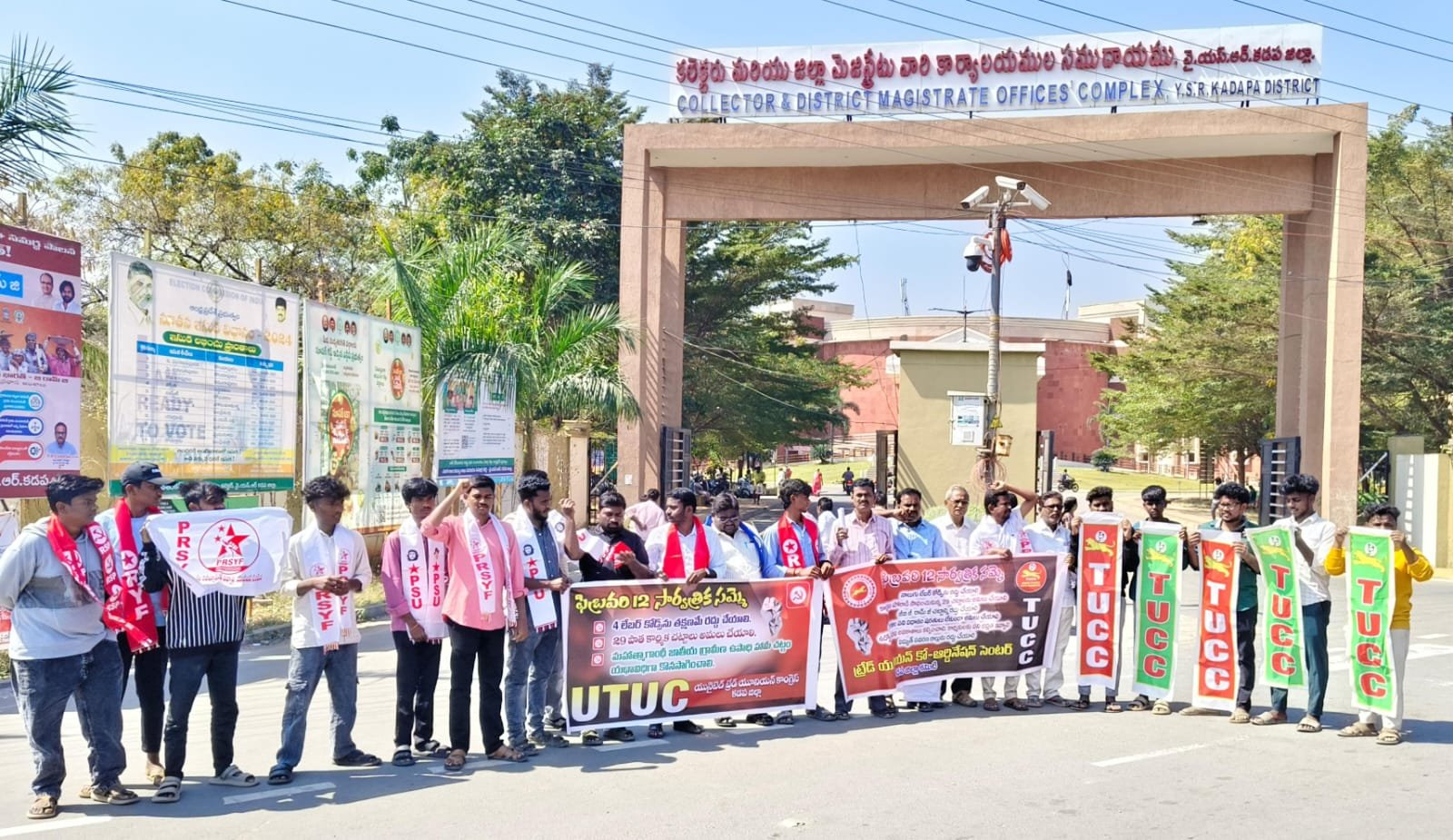
The nationwide general strike held on Thursday brought into focus the long-standing grievances of nearly one crore scheme workers across India, the majority of them women, who say they remain unrecognized, underpaid and excluded from basic labour protections despite being the backbone of several flagship government programmes. From Anganwadi centres to health missions and welfare schemes, workers argue that while governments claim credit for improvements in human development indicators, those delivering services on the ground continue to struggle without minimum wages, social security or job security.
The invisible workforce behind welfare delivery scheme
Across India, scheme workers — including Anganwadi workers, helpers, ASHAs, mid-day meal workers, sanitation staff and others — form the frontline of welfare delivery. They contribute directly to maternal health, child nutrition, immunisation, public health outreach and rural development.
Economists and social sector reports consistently show that improvements in nutrition, immunisation coverage and primary healthcare access are closely linked to this workforce. Yet, many of them are not legally recognised as “workers” or government employees, but are instead categorized as “honorarium-based volunteers,” limiting their access to labour protections.
Over 80 percent of this workforce comprises women, making the issue not only economic but also gendered.
Minimum wages and social security: A long-pending demand

The Indian Labour Conference (ILC) in 2013 recommended extending minimum wages, gratuity, provident fund (PF), Employees’ State Insurance (ESI) and other social security benefits to scheme workers.
However, implementation remains uneven across states.
The national floor wage had earlier been fixed at ₹178 per day — a figure widely criticised by trade unions as inadequate and below prevailing minimum wages in several states at the time. Labour groups argue that such benchmarks dilute wage protections rather than strengthen them.
As per demands raised by unions citing ILC norms, a minimum monthly wage of around ₹26,000 has been recommended for decent living standards. In specific judicial observations, including a Gujarat High Court reference, minimum wage calculations for Anganwadi workers and helpers were placed significantly higher than prevailing honorariums.
Despite a 2022 Supreme Court ruling that gratuity provisions apply to approximately 26 lakh Anganwadi workers under the Gratuity Act, workers’ organisations say implementation remains incomplete in many regions.
Labour codes and fears of dilution of rights
The central government has consolidated 29 labour laws into four Labour Codes — on wages, industrial relations, social security, and occupational safety — with preparations underway for phased implementation.
Trade unions argue that certain provisions may weaken collective bargaining power, particularly around fixed-term employment and conditions governing strikes. They fear that expanded fixed-term contracts may reduce long-term job security.
In some states, legislative resolutions proposing extended working hours from eight to ten hours have added to worker anxieties. While authorities argue reforms aim to modernise labour governance and improve ease of doing business, unions contend that safeguards for workers must not be diluted in the process.
Contractual employment and unequal treatment
Scheme workers and contract employees in regular government vacancies often allege disparities in wages and benefits compared to permanent staff performing similar duties.
The principle of “equal pay for equal work” has been repeatedly upheld by courts in various judgments. Yet, worker representatives say practical implementation remains inconsistent.
In several departments, retirement age policies vary, with some extended to 62 years while others remain unchanged. Workers also point out the absence of pension schemes, health insurance, compassionate appointments and retirement benefits in many welfare programmes.
Except in certain schemes such as the National Health Mission, coverage under PF and ESI remains limited.
Women at the centre of the crisis
The strike also underscored the gender dimension of scheme employment. Since a majority of workers are women from rural and economically weaker backgrounds, their economic insecurity has wider implications for household stability and community welfare.
Several workers participating in the strike described their situation as one of “serving the nation without security.” Many have worked for over a decade but remain outside the formal employee framework.
Their demand is not limited to wage revision — it is about recognition, dignity and institutional protection.
Human development and ground realities
India’s improvements in maternal mortality, child immunisation coverage and primary healthcare access have been widely acknowledged in policy circles. Experts often note that these gains rely heavily on grassroots workers.
However, labour organisations argue that the policy framework has not kept pace with the responsibilities assigned to scheme workers. As governments announce welfare achievements, the workforce implementing them continues to seek formal recognition and basic rights.
The larger question
The national strike reflects a broader debate: how should a country balance labour reforms aimed at economic growth with protections for vulnerable workers in public welfare systems?
For scheme workers across India, the demand is clear — recognition as workers, fair wages aligned with living costs, implementation of social security measures, and protection of collective rights.
As labour code implementation approaches, the coming months may determine whether reforms expand protection or deepen insecurity for millions serving at the foundation of India’s welfare architecture.