

5 Major Russian Troop Shifts Signal Dangerous Escalation in Southern Ukraine War
By Samir Singh 'Bharat': Editor In Chief

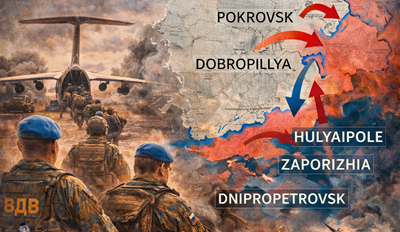
WAR-REPORT : The battlefield dynamics of the ongoing Russian invasion of Ukraine continue to evolve as Moscow adjusts its troop deployments in response to changing conditions along the frontlines. Recent intelligence and open-source reporting indicate that the Russian military command has begun redeploying elite airborne and naval infantry forces from eastern Ukraine toward the southern front. The shift appears to be a direct reaction to recent Ukrainian counterattacks and territorial gains in areas stretching across southern Zaporizhia Oblast and Dnipropetrovsk Oblast.
Military analysts believe the redeployments could significantly reshape the operational balance in southern Ukraine over the coming months. By moving highly trained units away from one sector of the front to reinforce another, Russia appears to be attempting to stabilize vulnerable positions and potentially prepare for renewed offensive operations later in the year.

The movement of troops also highlights the continuing fluidity of the war, where battlefield developments in one region frequently force rapid strategic adjustments elsewhere along the thousands-kilometer-long front.
Table of Contents
ToggleRedeployment From the Pokrovsk Sector
Open-source intelligence observations published on March 6 indicated that Russian commanders recently transferred elements of the 68th Army Corps away from the eastern frontlines near Pokrovsk and Dobropillya, both located in Donetsk Oblast.
These areas had previously been key zones of intense fighting as Russian and Ukrainian forces battled for control of strategic transportation routes and fortified defensive positions.

The units moved south include elements of the 39th Motorized Rifle Brigade and the 1472nd Motorized Rifle Regiment, both subordinate to the 68th Army Corps.
The redeployment sends these forces toward the Hulyaipole direction, a sector that straddles parts of eastern Zaporizhia and southern Dnipropetrovsk regions.
This movement suggests Russian commanders now consider the southern front a higher priority than some of the contested areas in eastern Ukraine.

Evidence From Battlefield Footage
Geolocated combat footage published on March 4 appears to confirm the arrival of Russian armored units in the southern sector.
The video shows a Russian tank believed to belong to the 39th Motorized Rifle Brigade firing artillery shells at Ukrainian defensive positions near the village of Hirke, located west of Hulyaipole.
Additional footage released by a Russian military blogger on March 7 reportedly shows drone operators from the brigade’s 1st Battalion conducting strikes against Ukrainian forces in the Zaporizhia direction.
The strikes likely occurred near Hulyaipole, further indicating that the redeployed units have already begun participating in active combat operations.
These visual confirmations provide rare insight into the movement of Russian formations across different fronts, which is often difficult to track due to operational secrecy and the vast geographic scale of the conflict.
Previous Movements of the 68th Army Corps
The redeployment of the 68th Army Corps is not the first time the formation has been moved across Ukraine’s battlefields.
Earlier in the war, the corps operated in the Kurakhove and Vuhledar sectors, two areas that witnessed some of the fiercest fighting in eastern Ukraine.
In March 2025, Russian commanders shifted parts of the corps toward the Toretsk direction before later relocating them again to the Pokrovsk and Dobropillya areas by mid-2025.
The repeated redeployments highlight the flexible but often reactive nature of Russian operational planning during the war.
Military planners frequently move units between sectors in response to shifting battlefield conditions, seeking to reinforce vulnerable areas or exploit emerging opportunities.
Activity Observed Earlier in 2025
Open-source intelligence reports throughout late 2025 and early 2026 had already noted the presence of these units in various eastern sectors.
Drone operators from the 39th Motorized Rifle Brigade were reported conducting strikes on Ukrainian positions in Bilytske, north of Pokrovsk, as recently as January 17.
Meanwhile, elements of the 1472nd Motorized Rifle Regiment were observed operating near Dobropillya in December 2025.
Earlier still, some elements of the regiment had been spotted in Kharkiv Oblast, demonstrating the wide geographic range across which Russian units have been deployed during the conflict.
Such movements underscore the logistical complexity of managing a large-scale war across multiple regions simultaneously.
Integration With Eastern Military District Forces
The 68th Army Corps belongs to Russia’s Eastern Military District, which traditionally operates in Russia’s far eastern territories.
However, since the beginning of the war, units from this district have been deployed thousands of kilometers away to support Russian operations in Ukraine.
With their redeployment to southern Ukraine, these troops are now operating alongside other formations belonging to the Eastern Military District within the Eastern Grouping of Forces.
This operational grouping is responsible for Russian military activities across several sectors in southern Ukraine.
The reintegration of these units into their original operational grouping may improve coordination and command efficiency.
Ukrainian Counterattacks Trigger Response
The redeployment appears to be directly linked to recent Ukrainian counteroffensives launched earlier this year.
Beginning in late January and continuing into February 2026, Ukrainian forces conducted a series of attacks aimed at pushing Russian troops back from positions in Zaporizhia Oblast and Dnipropetrovsk Oblast.
These operations reportedly achieved localized gains and disrupted several Russian defensive positions.
Although the advances were not large in territorial terms, they forced Russian commanders to reassess their troop deployments across the southern front.
By transferring additional forces to the region, Russia appears to be attempting to reinforce its defensive lines and prevent further Ukrainian breakthroughs.
Role of Elite Airborne Units
In addition to motorized rifle formations, Russian commanders have also redeployed elements of elite airborne units known as the Russian Airborne Forces, often referred to by their Russian acronym VDV.
These troops are among the most highly trained and mobile units within the Russian military.
Reports indicate that elements of the 76th Guards Air Assault Division had already been deployed to southern Ukraine earlier in January.
The division was reportedly positioned south of the town of Orikhiv, a strategically important location in Zaporizhia Oblast.
The presence of such elite units suggests that Russia considered the area a key operational focus even before the recent Ukrainian counterattacks began.
Russian Plans for Future Offensives
Military analysts believe that the early deployment of VDV units indicates Russia may have been preparing for offensive operations in southern Ukraine during the spring and summer of 2026.
One potential objective discussed by analysts was the capture of Orikhiv from both southern and eastern directions.
Control of Orikhiv could provide Russian forces with improved access to key transportation routes and potentially allow further advances toward Ukrainian defensive positions.
The region is also close to what analysts refer to as Ukraine’s Fortress Belt, a network of heavily fortified defensive positions designed to slow or stop Russian advances.
Breaking through this defensive system would represent a significant strategic achievement for Moscow.
Impact of Ukrainian Counterattacks
However, Ukraine’s February counterattacks appear to have complicated Russia’s plans.
The unexpected Ukrainian operations disrupted Russian positions and forced Moscow to divert additional resources toward defending territory rather than preparing new offensives.
Such actions are often referred to as “spoiling attacks,” designed specifically to disrupt an opponent’s preparations for future operations.
By forcing Russia to redeploy forces and focus on defense, Ukraine may have delayed or weakened any planned Russian offensive campaign for the coming months.
Technology and the Starlink Factor
Another factor influencing the battlefield situation has been the disruption of communications technology earlier this year.
Reports indicate that a temporary interruption affecting Starlink satellite communications occurred on February 1.
The communications disruption reportedly created operational complications for Russian forces at a critical moment.
According to analysts, the disruption coincided with the early stages of Ukraine’s counteroffensive operations.
The resulting confusion may have provided Ukrainian forces with an opportunity to launch successful localized attacks.
Strategic Consequences
The combination of Ukrainian counterattacks and technological disruptions appears to have forced Russia into a more reactive posture.
Instead of pressing forward with planned offensives, Russian commanders now appear focused on stabilizing the southern front.
Redeploying units from eastern sectors to reinforce southern positions is a clear indication that Moscow considers the area strategically important.
However, such redeployments also carry risks.
Removing forces from one sector can weaken defenses there, potentially creating new opportunities for Ukrainian operations.
A War of Constant Adjustment
The redeployment of elite units across multiple sectors reflects the ongoing nature of the conflict as a war of constant adjustment.
Both Russia and Ukraine regularly shift troops, equipment, and resources to respond to changing battlefield conditions.
Neither side currently possesses overwhelming superiority along the entire front, meaning local advantages can shift quickly depending on where reinforcements are deployed.
This dynamic has characterized the conflict since its early stages and continues to shape operations across Ukraine’s vast frontlines.
Outlook for the Southern Front
As spring approaches, the southern front in Ukraine may become one of the most active theaters of the war.
The concentration of Russian reinforcements in the Hulyaipole and Orikhiv directions suggests that the region could see intensified fighting in the coming months.
For Ukraine, maintaining pressure in this area could continue to disrupt Russian planning and prevent the launch of large-scale offensive operations.
For Russia, reinforcing the sector may be necessary to secure defensive positions and preserve the possibility of future advances.
An Uncertain Battlefield
The ongoing redeployments highlight how quickly the strategic picture can change during the war in Ukraine.
Frontlines that were relatively stable just months ago can become focal points of intense fighting as both sides adjust their strategies.
While the movement of Russian airborne and motorized rifle units may temporarily strengthen defenses in southern Ukraine, the broader outcome will depend on how both armies adapt to evolving battlefield conditions.
For now, the conflict remains a fluid and unpredictable struggle—one in which each side continues to search for opportunities to gain the upper hand.