

Russian Drone Incursions into NATO Airspace Escalate Tensions
By Samir Singh 'Bharat':Chief Editor

WAR-REPORT : Bucharest-Warsaw — NATO’s eastern flank faced heightened tensions this week after two Russian drone incursions into allied airspace in less than a week, raising concerns about Moscow’s intentions and testing of NATO defenses.
Romanian Defense Minister Ionuț Moșteanu confirmed that Romanian air defense forces scrambled two F-16 fighter jets from the 86th Air Base near Fetești on the evening of September 13, after radar detected a Russian drone entering Romanian airspace at 18:23 local time.

The jets tracked the drone for nearly 50 minutes before it exited Romanian territory without causing damage or casualties. Romanian Foreign Minister Oana-Silvia Toiu condemned the incursion as “unacceptable and reckless,” stressing that Romania would take all necessary measures to defend its sovereignty.

Toiu also noted that two allied German Eurofighter Typhoon jets were ready to assist Romanian forces if required. Minister Moșteanu stated that Romania has faced “provocations from Russia” nearly every week, pointing to a pattern of deliberate pressure on NATO’s eastern frontier.

Ukrainian President Volodymyr Zelensky echoed this sentiment, warning that Russian drone flight paths are “always calculated” and that the latest violation could not be dismissed as a mistake or the result of rogue commanders.
According to data shared by the Romanian Ministry of Defense with ABC News on September 14, Russian drones have violated Romanian airspace 11 times since the start of the full-scale invasion of Ukraine in February 2022. At least 30 drone strikes near the Ukrainian-Romanian border have scattered debris onto Romanian territory, highlighting persistent risks for NATO members bordering Ukraine.
Poland’s Response: NATO Reinforcements Under Operation Eastern Sentry
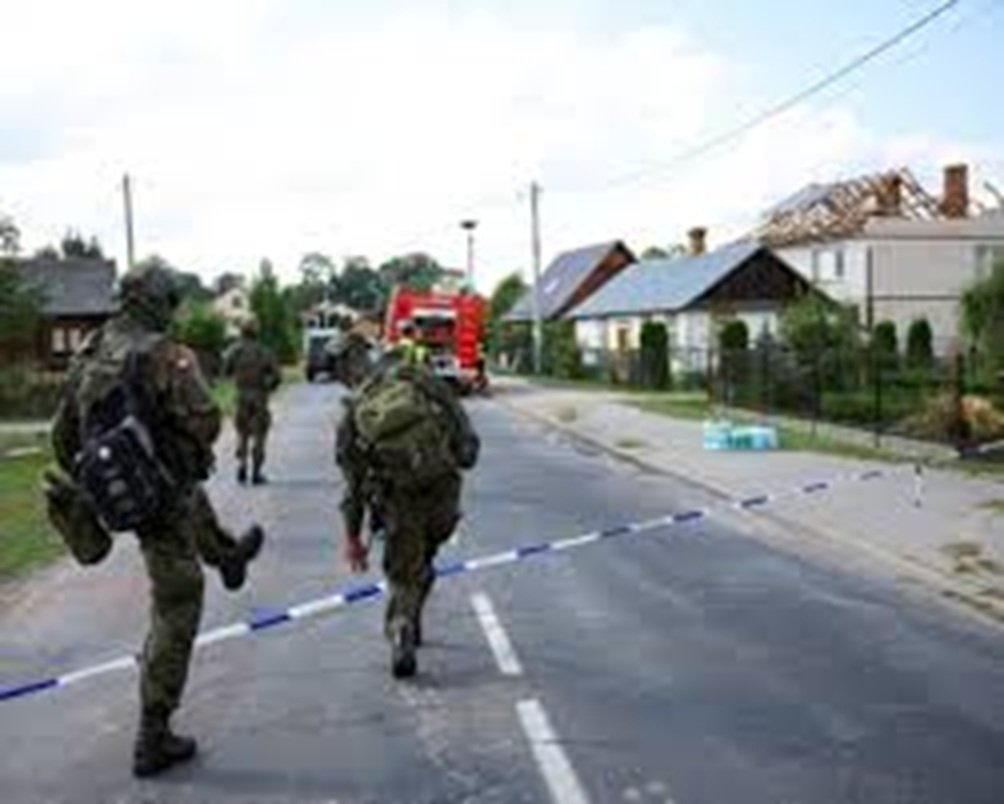
The Romanian incident came just days after another Russian drone breached Polish airspace between September 9 and 10, prompting Warsaw to escalate its defense posture.

On September 14, Polish President Karol Nawrocki signed a decree authorizing the deployment of additional NATO reinforcements under Operation Eastern Sentry, launched on September 12 to reinforce NATO’s eastern flank.

Following the Romanian incursion, Polish and NATO aircraft again scrambled, and Poland’s ground-based air defense systems were placed on maximum readiness amid further Russian drone attacks against Ukrainian border regions overnight on September 13–14.
NATO officials and allied governments denounced Moscow’s actions, with assessments indicating the drone intrusions were likely intentional probes designed to test NATO responses. Analysts at the Institute for the Study of War (ISW) continue to assess that Russia is “gauging NATO’s capabilities and reactions” in preparation for potential escalations.

Meanwhile, Russian officials and pro-Kremlin sources sought to downplay the violations, deflecting responsibility while dismissing NATO’s reactions as exaggerated.
Parallel to these incidents, Russia and Belarus continued the large-scale Zapad-2025 joint military exercises, showcasing advanced weapons systems and combined operations near NATO borders.
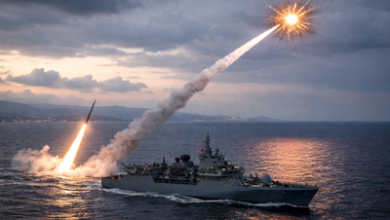
On September 14, Russia’s Ministry of Defense claimed joint forces conducted naval drills in the Barents Sea, including simulated strikes with Bal coastal missile systems and Uran cruise missiles, as well as a Ka-27 helicopter launch from the destroyer Severomorsk.
The Russian Baltic Fleet reportedly practiced emergency rescue maneuvers, while joint aviation drills involved Il-76 military transport aircraft, Ka-52M and Mi-28NM attack helicopters, and MiG-31 interceptors armed with Kinzhal ballistic missiles.
Belarusian forces conducted parallel training in reconnaissance, counter-sabotage operations, drone warfare, and command relocation. Notably, footage geolocated by Ukrainian OSINT group CyberBoroshno confirmed the presence of a Russian Iskander-M ballistic missile system along the E28 highway in Kaliningrad Oblast, just 35 kilometers from the Polish border. Russia has maintained permanent Iskander-M deployments in Kaliningrad since 2018, but the exercises underscored their continued threat to NATO territory.

The back-to-back Russian drone incursions into Romania and Poland—both NATO members—within four days mark a sharp escalation in Moscow’s provocations.
While neither incident caused casualties or damage, they highlight the increasing vulnerability of NATO’s border regions as Russia intensifies its drone and missile campaigns against Ukraine.
With Operation Eastern Sentry underway, NATO has reaffirmed its commitment to defending the sovereignty of its eastern allies. Still, analysts warn that Russia’s strategy of incremental provocations could erode NATO’s red lines and complicate deterrence efforts.