

5 Explosive Intelligence Warnings: Putin’s Dangerous Plan to Reshape Ukraine and Europe
By Samir Singh 'Bharat': Editor In Chief

WAR-REPORT : Western intelligence assessments are increasingly pointing toward a strategic reality that many policymakers and analysts have long suspected: Russian President Vladimir Putin is not merely pursuing territorial gains in Ukraine, but is instead attempting to fundamentally reshape Ukraine’s political system and the broader European security framework. According to multiple European intelligence agency leaders cited in a report published by Reuters on February 19, Moscow’s ultimate objectives extend far beyond the annexation of land in eastern Ukraine.
Five anonymous heads of European intelligence agencies reportedly told Reuters that the Kremlin does not intend to end the war quickly and remains committed to achieving its original strategic goals. These goals reportedly include removing Ukrainian President Volodymyr Zelensky, forcing Ukraine into geopolitical neutrality, and installing a government in Kyiv that aligns with Russian interests.

Such conclusions reinforce long-standing analyses by the Institute for the Study of War, which has consistently assessed that the Kremlin’s ambitions in Ukraine involve regime change and a structural overhaul of the country’s military and political institutions. According to intelligence officials cited in the report, even if Ukraine were to concede additional territory — including the remainder of the Donetsk region — such concessions would likely fail to satisfy Moscow’s broader strategic ambitions.
Table of Contents
ToggleStrategic Objectives Beyond Territorial Control
European intelligence leaders emphasized that Russia’s demands are unlikely to end with the recognition of its control over eastern Ukrainian territories. Instead, Putin’s strategic calculus appears rooted in the belief that the removal of Ukraine’s current democratic leadership and the imposition of strict limitations on Ukraine’s military capabilities are necessary to secure long-term Russian interests in the region.

These reported objectives are consistent with repeated public statements from Kremlin officials indicating that Moscow seeks a binding commitment from Ukraine to abandon its aspirations to join NATO. Additionally, Russia has demanded security arrangements that would prevent Ukraine from rebuilding or maintaining a military capable of defending itself against future aggression.
Analysts argue that these demands would effectively reduce Ukraine to a neutralized buffer state, dependent on Moscow’s goodwill for its security. Intelligence sources cited by Reuters warned that even if Ukraine were to agree to Russia’s territorial demands, Putin would likely present additional conditions aimed at dismantling Ukraine’s democratic institutions and reorienting its foreign policy.

Kremlin Officials Reject Compromise Solutions
Senior Kremlin officials continued to reiterate Russia’s maximalist demands on February 18, rejecting any resolution to the conflict that does not fully address Moscow’s stated objectives. Russian Foreign Minister Sergei Lavrov recently gave an interview to Saudi state-owned television network Al-Arabiya, marking the latest in a series of high-profile media appearances aimed at shaping international perceptions of the conflict.
During the interview, Lavrov claimed that Russian and American delegations had discussed what he described as an “Alaska understanding” during recent talks in Geneva. He suggested that this alleged understanding reflects agreements reached between Moscow and Washington during a summit held in Alaska in August 2025 — agreements that purportedly address what the Kremlin describes as the “root causes” of the war in Ukraine.
Lavrov reiterated Moscow’s long-standing claim that Ukraine’s desire to join NATO represents a fundamental threat to Russian security. He also accused the Ukrainian government of discriminating against ethnic Russians and members of the Ukrainian Orthodox Church aligned with the Moscow Patriarchate.
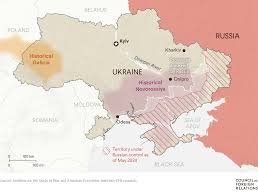
Furthermore, Lavrov called on the international community to formally recognize Russia’s annexation of four Ukrainian regions in 2022: Luhansk, Donetsk, Zaporizhzhia, and Kherson. These territories were declared part of the Russian Federation following widely condemned referendums conducted under military occupation.
Disputed Narratives on the Minsk Agreements
Lavrov also sought to shift responsibility for the failure of past peace efforts onto Western governments and Ukraine. He claimed that Kyiv has been the primary obstacle to peace since 2014 and accused the European Union of undermining the Minsk Agreements.
However, critics note that Russia itself has been widely accused of violating the Minsk ceasefire arrangements and prolonging hostilities in eastern Ukraine. Western officials argue that Moscow’s continued support for separatist forces in the Donbas region played a decisive role in destabilizing the peace process.
Lavrov additionally denounced Western security guarantees for Ukraine, arguing that such measures would pose a direct threat to Russia’s national security interests. This stance underscores the Kremlin’s broader objective of limiting Western influence in Eastern Europe and preventing Ukraine from integrating into Euro-Atlantic institutions.
Regime Change as a Central Objective
Statements from Kremlin officials suggest that Russia’s ambitions may extend beyond the removal of President Zelensky himself. Lavrov recently asserted that both Zelensky and former Ukrainian President Petro Poroshenko have engaged in policies that discriminate against ethnic Russians living in eastern Ukraine.
More significantly, Lavrov has publicly stated that any future Ukrainian government must be “friendly” toward Russia and “benevolent” in its policies toward Moscow. Such remarks have been interpreted by analysts as evidence that the Kremlin seeks to install a pro-Russian administration in Kyiv following the conclusion of hostilities.
European intelligence officials warned that Moscow would likely remain dissatisfied with any democratically elected Ukrainian government that rejects Russian influence, even if Ukraine were to comply with demands to hold new elections. In their assessment, the Kremlin’s strategic goal is not simply to alter Ukraine’s borders, but to ensure the emergence of a political system aligned with Russian interests.
Implications for European Security
The broader implications of Russia’s war aims extend well beyond Ukraine itself. Intelligence assessments indicate that Putin is pursuing changes to NATO’s posture in Eastern Europe that would effectively restructure the continent’s security architecture.
Such changes could include restrictions on NATO troop deployments in member states bordering Russia, as well as limitations on military exercises and infrastructure development in the region. Western officials fear that conceding to these demands would weaken NATO’s deterrence capabilities and embolden further Russian assertiveness.
As the war continues, the gap between Moscow’s maximalist objectives and Kyiv’s determination to preserve its sovereignty remains a significant obstacle to meaningful peace negotiations. With both sides entrenched in their respective positions, intelligence officials caution that a comprehensive settlement may remain elusive in the near term.
Ultimately, Western assessments suggest that the Kremlin’s vision for Ukraine involves not only territorial expansion but also a fundamental transformation of the country’s political orientation and security relationships — objectives that are likely to shape the trajectory of the conflict for years to come.