

7 Powerful Signals From North Korea’s 9th Workers Party Congress
By Samir Singh 'Bharat': Editor In Chief

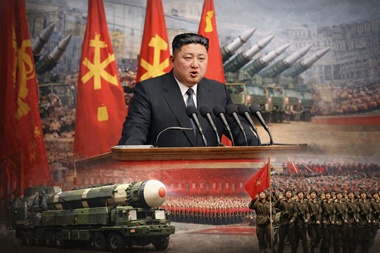
WAR-REPORT : The Democratic People’s Republic of Korea (DPRK) has once again drawn international attention following the conclusion of the 9th Congress of the Workers’ Party of Korea (WPK), held between February 19 and February 25. The congress, regarded as the highest decision-making body in North Korea’s political system, serves as a platform for determining national policies, appointing key leadership positions, and outlining the country’s long-term strategic objectives.
At this latest congress, North Korean leader Kim Jong Un unveiled an agenda that underscores growing confidence in the country’s geopolitical standing, economic trajectory, and military strength. The outcomes of the meeting reveal a regime that is increasingly assertive about its nuclear capabilities, cautious about diplomatic engagement with the West, and focused on expanding its ties with non-Western partners.

The congress also introduced significant personnel reshuffles within the ruling party, replacing aging officials with younger technocrats and redistributing power across several institutions—moves widely interpreted as part of Kim’s broader effort to consolidate authority while modernizing the government structure.
Table of Contents
ToggleThe Role and Significance of the Party Congress
The Workers’ Party of Korea plays a central role in North Korea’s governance. As the country operates under a single-party political system, the party congress functions as the ultimate authority responsible for setting policy direction, approving economic strategies, and selecting senior leadership.
Party congresses are not held frequently, and when they occur they often mark important moments of political transition or policy recalibration. The previous congress, the eighth, took place in 2021 and laid out a five-year national development plan centered on strengthening military deterrence and overcoming economic challenges caused by sanctions and the COVID-19 pandemic.

The ninth congress therefore served as a critical checkpoint for evaluating progress toward these goals and presenting the regime’s future strategy. Analysts suggest that the tone and decisions emerging from this meeting indicate a leadership that believes it has gained stronger leverage internationally and domestically.
North Korea’s Evolving Strategic Confidence
Throughout the congress, North Korean officials repeatedly emphasized the country’s improved strategic position. State media reports portrayed a narrative of resilience, highlighting advancements in defense capabilities and economic stabilization despite international sanctions.
Central to this narrative was the assertion that North Korea has strengthened its deterrence posture. The leadership argued that its military modernization programs—especially nuclear and missile development—have enhanced national security and reduced vulnerability to external pressure.

According to statements made during the congress, the country now sees itself as better positioned to negotiate internationally from a position of strength rather than concession. This shift reflects the leadership’s belief that the global strategic environment has changed in ways that favor North Korea’s autonomy.
Nuclear Weapons Remain the Cornerstone of Security
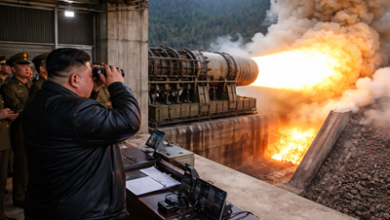
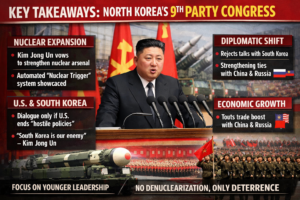
Perhaps the most consequential aspect of the congress was the reaffirmation of nuclear weapons as the cornerstone of North Korea’s defense policy. Kim Jong Un reiterated that the country’s nuclear arsenal is essential for deterring potential aggression and ensuring the survival of the regime.
During speeches delivered at the event, Kim highlighted the importance of the 2022 Nuclear Force Policy Law, a legislative framework that codifies the conditions under which North Korea might employ nuclear weapons. The law stipulates that an attack against senior leadership or the nuclear command structure would automatically trigger a nuclear response.
The leadership presented this doctrine as a necessary measure to prevent attempts at regime decapitation or strategic coercion. According to North Korean officials, such policies guarantee that any adversary contemplating an attack would face unacceptable consequences.
The “Nuclear Trigger” System and Technological Integration
In addition to reaffirming existing policies, the congress also highlighted advancements in the country’s nuclear command and control system. Kim Jong Un referenced the development of the so-called “nuclear trigger” system, introduced in 2023 to streamline decision-making during crisis situations.
The system reportedly enables faster and more coordinated responses to perceived threats, potentially allowing automated retaliatory actions under specific circumstances. While details remain limited, North Korean officials claim the mechanism is designed to ensure survivability and reliability of their deterrent even in high-pressure scenarios.
Another notable element of Kim’s remarks was his emphasis on integrating emerging technologies—particularly artificial intelligence—into military planning and weapons development. The leadership argued that advanced computational systems could improve missile guidance, threat detection, and decision-making processes.
If successfully implemented, such innovations could significantly enhance North Korea’s military capabilities and complicate efforts by other nations to predict or counter its strategic moves.
Relations with the United States
Relations between North Korea and the United States remained a central topic throughout the congress. Kim Jong Un indicated that dialogue with Washington might still be possible under certain conditions, but he stressed that any talks would require recognition of North Korea’s nuclear status.
This position represents a significant departure from earlier diplomatic frameworks that focused on denuclearization as the ultimate goal of negotiations. Instead, Pyongyang now appears to insist that its nuclear arsenal is non-negotiable.
Kim also criticized the policies of former U.S. President Donald Trump, particularly the “America First” approach, which he accused of contributing to global instability and reinforcing U.S. dominance in international affairs.
Despite this criticism, Kim’s statements left the door open for engagement if Washington were to abandon what North Korea describes as “hostile policies.” These policies typically include economic sanctions, joint military exercises with South Korea, and continued demands for denuclearization.
North Korean state media summarized the regime’s stance by declaring that the country was prepared for either “peaceful coexistence or eternal confrontation” with the United States.
Firm Rejection of South Korean Dialogue
While Kim signaled limited openness toward negotiations with Washington, the tone toward South Korea was markedly harsher. The leadership explicitly rejected proposals from South Korea for renewed dialogue or reconciliation.
North Korean officials accused Seoul of aligning too closely with U.S. strategic interests and criticized joint military exercises conducted by the two allies. From Pyongyang’s perspective, such activities demonstrate hostility rather than a willingness to build trust.
This hardline stance suggests that inter-Korean relations may remain tense in the foreseeable future, particularly as both sides continue to strengthen their respective defense capabilities.
Expanding Diplomatic Partnerships
At the same time that it rejected dialogue with South Korea, North Korea signaled an interest in expanding diplomatic engagement with other nations—especially those outside the Western alliance system.
The congress highlighted growing cooperation with Russia and the People’s Republic of China, two countries that remain among North Korea’s most important economic and political partners. Increased trade with these nations has reportedly helped stabilize parts of the North Korean economy following years of pandemic-related disruptions.
Beyond these traditional partners, Kim Jong Un also expressed interest in strengthening relations with countries in Asia, Africa, and the Middle East that maintain non-aligned or independent foreign policies. The leadership views these relationships as a way to diversify economic partnerships and reduce reliance on any single ally.
Such diplomatic outreach reflects a broader strategy of positioning North Korea within an emerging global order where Western influence may be less dominant.
Economic Narrative and Claims of Growth
Economic development was another prominent theme during the congress. North Korean officials claimed that the country has experienced notable economic improvements since the previous party congress.
These claims were linked largely to expanded trade with Russia and China, as well as efforts to modernize certain industrial sectors. According to official narratives, infrastructure upgrades, agricultural reforms, and technological investments have contributed to gradual economic stabilization.
However, outside analysts remain cautious about these assertions. International sanctions and limited access to global markets continue to constrain North Korea’s economic growth. Nevertheless, the leadership appears eager to present an image of progress and resilience to both domestic and international audiences.
Leadership Reshuffles and Political Consolidation
The ninth party congress also introduced a series of leadership changes within the ruling party and government. Several older officials were replaced by younger technocrats who are believed to possess stronger expertise in economic management, technology, and administration.
Observers interpret these changes as part of Kim Jong Un’s long-term strategy to rejuvenate the political elite while maintaining tight control over the decision-making process. By promoting younger figures who owe their careers to him, Kim can reinforce loyalty and reduce potential internal opposition.
At the same time, the redistribution of authority across multiple institutions may serve to prevent the concentration of power in any single faction. This structure helps ensure that the ultimate authority remains firmly in Kim’s hands.
Implications for Regional Security
The policies announced during the ninth party congress are likely to have significant implications for security dynamics in East Asia.
North Korea’s commitment to expanding its nuclear arsenal will undoubtedly heighten concerns among neighboring countries, particularly Japan and South Korea. Both nations have already increased defense spending and enhanced military cooperation with the United States in response to North Korea’s missile tests.
If Pyongyang continues to advance its nuclear and missile technologies, it may trigger further arms development across the region, potentially accelerating an emerging security competition.
The Future of Diplomacy on the Korean Peninsula
Despite the confrontational tone of some statements, the congress did not completely rule out diplomatic engagement. Kim Jong Un’s remarks about possible dialogue with the United States suggest that Pyongyang may still see value in negotiations—provided they occur on terms that recognize its strategic achievements.
This stance presents a major challenge for policymakers. The United States and its allies have consistently insisted that denuclearization remains the ultimate objective of any talks. North Korea, however, now appears determined to maintain its nuclear status permanently.
Reconciling these positions will be difficult and may require new diplomatic frameworks that address security concerns on all sides.
The ninth congress of the Workers’ Party of Korea marks a pivotal moment in North Korea’s political and strategic trajectory. The meeting highlighted a leadership that feels increasingly confident about its position in the international system and determined to pursue policies that reinforce national sovereignty and military strength.
Through its emphasis on nuclear deterrence, technological modernization, diplomatic diversification, and political consolidation, the regime under Kim Jong Un has signaled a clear vision for the future. Whether this strategy will bring stability or further tensions to the Korean Peninsula remains uncertain.
What is clear, however, is that North Korea’s policies following the ninth party congress will continue to shape regional security dynamics and global diplomatic efforts for years to come.