

Myanmar’s Civil War Reaches a Critical Juncture in Rakhine State
By Samir Singh 'Bharat': Editor In Chief

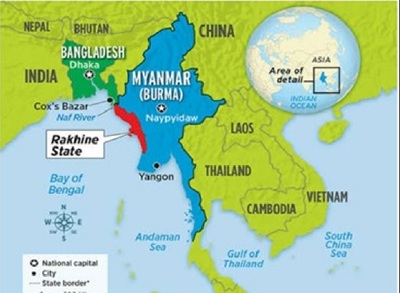
WAR-REPORT : Myanmar’s ongoing civil war is approaching a decisive moment in Rakhine State, where the balance of power between the military regime and the Arakan Army is increasingly under strain. At the center of this evolving conflict is Sittwe, the state capital and one of the military’s last major strongholds in western Myanmar. Over the past two years, the regime has heavily fortified the city in anticipation of a possible large-scale offensive by the Arakan Army. However, recent developments indicate that pressure is mounting, and the stability of this stronghold may soon be tested.
Strategic Importance of Rakhine State
Rakhine State holds significant strategic value due to its geographic location along the Bay of Bengal. It serves as a gateway to maritime trade routes and hosts important infrastructure, including ports and energy projects. Control over this region allows access to key economic and logistical networks, making it a priority for both the military and opposition forces.

For the military regime, maintaining control over Rakhine is essential for preserving national authority and securing access to coastal resources. For the Arakan Army, gaining dominance in the region represents a major step toward political autonomy and influence. This dual significance has made Rakhine one of the most contested regions in the country.
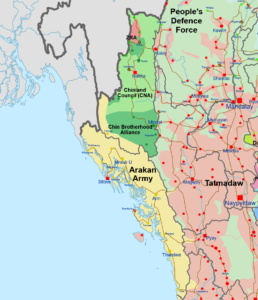
Sittwe as a Defensive Stronghold
Sittwe has become a central focus of military planning. As the administrative and logistical hub of Rakhine State, it plays a critical role in coordinating operations and maintaining supply lines. Recognizing its importance, the military has invested heavily in strengthening its defenses.

These efforts include the construction of fortified positions, reinforcement of military bases, and deployment of additional personnel and equipment. The city has been transformed into a defensive zone designed to withstand prolonged attacks. Surveillance systems have been expanded, and movement in and around the city is tightly controlled.
Checkpoints, patrols, and restricted access areas have become a regular feature of daily life in Sittwe. These measures reflect the regime’s determination to prevent infiltration and maintain control over the city.
The Arakan Army’s Growing Influence
The Arakan Army has emerged as one of the most capable armed groups in Myanmar. Over recent years, it has expanded its operational reach and demonstrated increasing effectiveness in both conventional and irregular warfare.

In Rakhine State, the group has steadily gained ground, establishing control over rural areas and key strategic locations. Its operations have disrupted military supply routes and limited the regime’s ability to operate outside major urban centers.
The Arakan Army’s approach combines mobility, local knowledge, and adaptive tactics. This flexibility allows it to exploit weaknesses in the military’s defenses and respond quickly to changing conditions on the battlefield.
Rising Pressure Around Sittwe
As the Arakan Army consolidates its position in the region, pressure on Sittwe is intensifying. Although the city has not yet faced a full-scale assault, surrounding areas have experienced increased activity. This suggests that preparations may be underway for a more significant operation.
The military’s fortifications have so far acted as a deterrent, but they also highlight the perceived threat. The concentration of resources in Sittwe indicates that the regime views the city as a critical point that must be defended at all costs.
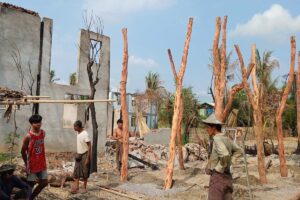
At the same time, the presence of a large civilian population complicates the situation. Any major confrontation in or near the city would likely result in significant humanitarian consequences, including displacement and disruption of essential services.
Challenges Facing the Military
The military regime faces multiple challenges in maintaining its position in Rakhine State. One of the primary issues is the distribution of resources. With conflicts ongoing in other parts of the country, the military must divide its forces across several fronts, limiting its ability to concentrate strength in any single area.
Another challenge is the reliance on static defenses. While fortified positions can provide strong protection, they reduce operational flexibility. Static defenses can be bypassed, isolated, or subjected to sustained pressure over time.
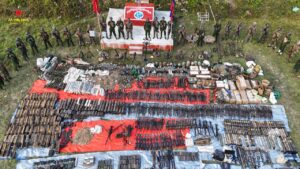
Logistics also present a significant concern. As the Arakan Army expands its influence in surrounding areas, supply routes to Sittwe become increasingly vulnerable. Disruptions to these routes could weaken the city’s defenses and reduce its ability to sustain prolonged resistance.
Humanitarian Impact
The situation in Rakhine State has serious humanitarian implications. Years of conflict have already displaced large numbers of people and disrupted access to basic services. The possibility of intensified fighting around Sittwe raises concerns about further displacement and hardship.
Civilians in the region face challenges including limited access to food, healthcare, and education. Restrictions on movement and economic activity further exacerbate these difficulties. The presence of military forces and ongoing security operations adds to the complexity of daily life.
Humanitarian organizations have called for greater access to affected areas and measures to protect civilians. However, security conditions and administrative restrictions continue to limit the effectiveness of these efforts.
Regional and International Considerations
The conflict in Rakhine State has implications beyond Myanmar’s borders. The region’s proximity to international waters and neighboring countries makes it strategically significant. Stability in this area is important for regional security and economic activity.
International observers have expressed concern about the escalation of violence and its potential impact. While there have been calls for dialogue and peaceful resolution, progress has been limited due to the complexity of the conflict and the positions of the involved parties.
A Turning Point in the Conflict
The current situation represents a critical moment in Myanmar’s civil war. The outcome of developments in Rakhine State, particularly in Sittwe, could influence the broader trajectory of the conflict.
If the military is able to maintain control over the city, it would reinforce its presence in the region and provide a base for further operations. On the other hand, if the Arakan Army succeeds in capturing or isolating Sittwe, it would represent a significant shift in the balance of power.
Such a development would not only strengthen the Arakan Army’s position but also have wider political and strategic consequences for Myanmar.
Possible Future Developments
Several scenarios could unfold in the coming months. One possibility is a prolonged stalemate, with both sides maintaining their positions without achieving a decisive breakthrough. This would likely result in continued instability and humanitarian challenges.
Another scenario involves a direct offensive by the Arakan Army against Sittwe. While this would be a high-risk operation, it could potentially lead to significant gains if successful.
A third scenario is a gradual shift in control, with the Arakan Army expanding its influence around the city and weakening the military’s position over time. This approach would avoid the risks associated with a large-scale assault while still achieving strategic objectives.
Our Media Opinion
Myanmar’s civil war is entering a critical phase in Rakhine State, with Sittwe at the center of the conflict. The city’s role as a fortified military stronghold underscores its strategic importance, while the growing capabilities of the Arakan Army highlight the challenges facing the regime.
The situation remains highly uncertain, and the coming months will be decisive in shaping the outcome. Whether through military developments or political changes, the events in Rakhine State will have a lasting impact on the future of Myanmar.
The evolving dynamics in this region illustrate the complexity of modern conflicts, where geography, strategy, and human factors intersect. As the situation continues to develop, Sittwe will remain a key focal point in determining the direction of the war.