

Mojtaba Khamenei IRGC Power: 5 Critical Signals of Iran’s Hardline Shift and Military Control
By Samir Singh 'Bharat': Editor In Chief

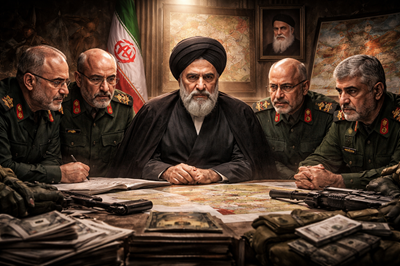
WAR-REPORT : Iran’s political landscape appears to be entering a decisive and potentially transformative phase as reports suggest that Mojtaba Khamenei is consolidating influence with the backing of a powerful network of long-standing commanders from the Islamic Revolutionary Guard Corps (IRGC). According to multiple sources cited in international reporting, this inner circle—comprised largely of veteran hardliners—could play a defining role in shaping Iran’s domestic and foreign policies in the years ahead.
The emergence of this group at the center of Iran’s power structure signals continuity rather than change. Analysts suggest it may lead to a more confrontational posture toward Western nations, particularly the United States and Israel, while reinforcing existing patterns of internal securitization and economic centralization under military-linked institutions.

The Rise of Mojtaba Khamenei’s Inner Circle
A report published on March 16 by The New York Times sheds light on the individuals believed to be instrumental in supporting Mojtaba Khamenei’s ascent within Iran’s political hierarchy.
Among the most prominent figures are:
-
Hossein Taeb

-
Ahmad Vahidi
-
Mohammad Ali Jafari
-
Mohammad Bagher Ghalibaf

These individuals are not only influential in their own right but also share decades of experience working under Iran’s former Supreme Leader, Ali Khamenei. Their longstanding loyalty and institutional knowledge position them as key architects of Iran’s current and future strategic direction.
The report suggests that these commanders played a central role in lobbying the Assembly of Experts—the clerical body responsible for appointing the Supreme Leader—to support Mojtaba’s elevation.
The findings are based on interviews with a wide range of sources, including senior Iranian officials, clerics, individuals affiliated with the Supreme Leader’s office, and members of the IRGC familiar with the internal selection process.
Continuity of Revolutionary Leadership
Despite years of regional conflict, sanctions, and targeted killings of senior commanders, the core leadership structure of the IRGC appears remarkably intact.
The same generation that rose to prominence during the early years of the Islamic Republic and the Iran-Iraq War continues to dominate Iran’s political and military institutions.
Mojtaba Khamenei himself has deep roots within this network. During the Iran-Iraq War, he served in the Habib Ibn Mazahir Battalion, part of the IRGC’s 27th Mohammad Rasoul Ollah Division. This early experience helped forge strong personal and ideological ties with many of the commanders who now form his inner circle.
These shared wartime experiences have created a tightly knit elite that views itself as the guardian of the Islamic Republic’s revolutionary ideals.
Appointment of Mohsen Rezaei Signals Military Influence
Further underscoring the central role of the IRGC in Iran’s leadership structure, Mojtaba Khamenei reportedly appointed Mohsen Rezaei as his military adviser on March 16.
Rezaei is one of the most prominent figures in Iran’s military establishment, having served as the IRGC’s commander for over a decade. His appointment signals that military considerations will likely play a major role in shaping policy decisions under Mojtaba’s influence.
Observers note that this move reflects a broader trend in which military leaders are increasingly involved in political governance, blurring the lines between civilian and military authority in Iran.
IRGC’s Expanding Role in Governance
The growing influence of the IRGC extends beyond military affairs into economic, political, and social domains.
Over the past two decades, the organization has expanded its footprint across key sectors of the Iranian economy, including construction, energy, telecommunications, and finance. This expansion has allowed the IRGC to consolidate both economic power and political influence.
Critics argue that this concentration of power has contributed to systemic corruption and reduced transparency in governance. Supporters, however, view the IRGC as a stabilizing force capable of defending Iran against external threats and internal unrest.
The reported dominance of IRGC figures within Mojtaba Khamenei’s inner circle suggests that this trend is likely to continue, if not intensify.

Hardline Outlook on Foreign Policy
Analysts widely believe that the prominence of hardline IRGC commanders will push Iran toward a more confrontational stance in international relations.
The IRGC has long been associated with policies that emphasize resistance to Western influence, support for regional proxy groups, and the development of advanced military capabilities, including missile and drone programs.
The involvement of figures such as Ahmad Vahidi and Mohammad Ali Jafari—both known for their strong ideological positions—reinforces expectations that Iran’s foreign policy will remain firmly anti-Western.
Relations with the United States and Israel are likely to remain particularly tense, with little indication of a shift toward diplomatic engagement in the near future.
Conflict as a Tool for Domestic Unity
One of the most striking aspects of recent reporting is the suggestion that some IRGC leaders view external conflict as a means of strengthening domestic cohesion.
According to an informed source cited by Iran Wire, an anti-regime media outlet, an IRGC official told Iranian President Masoud Pezeshkian that ongoing tensions with the United States and Israel have had a unifying effect on the Iranian population.
The official reportedly compared the current situation to the Iran-Iraq War, a period during which national unity was reinforced by the perception of an external threat.
This perspective reflects a broader strategic calculation within parts of the Iranian leadership: that external pressure can be used to rally public support and reduce internal dissent.
Pezeshkian’s Warning on Economic Realities
President Masoud Pezeshkian, however, appears to have expressed concern about this approach.
According to the same report, Pezeshkian warned that relying on conflict as a unifying force could lead to renewed repression rather than meaningful economic recovery or effective governance.
His remarks reportedly came during a meeting in which he asked IRGC officials about their plans for post-war economic recovery.
The response he received, suggesting that conflict itself was beneficial for regime stability, appears to have raised alarms within the civilian leadership.
Pezeshkian’s comments highlight a growing tension between different factions within Iran’s political system—those prioritizing security and ideological resistance, and those focused on economic reform and domestic stability.
Economic Challenges Facing Iran
Iran is currently grappling with a range of economic challenges, including high inflation, currency devaluation, unemployment, and the impact of long-standing international sanctions.
These issues have placed significant pressure on the government to deliver tangible improvements in living standards.
However, the increasing dominance of military-linked institutions in economic decision-making may complicate efforts to implement reforms.
Critics argue that the IRGC’s economic interests could create conflicts of interest that hinder transparency and accountability.
Supporters counter that the organization’s resources and organizational capacity make it well-suited to manage large-scale economic projects, particularly in times of crisis.
Securitization of Domestic Policy
Another likely consequence of the IRGC’s growing influence is the further securitization of domestic policy.
In recent years, Iranian authorities have increasingly relied on security forces to manage internal dissent, including protests related to economic conditions and social issues.
The presence of hardline commanders at the highest levels of leadership could reinforce this trend, leading to stricter controls on political expression and civil society.
Analysts suggest that this approach may provide short-term stability but could also exacerbate underlying tensions over the long term.
The Role of the Assembly of Experts
The involvement of the Assembly of Experts in Mojtaba Khamenei’s reported rise highlights the importance of institutional processes in Iran’s political system.
While the body is formally responsible for selecting the Supreme Leader, its decisions are often influenced by broader political dynamics, including the preferences of powerful institutions such as the IRGC.
The reported lobbying efforts by senior IRGC figures suggest that military influence extends even into clerical decision-making bodies.
This interplay between religious authority and military power is a defining feature of Iran’s governance model.
Regional and Global Implications
The consolidation of power around Mojtaba Khamenei and his IRGC-aligned inner circle could have significant implications for regional and global security.
A more hardline Iran may intensify its support for allied groups across the Middle East, potentially increasing tensions in conflict zones such as Syria, Iraq, Lebanon, and Yemen.
Relations with Western countries are also likely to remain strained, particularly in areas such as nuclear negotiations, sanctions, and regional security.
For international observers, the key question is whether this consolidation of power will lead to greater stability within Iran or further escalation in its external relations.
A System Defined by Continuity
Ultimately, the developments surrounding Mojtaba Khamenei’s rise and the role of the IRGC point to a broader pattern of continuity within Iran’s political system.
Despite external pressures and internal challenges, the core structures of power—rooted in revolutionary ideology and reinforced by military influence—remain firmly in place.
The enduring presence of first-generation revolutionary figures at the top of the hierarchy suggests that significant political change is unlikely in the near term.
Instead, Iran appears poised to continue along a path shaped by its historical experiences, strategic priorities, and the enduring influence of institutions like the IRGC.
Our Media Opinion
As Iran navigates a complex landscape of internal and external challenges, the consolidation of power around Mojtaba Khamenei and his network of IRGC commanders represents a pivotal moment.
The combination of military influence, ideological continuity, and strategic calculation is likely to shape the country’s trajectory for years to come.
Whether this approach will succeed in maintaining stability and addressing Iran’s economic difficulties—or instead deepen existing tensions—remains an open question.
What is clear, however, is that the balance of power within Iran is increasingly centered on a group of experienced, hardline figures whose decisions will have far-reaching consequences both at home and abroad.