

Mojtaba Khamenei Iran Strategy Speech: 7 Strong Warnings to US and Israel
By Samir Singh 'Bharat': Editor In Chief

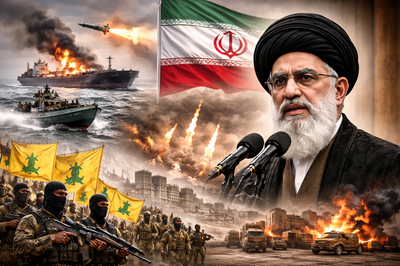
WAR-REPORT : In his first public message since assuming Iran’s highest political and religious authority, Mojtaba Khamenei delivered a firm and uncompromising statement outlining Tehran’s strategic direction amid escalating regional tensions. The address, broadcast on state media on March 12, came just days after the Assembly of Experts selected him as the new Supreme Leader on March 8.
The statement signals a continuation—and possibly an intensification—of Iran’s confrontational foreign policy, particularly toward the United States and Israel. Khamenei emphasized the regime’s determination to pursue long-standing strategic goals, including the reduction of American influence in the Middle East and what he described as the ultimate defeat of Israel.

The message, read by a news anchor on Iranian state television, outlined several key priorities that observers believe will shape Iran’s military and geopolitical strategy in the coming months.
Table of Contents
ToggleA New Leader in a Time of Regional Conflict
The appointment of Mojtaba Khamenei by the Assembly of Experts marks a pivotal moment in Iranian politics. The Supreme Leader holds the highest authority within the Iranian political system, overseeing the military, judiciary, intelligence services, and major elements of foreign policy.
In his inaugural statement, Mojtaba Khamenei framed the ongoing regional confrontation as a decisive struggle against Western influence. He declared that Iran would remain fully committed to its “war effort” and described the conflict as part of a broader historical mission tied to the ideological foundations of the Islamic Republic.

According to analysts, the speech appears designed to reassure hardline factions within the Iranian political establishment while signaling continuity in the country’s strategic posture.
Iran’s Strategy in the Strait of Hormuz
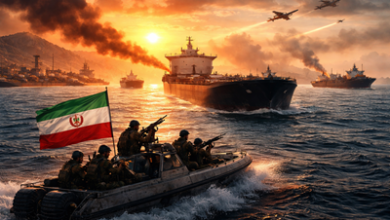
One of the most striking elements of Khamenei’s address was his renewed emphasis on disrupting maritime traffic through the Strait of Hormuz, one of the world’s most critical energy transit routes.
The narrow waterway connects the Persian Gulf to the Gulf of Oman and serves as a major artery for global oil shipments. Roughly a fifth of the world’s petroleum exports pass through this strategic corridor each day.

In his statement, Khamenei asserted that Iran “must continue” efforts to block or disrupt shipping in the strait. Although he did not elaborate on specific operational plans, the declaration reinforces longstanding Iranian threats to target maritime traffic during periods of heightened conflict.
Such actions could have significant consequences for global energy markets and international shipping, potentially triggering wider military responses from Western powers.
Threats of “Additional Fronts”
Khamenei also hinted at the possibility of expanding the conflict geographically. In his remarks, he stated that Iran may open “additional fronts where the enemy is extremely vulnerable,” though he did not clarify what locations he had in mind.
Security analysts interpret this statement as a reference to Iran’s network of allied militias and political movements across the region. These groups operate in several countries and have previously served as proxies for Iranian strategic objectives.
However, not all members of this network have actively participated in the current conflict. The Houthi movement, for example, has not yet conducted attacks in response to the ongoing military campaign involving United States and Israel.
Similarly, the Houthis have not issued public threats or announced plans to retaliate for strikes conducted against Iranian targets or operations linked to Israeli forces in Lebanon.
Iran’s Position on Attacks Against Regional States
Another controversial portion of Khamenei’s message involved Iran’s stance toward countries in the Middle East that host American military bases.
The new supreme leader asserted that Iranian strikes against locations in these countries are directed solely at American military infrastructure rather than the host nations themselves. However, numerous incidents reported since the beginning of the conflict appear to contradict that claim.
Among the most widely discussed was a drone attack targeting the Hayat Palace Hotel in Bahrain on March 3. The site was not identified as a US military installation.
In addition, Iranian-linked strikes have reportedly targeted energy facilities and maritime infrastructure in several regional countries, including:
-
Oman
-
Saudi Arabia
-
United Arab Emirates
Despite these incidents, Khamenei maintained that Iran would continue targeting locations connected to US military presence across the region.
The “Axis of Resistance” Strategy
A central theme of the speech was Iran’s ongoing support for the so-called Axis of Resistance, a network of militias and political organizations aligned with Tehran’s strategic goals.
This alliance has developed over decades and includes groups operating in multiple countries across the Middle East. Khamenei described the movement as “an inseparable part of the Islamic Revolution’s values.”
The origins of the Axis of Resistance can be traced to the aftermath of the Iranian Revolution, when the Islamic Republic began cultivating regional partnerships to expand its influence.
Members of this network include armed groups and political movements that receive varying degrees of financial, logistical, and military support from Iran. In return, Tehran gains strategic leverage and the ability to project power beyond its borders.
Among the most prominent groups associated with the alliance is Hezbollah, based in Lebanon.
Recent Attacks Linked to Iranian Allies
Since the beginning of the current conflict on February 28, several members of the Axis of Resistance have launched attacks targeting US or Israeli interests.
Iranian-backed militias operating in Iraq have reportedly carried out strikes against American military assets in the country.
Meanwhile, Hezbollah has launched attacks targeting Israeli facilities and positions near the border between Lebanon and Israel.
These actions illustrate how Tehran’s regional network allows it to exert pressure on adversaries without directly deploying its own conventional military forces in every theater.
Calls for National Unity
In addition to outlining foreign policy objectives, Mojtaba Khamenei devoted a portion of his speech to domestic issues.
He urged the Iranian public to demonstrate unity and resilience in the face of international pressure and ongoing conflict. As part of this effort, Khamenei encouraged citizens to participate in Quds Day ceremonies scheduled for March 13.
Quds Day is an annual event observed in Iran and other countries to express support for Palestinians and opposition to Israel. Large rallies are typically held in major cities, including Tehran.
The leadership of the Islamic Revolutionary Guard Corps also issued statements encouraging widespread participation in the marches.
Observers believe these calls for mass demonstrations are intended to project an image of national unity and regime stability at a time when the country faces both external conflict and internal economic pressures.
Regional and Global Reactions
The speech has drawn significant attention from governments and security analysts around the world.
Officials in the United States and allied nations have expressed concern that Iran’s statements could signal a broader escalation of hostilities across the Middle East.
Meanwhile, governments in Gulf countries are closely monitoring developments due to the potential impact on energy exports and maritime security, particularly in the Strait of Hormuz.
Any sustained disruption in this region could affect global oil markets, shipping routes, and economic stability.
Strategic Implications
Analysts suggest that the new Supreme Leader’s message serves several strategic purposes.
First, it reassures hardline factions within Iran that the country’s ideological and geopolitical objectives remain unchanged.
Second, it signals to regional allies and proxy groups that Tehran intends to continue supporting their activities.
Third, it serves as a warning to adversaries that Iran is prepared to escalate the conflict through both direct actions and proxy operations.
At the same time, the speech leaves open questions about how far Iran is willing to go in expanding the confrontation.
The first statement from Mojtaba Khamenei as Iran’s Supreme Leader provides a clear indication that the country’s strategic trajectory is unlikely to shift dramatically in the near future.
By reaffirming commitments to disrupt shipping in the Strait of Hormuz, continue supporting the Axis of Resistance, and confront the United States and Israel, the new leader has signaled continuity with the policies that have shaped Iran’s regional strategy for decades.
At the same time, his call for unity and mass participation in Quds Day demonstrations highlights the importance the Iranian leadership places on maintaining domestic cohesion during periods of conflict.
As tensions continue to unfold across the Middle East, the policies outlined in Khamenei’s first address will likely play a central role in determining the trajectory of regional security and diplomacy in the months ahead.