

Israel’s High-Impact Strikes on Iran’s Energy Core and Leadership
By Samir Singh 'Bharat': Editor In Chief

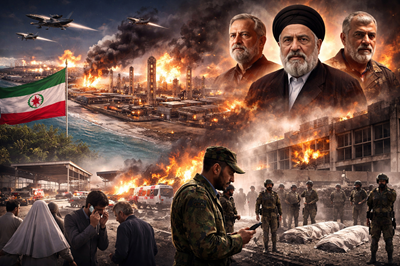
WAR-REPORT : In a dramatic escalation of hostilities in the Middle East, the Israel Defense Forces (IDF) launched a series of high-precision strikes on March 18 targeting critical components of Iran’s energy infrastructure and senior leadership. The coordinated attacks signal a significant intensification in the ongoing shadow conflict between the two regional adversaries, combining economic warfare, targeted assassinations, and psychological operations.
The strikes, which hit vital gas production and processing facilities, alongside the killing of Iran’s Intelligence Minister Esmail Khatib, have the potential to reshape Iran’s internal stability and its broader strategic posture. The developments also highlight Israel’s evolving approach—one that integrates military precision with intelligence-led operations designed to weaken Iran from within.

Targeting the Heart of Iran’s Energy Network
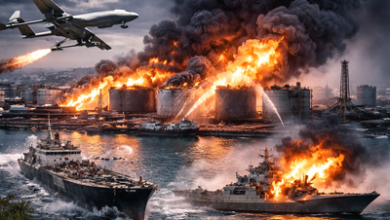
At the center of the Israeli offensive was Iran’s most critical energy infrastructure, including facilities linked to the South Pars Gas Field and the Asaluyeh processing hub in Bushehr Province. These sites form the backbone of Iran’s natural gas production and distribution system, playing an indispensable role in sustaining the country’s economy and domestic energy needs.
The South Pars field, one of the largest natural gas reserves in the world, is jointly shared with Qatar and serves as the cornerstone of Iran’s energy sector. The Asaluyeh hub processes vast quantities of gas extracted from this field, supplying fuel to power plants, industries, and residential areas across the country.
By striking these facilities, Israel has effectively targeted the lifeline of Iran’s domestic energy system. According to available data, Iran consumes approximately 94 percent of its natural gas production internally. This heavy reliance on domestic consumption means that any disruption in production or processing is likely to have immediate and widespread consequences for the Iranian population.

Reports from Israeli media suggest that the strikes may have damaged up to one-fifth of Iran’s total gas processing capacity—a significant blow that could take months, if not longer, to fully repair.
Ripple Effects on Electricity and Economic Stability
The implications of these strikes extend far beyond the energy sector. Iran’s electricity generation is heavily dependent on natural gas, with over 90 percent of its power produced by gas-fired thermal plants. Any disruption in gas supply is therefore likely to translate directly into power shortages, affecting industries, infrastructure, and daily life.
Electricity shortages in Iran are not a new phenomenon, particularly during peak summer and winter months. However, the scale of the current damage raises the possibility of more severe and prolonged outages, potentially exacerbating public dissatisfaction and economic strain.

Industries reliant on consistent energy supply—such as manufacturing, petrochemicals, and transportation—may face significant disruptions. This could, in turn, reduce economic output and further strain government revenues, which are already under pressure due to international sanctions.
The targeting of energy infrastructure also reflects a broader strategic objective: to weaken Iran’s ability to sustain its domestic economy while limiting its capacity to project power regionally.
A Continuation of Previous Energy Strikes
This is not the first time Israel has targeted Iran’s energy infrastructure. During the Israel-Iran War June 2025, Israeli forces conducted similar strikes on gas processing facilities associated with the South Pars field, as well as the Fajr-e Jam Gas Refinery in Bushehr Province.
The recurrence of such attacks indicates a deliberate and sustained strategy aimed at degrading Iran’s energy capabilities over time. By repeatedly targeting critical nodes within the energy network, Israel appears to be seeking cumulative effects that could significantly impair Iran’s economic resilience.
Decapitation Strike: Killing of Intelligence Chief Esmail Khatib
In a parallel operation, the IDF carried out a targeted airstrike that resulted in the death of Esmail Khatib. Both Israeli and Iranian officials confirmed his killing, marking one of the most high-profile assassinations of an Iranian official in recent years.
Khatib, who served as Iran’s Intelligence Minister, played a central role in overseeing the country’s internal security apparatus. His responsibilities included coordinating efforts to suppress dissent and manage domestic unrest, particularly during the Mahsa Amini protests and the more recent Winter 2025–2026 protests.
The United States had previously sanctioned Khatib and the Ministry of Intelligence and Security in 2022, citing involvement in cyber operations targeting American interests and allies.
His death represents a significant blow to Iran’s internal security structure, potentially disrupting coordination among intelligence agencies and weakening the regime’s ability to respond to domestic challenges.
Broader Leadership Targeting: A Pattern Emerges
Khatib’s assassination follows a series of targeted killings carried out by Israel in recent days. On March 17, Israeli operations reportedly eliminated senior figures including Ali Larijani, associated with Iran’s Supreme National Security Council, and Basij Commander Gholamreza Soleimani.
This pattern suggests a coordinated “decapitation campaign” aimed at dismantling Iran’s leadership across multiple domains—military, intelligence, and political. By removing key decision-makers, Israel appears to be attempting to create confusion, disrupt command structures, and reduce the effectiveness of Iran’s response.
Such operations require highly accurate intelligence, indicating the presence of sophisticated surveillance networks and possibly human intelligence sources Iran.
Psychological Warfare and Internal Disruption
Beyond the physical destruction and leadership losses, Israel’s campaign appears to include a significant psychological component. Reports indicate that Israeli intelligence has been engaging in direct communication with Iranian commanders, issuing warnings and threats aimed at discouraging them from acting against potential civil unrest.
This tactic, reportedly used during the 2025 conflict as well, is designed to sow distrust and hesitation within the ranks of Iran’s security forces. By targeting not only infrastructure and leadership but also morale, Israel is expanding the scope of its operations into the cognitive domain.
The impact of these efforts is reportedly already visible. Iranian security personnel are said to be experiencing heightened levels of paranoia, with some choosing to sleep in unconventional locations such as vehicles, mosques, and sports facilities to avoid being targeted.
Strikes on Security Infrastructure and Civilian Collaboration
Israeli strikes have also targeted facilities used by Iran’s internal security forces, including sports complexes repurposed as temporary bases. According to reports, these locations have been among the most heavily hit, resulting in significant casualties among security personnel.
In a notable development, some Iranian civilians are reportedly providing intelligence tips that assist Israeli targeting efforts. This suggests a level of internal dissent that could have broader implications for the stability of the Iranian regime.
There are also reports that some police stations in Tehran have been abandoned, potentially indicating a breakdown in local security structures or a strategic withdrawal to avoid further losses.
Erosion of Morale Within Iranian Security Forces
The cumulative effect of targeted strikes, leadership losses, and psychological operations appears to be taking a toll on the morale of Iran’s security forces. Reports describe declining confidence among rank-and-file personnel, as well as increasing fear of being singled out in precision attacks.
This erosion of morale could have significant consequences for the regime’s ability to maintain internal order, particularly in the face of ongoing or future protests. Security forces play a critical role in suppressing dissent, and any weakening of their cohesion or effectiveness could embolden opposition movements.
Strategic Implications for the Region
The latest developments mark a turning point in the Israel-Iran confrontation, with potential ramifications extending across the Middle East. By targeting both economic infrastructure and leadership, Israel is employing a multi-dimensional strategy aimed at weakening Iran on several fronts simultaneously.
For Iran, the challenge lies in responding effectively while managing internal vulnerabilities. The loss of key officials and damage to critical infrastructure may limit its options and force difficult strategic decisions.
For the broader region, the escalation raises concerns about the potential for further conflict, including retaliation by Iran or its regional allies. The situation also underscores the increasing role of intelligence-driven warfare and the blurring of lines between conventional and unconventional conflict.
Our Media Opinion : A New Phase of Conflict
The March 18 strikes represent more than just a tactical operation—they signal the emergence of a new phase in the Israel-Iran conflict. One characterized by precision, intelligence dominance, and a focus on systemic disruption rather than isolated engagements.
As the situation continues to evolve, the interplay between military action, economic pressure, and internal dynamics will shape the trajectory of the conflict. Whether these developments lead to de-escalation, further confrontation, or internal change within Iran remains uncertain.
What is clear, however, is that the stakes have risen significantly—and the consequences will be felt far beyond the immediate theater of operations.