

5 Explosive Consequences Iran’s Supreme Leader Is Killed in a U.S.–Israel Strike
By Samir Singh 'Bharat': Editor In Chief

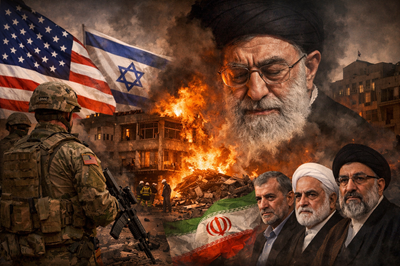
WAR-REPORT : In a dramatic and unprecedented escalation in Middle Eastern tensions, a combined United States and Israeli military operation has reportedly killed Iran’s Supreme Leader, Ali Khamenei, in a targeted strike on his compound in Tehran. The development, confirmed by Donald Trump on February 28, has plunged Iran into deep political uncertainty and triggered fears of broader regional instability.
According to multiple senior officials briefed on the matter, Israeli airstrikes targeted a high-level meeting in Tehran where Khamenei was present alongside several senior Iranian officials. Four Israeli security officials told The Washington Post that the strike successfully eliminated Khamenei inside his residential compound. A correspondent from Fox News reported that U.S. officials described the operation as a strategic decision to exploit the rare convergence of Iran’s top leadership in one location.

As of this writing, Iranian authorities have not publicly announced a clear succession plan, and it remains uncertain who is effectively governing the Islamic Republic.
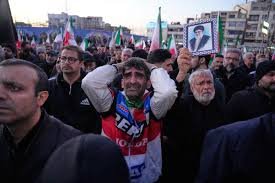
Table of Contents
ToggleConstitutional Succession and Interim Rule
Under Iran’s constitution, the death of the Supreme Leader triggers a temporary leadership arrangement until the powerful Assembly of Experts selects a successor. The interim authority is to be exercised collectively by the sitting president, the judiciary chief, and a clerical member of the Guardian Council.

This means that Masoud Pezeshkian, Gholam Hossein Mohseni Ejei, and one of the six jurists serving on the Guardian Council are constitutionally mandated to assume the Supreme Leader’s responsibilities. However, it is unclear whether this mechanism has formally been activated or if political factions within Tehran are maneuvering behind closed doors.
Iran’s Assembly of Experts, an 88-member clerical body tasked with selecting and supervising the Supreme Leader, must convene to appoint a permanent successor. Historically, the selection process is highly opaque and influenced by elite power centers, including the Islamic Revolutionary Guard Corps (IRGC).
Prior to the current conflict, Khamenei was reportedly preparing contingency plans in the event of his death. According to a February 22 report in The New York Times, he and senior officials discussed who would “manage the country” should he be killed. Names reportedly considered included Ali Larijani, Secretary of the Supreme National Security Council, and Mohammad Bagher Ghalibaf, the Speaker of Parliament.

Whether these discussions translate into political reality remains to be seen. Iran’s political system balances clerical authority, elected institutions, and powerful military entities, making the succession battle potentially volatile.
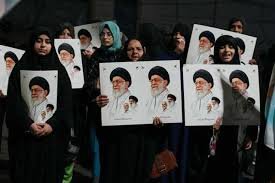
Nearly 900 Strikes in 12 Hours
The operation that eliminated Khamenei was part of a sweeping military campaign. An unnamed U.S. official told Fox News that nearly 900 strikes were conducted against Iranian targets within the first 12 hours. Meanwhile, the Israel Defense Forces (IDF) stated it had struck approximately 500 Iranian targets.
Analysts from the Institute for the Study of War’s Critical Threats Project (ISW-CTP) observed strikes across at least 17 Iranian provinces. However, the full scale of the operation may be significantly larger. Iran imposed a nationwide internet shutdown shortly after the attacks began, sharply restricting outgoing information. As a result, independent verification of strike locations and damage assessments remains limited.
A senior U.S. official speaking to Axios explained that U.S. forces are focusing primarily on Iran’s missile infrastructure, including production facilities, storage sites, and launch platforms. Israeli forces, meanwhile, are targeting both senior Iranian officials and key missile program assets.
Strategic Objectives of the Campaign
According to U.S. and Israeli officials, the joint campaign is designed to accomplish three core objectives:
-
Suppress Iranian Air Defenses – Neutralizing radar systems and surface-to-air missile sites to ensure continued aerial freedom of operation.
-
Degrade Retaliatory Capabilities – Destroying ballistic missile stockpiles, drone facilities, and launchers to reduce Iran’s ability to strike regional adversaries.
-
Disrupt Command-and-Control Networks – Targeting communication hubs, military headquarters, and senior leadership nodes to fragment Iran’s operational cohesion.
The operation reflects a calculated effort to prevent Iran from coordinating a large-scale counteroffensive while destabilizing its strategic decision-making apparatus.
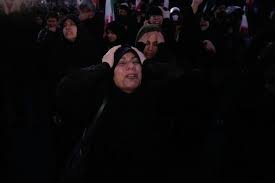
Iranian Retaliation and CENTCOM’s Response
Despite warnings from Tehran of severe retaliation, initial Iranian counterstrikes appear to have had limited impact on U.S. forces. US Central Command (CENTCOM) reported that Iran launched hundreds of missiles and drones at American military installations in the region but failed to inflict casualties or significant damage.
CENTCOM credited layered air defense systems and coordinated interception efforts for successfully neutralizing incoming threats. Patriot missile batteries, naval interceptors, and advanced radar systems were reportedly employed to counter the barrage.
While Iranian state media claimed “successful strikes,” independent assessments suggest that most projectiles were intercepted before reaching their targets.
Strait of Hormuz Remains Open
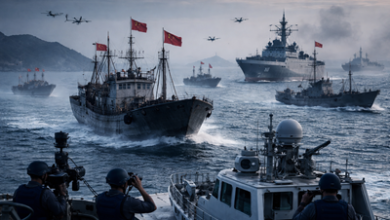
One of the world’s most strategically critical waterways, the Strait of Hormuz, remains operational despite escalating tensions. An unnamed European Union official told Reuters that Iran’s Islamic Revolutionary Guard Corps (IRGC) warned vessels that “no ship is allowed to pass the Strait of Hormuz.”
However, there have been no confirmed reports of Iranian naval forces attacking or harassing commercial vessels at the time of publication. Global energy markets remain on high alert, as approximately one-fifth of the world’s oil supply transits the strait.
Any disruption could trigger significant spikes in oil prices and broader economic repercussions.
Axis of Resistance Reaction
Members of Iran’s so-called Axis of Resistance — a network of Tehran-backed militias and political movements across the Middle East — have strongly condemned the strikes but have not yet launched major retaliatory attacks.
Groups including Hezbollah and Houthis issued statements denouncing the killing of Khamenei as an “act of aggression” and a declaration of war. However, as of the latest data cutoff, neither group had initiated significant operations against U.S. or Israeli targets.
Security analysts caution that this restraint may be temporary. These groups retain the capacity to launch missile and drone attacks against Israel, U.S. bases, and commercial shipping lanes.
Iraqi Militias and Regional Tensions
The Islamic Resistance of Iraq — a coalition of Iranian-backed Iraqi militias — claimed on February 24 that it conducted 16 operations using dozens of drones targeting “enemy” bases in Iraq and elsewhere in the region.
Separately, Iraq’s Joint Operations Command reported intercepting nine drones aimed at military sites in Dhi Qar and Basra provinces on February 28. No group has formally claimed responsibility for those particular attacks.
These developments suggest that Iran’s proxy networks may already be testing defensive responses while avoiding direct large-scale confrontation.
A Nation in Uncertainty
The death of Ali Khamenei marks the most significant political upheaval in Iran since the 1979 Islamic Revolution. As Supreme Leader since 1989, Khamenei wielded ultimate authority over military, judicial, and political institutions.
His sudden removal creates a power vacuum that could reshape Iran’s domestic and foreign policy trajectory. Factional competition between hardliners, pragmatists, and the Revolutionary Guard may intensify. The Assembly of Experts’ decision will likely determine whether Iran adopts a more confrontational posture or seeks de-escalation.
International observers warn that miscalculations in the coming days could trigger a broader regional war involving Lebanon, Syria, Iraq, Yemen, and potentially Gulf states.
For now, the Islamic Republic stands at a crossroads — its supreme authority gone, its military infrastructure under sustained assault, and its future leadership uncertain. The coming weeks will reveal whether Iran consolidates power internally or descends into deeper instability amid one of the most consequential geopolitical crises in recent history.