

Escalation Reaches Iran’s Northeastern Stronghold 2026
By Samir Singh 'Bharat': Editor In Chief

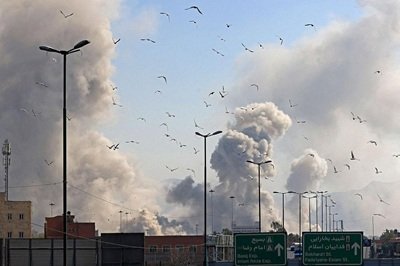
WAR-REPORT : The evolving military campaign against Iran entered a significant new phase on March 25 and 26, as combined forces carried out coordinated strikes in and around Mashhad, the capital of Khorasan Razavi Province. These operations marked the northeastern-most strikes conducted so far in the conflict, underscoring a gradual but deliberate expansion of the campaign from western Iran toward the country’s eastern frontier. The strikes near Mashhad not only demonstrate the widening geographic scope of the conflict but also highlight a strategic shift aimed at targeting critical infrastructure, military assets, and leadership nodes deep within Iranian territory.
Mashhad, Iran’s second most populous city and a major religious and economic hub, has long been considered relatively insulated from direct military confrontation due to its distance from Iran’s western borders. However, recent developments suggest that no region is beyond the reach of the ongoing campaign. The strikes near Mashhad International Airport represent a notable escalation, signaling both enhanced operational reach and a willingness to engage targets in areas previously considered secure.

Expansion of the Campaign: West-to-East Momentum
Since the onset of hostilities, combined forces have pursued a methodical west-to-east progression across Iran. Initial operations focused heavily on western provinces, where military infrastructure, logistics hubs, and command centers were more accessible due to proximity. Over time, this approach evolved into a broader strategy aimed at systematically degrading Iran’s military capabilities nationwide.
The strikes conducted on March 25 and 26 in Mashhad are emblematic of this progression. By extending operations into northeastern Iran, combined forces are demonstrating their ability to sustain long-range strike capabilities and maintain operational tempo across vast distances. This expansion also serves to stretch Iranian defensive resources, forcing Tehran to allocate military assets across a wider geographic area.
Reports from Iranian open-source intelligence (OSINT) accounts, as well as footage disseminated by anti-regime media outlets, indicate that multiple strikes occurred in the vicinity of Mashhad International Airport. The airport is of particular strategic importance, as it hosts both civilian and military aviation facilities.

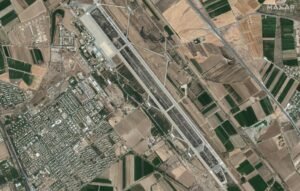
Strategic Significance of Mashhad International Airport
Mashhad International Airport is not merely a civilian transportation hub; it also serves as a critical military installation. Two major Iranian military units are co-located at the site: the 14th Artesh Air Force Tactical Airbase and the 5th Artesh Ground Forces Aviation Base. These facilities play an essential role in Iran’s air operations, logistics, and regional force projection.
The presence of these installations makes the airport a high-value target. Strikes in this area are likely intended to disrupt Iranian air capabilities, including refueling operations, aircraft deployment, and coordination between different branches of the armed forces. Notably, this is not the first time the airport has been targeted. During the earlier phase of the conflict—referred to as the “12-Day War”—Israeli Defense Forces (IDF) reportedly struck an Iranian refueling aircraft at the same location.

The recurrence of strikes at Mashhad International Airport suggests a sustained effort to neutralize its operational capacity. Anti-regime media footage showing smoke plumes rising from multiple locations around the city further indicates that additional targets may have been hit. While the full extent of the damage remains unclear, the visual evidence points to a broader strike package rather than a single isolated attack.
Psychological and Strategic Impact
Beyond the immediate military implications, the strikes on Mashhad carry significant psychological weight. As a densely populated urban center with deep cultural and religious significance, Mashhad has symbolic importance within Iran. Demonstrating the ability to conduct operations in such a location sends a powerful message regarding the reach and precision of the combined forces.
For the Iranian population, these developments may contribute to a growing sense of vulnerability, particularly as the conflict encroaches on areas previously perceived as safe. For the Iranian leadership, the strikes highlight the challenges of defending a geographically expansive nation against a technologically advanced adversary capable of long-range operations.
Targeting Leadership: Disrupting Command and Control
In parallel with the geographic expansion of the campaign, the Israeli Defense Forces have intensified efforts to target senior Iranian military leaders. This strategy aims to disrupt command-and-control structures, degrade operational coordination, and create uncertainty within the Iranian military hierarchy.
On March 26, the IDF announced the killing of Rear Admiral Alireza Tangsiri, the commander of the Islamic Revolutionary Guards Corps (IRGC) Navy. The strike occurred in Bandar Abbas, a key port city in Hormozgan Province that serves as a central hub for Iran’s naval operations.
Tangsiri had been a prominent figure within the IRGC, serving as the Navy’s commander since August 2018. Prior to his appointment, he held several influential positions, including deputy commander of the IRGC Navy from 2010 to 2018 and commander of the IRGC’s 1st Saheb ol Zaman Naval District, based in Bandar Abbas.
Role and Influence of Alireza Tangsiri
Tangsiri’s tenure as IRGC Navy commander was marked by an assertive posture in the Persian Gulf and the Strait of Hormuz. He oversaw operations that included harassment of international shipping, confrontations with U.S. naval forces, and efforts to project Iranian power in strategically महत्वपूर्ण waterways.
The Saheb ol Zaman Naval District, which Tangsiri once commanded, is tasked with controlling the Strait of Hormuz—one of the world’s most critical maritime chokepoints. This district encompasses several key military assets, including the IRGC Navy headquarters and command center, the 2nd Imam Sajjad Special Forces Brigade, the 16th Assef Coastal Missile Group, the 112th Zolfaghar Surface Combat Brigade, and fortified positions on Abu Musa Island.
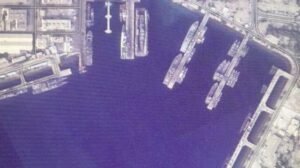
Given the strategic importance of these assets, Tangsiri’s leadership role placed him at the center of Iran’s maritime defense and deterrence strategy. His death represents a significant blow to the IRGC’s operational continuity and leadership structure.
The United States had previously sanctioned Tangsiri in June 2019, citing his role in threatening to close the Strait of Hormuz and overseeing activities that included the sabotage of vessels in international waters. These sanctions reflected broader concerns about Iran’s use of asymmetric tactics to challenge global maritime security.
Additional Leadership Losses
In the same series of operations, the IDF also reported the killing of Behnam Rezaei, the deputy intelligence chief of the IRGC Navy. Rezaei was reportedly responsible for regional intelligence collection and coordination, making him a key figure in the IRGC’s ability to monitor and respond to threats.
The simultaneous targeting of both operational and intelligence leadership suggests a coordinated effort to disrupt multiple layers of the IRGC’s command structure. By eliminating individuals responsible for both decision-making and information gathering, combined forces aim to create gaps in situational awareness and hinder effective response mechanisms.
IRGC Consolidation of Power
While the military campaign continues to erode Iran’s external capabilities, internal dynamics within the Iranian regime are also undergoing significant changes. Reports from anti-regime media indicate that the IRGC is consolidating power and exerting increasing influence over key political decisions.
On March 26, sources claimed that the IRGC pressured Iranian President Masoud Pezeshkian to appoint Mohammad Bagher Zolghadr as the secretary of the Supreme National Security Council (SNSC). Zolghadr is widely regarded as a hardline figure with strong ties to Iran’s military and judicial institutions.
According to these reports, Brigadier General Ahmad Vahidi, a senior IRGC commander, was among those who advocated for Zolghadr’s appointment. The sources suggest that the decision was not universally supported within the Iranian leadership, with President Pezeshkian and other senior officials reportedly opposing the move.
Implications for Iranian Governance
The reported intervention by the IRGC in the appointment process highlights the growing influence of the military establishment within Iran’s political system. This trend raises important questions about the balance of power between civilian authorities and military leaders.
Notably, the sources indicated that there were no clear signs of involvement by Supreme Leader Mojtaba Khamenei in the decision to appoint Zolghadr. This absence of direct influence has fueled speculation about the extent of Mojtaba’s control over key decisions, particularly in light of reports that a group of IRGC officers played a decisive role in his succession.
Statements from U.S. and Israeli security officials suggest that this group of IRGC officers has gained significant influence since Mojtaba assumed the role of supreme leader. Their increasing prominence may signal a shift toward a more militarized governance structure, in which the IRGC plays a central role not only in defense but also in political decision-making.
Broader Strategic Context
The combination of external military pressure and internal political consolidation presents a complex and evolving strategic landscape. On one hand, the strikes on Mashhad and the targeting of senior commanders demonstrate the effectiveness of the combined forces’ campaign in degrading Iran’s military capabilities. On the other hand, the growing influence of the IRGC within the Iranian regime may lead to more centralized and potentially more hardline decision-making.
This dynamic could have significant implications for the trajectory of the conflict. A more dominant IRGC may prioritize military responses and resistance over diplomatic engagement, potentially prolonging hostilities and increasing the risk of further escalation.
Our Media Opinion
The events of March 25 and 26 mark a pivotal moment in the ongoing conflict involving Iran. The extension of military operations to Mashhad underscores the expanding reach of the combined forces and their ability to strike deep Iranian territory. At the same time, the targeted killing of key IRGC leaders highlights a deliberate strategy aimed at dismantling Iran’s command-and-control infrastructure.
Internally, the apparent consolidation of power by the IRGC suggests a shifting political landscape that could influence Iran’s response to these challenges. As the conflict continues to unfold, the interplay between military operations and internal dynamics will be critical in shaping the future course of events.
The strikes on Mashhad, the loss of senior commanders, and the rising influence of the IRGC collectively point to an increasingly پیچیدہ and volatile situation—one that carries significant implications not only for Iran but for the broader regional and global security environment.