

Iran Strikes Haifa Oil Refinery-A Dangerous Shift Toward Energy Warfare
By Samir Singh 'Bharat': Editor In Chief

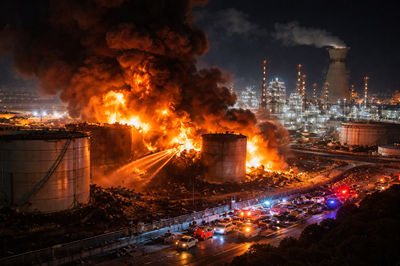
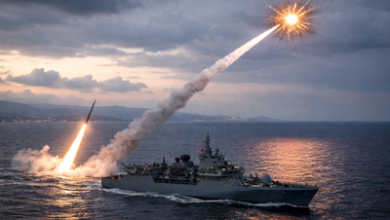
WAR-REPORT : The ongoing conflict between Iran and Israel has entered a more dangerous and complex phase, marked by direct attacks on critical energy infrastructure. In a significant escalation, Iranian missiles have targeted a major oil refinery in the northern port city of Haifa, signaling a shift from traditional military targets to economic and industrial assets.
This development reflects a broader change in the nature of the conflict. What began as a strategic military confrontation is now evolving into a wider struggle involving economic disruption, infrastructure damage, and pressure on civilian systems. The strike on Haifa is not just a tactical action—it represents a strategic message with far-reaching consequences.

The Attack: Details and Immediate Impact
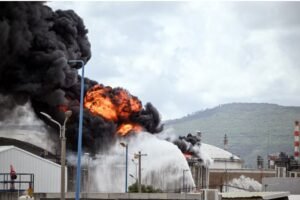
Recent reports indicate that Iranian missiles struck facilities associated with Israel’s largest oil refining complex. The attack caused fires, visible structural damage, and thick smoke rising over the industrial zone. Emergency services were deployed quickly to contain the damage and prevent further spread.
Initial assessments suggest that the damage was limited and that key operations were not completely halted. However, even partial disruption at such a critical site has immediate effects on industrial activity and public confidence.
Officials confirmed that there were no large-scale casualties, but the incident highlighted the vulnerability of important infrastructure in a high-intensity conflict. It also demonstrated Iran’s ability to strike deep into Israeli territory with precision.

Strategic Importance of the Haifa Refinery
The oil refinery in Haifa is one of Israel’s most important energy assets. It plays a central role in refining crude oil and supplying fuel for transportation, industry, and national defense.
Its importance can be understood through several key points:
- Energy Supply: It supports a large share of domestic fuel needs.
- Industrial Support: It provides materials for petrochemical production.
- National Security: It supports military logistics and operations.
By targeting this facility, Iran has signaled that economic infrastructure is now a key focus in the conflict. This represents a calculated effort to weaken resilience beyond the battlefield.

A Cycle of Retaliation
The strike on Haifa is part of an ongoing cycle of retaliation between Iran and Israel. In recent weeks, both sides have expanded their targets beyond military sites to include industrial and economic facilities.
Israel has previously carried out strikes on Iranian sites linked to energy production and military supply. In response, Iran has broadened its approach to include Israeli infrastructure of economic importance.
This pattern reflects a deliberate escalation strategy. Each side aims to deter further attacks by showing its ability to impose serious costs. However, this approach also increases the risk of continuous escalation, as each action leads to a response.
Expansion of the Conflict
The conflict is no longer limited to direct military engagements. It has expanded into several areas, each with its own risks.
1. Energy Infrastructure
Refineries, fuel storage sites, and energy facilities have become key targets, showing a shift toward economic warfare.
2. Industrial and Civilian Areas
Industrial zones and economic centers are increasingly affected, raising concerns about the impact on civilian life.
3. Regional Effects
The conflict is influencing nearby regions and important trade routes, increasing its overall impact.
This expansion raises the stakes and makes the situation more complex and difficult to manage.
Military and Tactical Implications
The attack on Haifa highlights several important aspects of modern conflict.
Precision Capabilities
Iran’s ability to strike a high-value target shows improved missile accuracy and planning.
Psychological Impact
Attacks on critical infrastructure create fear and uncertainty, affecting public morale and economic confidence.
Defensive Challenges
Protecting large industrial sites requires significant resources, forcing Israel to strengthen its air defense systems.
These factors show how modern conflicts extend beyond direct combat and affect multiple layers of national security.
Economic Consequences
Targeting energy infrastructure has both immediate and long-term economic effects.
Short-Term Effects
- Temporary disruption of operations
- Increased security and insurance costs
- Market uncertainty
Long-Term Risks
- Lower investor confidence
- Higher energy production costs
- Pressure on economic stability
Globally, such events can lead to changes in oil prices and increased uncertainty in energy markets. The connected nature of global systems means that even local incidents can have wide effects.
International Response
The escalation has drawn strong reactions from countries and international organizations.
Diplomatic Concerns
Many nations have called for restraint and de-escalation, warning about the risks of further attacks.
Security Measures
Some countries have increased their military presence in the region to protect their interests.
Economic Monitoring
Energy-dependent countries are closely watching the situation and preparing for possible disruptions.
These responses highlight the global importance of the conflict.
Risk of Wider Conflict
There is growing concern about the possibility of a broader war.
Involvement of Other Groups
Additional armed groups may become involved, increasing the scale of the conflict.
Geographic Spread
Attacks could extend to more regions, creating multiple areas of tension.
Escalation Risks
The ongoing cycle of retaliation increases the chance of miscalculation, which could lead to a larger conflict.
The situation remains highly uncertain and sensitive.
Energy Warfare: A New Phase
The strike on the Haifa refinery represents a shift toward energy-focused warfare.
In this phase:
- Economic infrastructure becomes a primary target
- Energy supply systems are directly affected
- Financial stability becomes part of the conflict
This change makes the conflict more complex and increases its overall impact.
Possible Future Scenarios
Several possible outcomes could shape the future of the situation:
1. Controlled Escalation
Both sides continue limited strikes without entering full-scale war.
2. Prolonged Conflict
The confrontation continues over a long period with ongoing attacks.
3. Regional War
More actors become directly involved, leading to a wider conflict.
4. Diplomatic Resolution
International pressure leads to talks and a ceasefire.
Each outcome carries different risks and challenges.
Our Media Opinion: A Critical Moment
The strike on the Haifa oil refinery marks a critical point in the conflict between Iran and Israel. It shows a shift toward a broader and more complex form of warfare, where economic and energy systems are directly targeted.
Although the immediate damage may be limited, the long-term implications are serious. The attack highlights the vulnerability of critical infrastructure and the increasing intensity of the conflict.
As the situation continues to develop, the decisions made by both sides and the international community will play a key role in determining whether the conflict stabilizes or escalates further.
In a connected world, the effects go far beyond the battlefield, influencing economies, societies, and global stability.