

Explosive Iran Defense Infrastructure Strikes: 9 Major Military Targets Hit in Escalating Middle East Conflict
By Samir Singh 'Bharat': Editor In Chief

WAR-REPORT : The security situation in the Middle East has entered a new and volatile phase as coordinated military strikes targeting Iran’s defense infrastructure intensify. Over the past several days, a series of operations attributed to joint American and Israeli forces have targeted key industrial zones, drone manufacturing facilities, and internal security infrastructure linked to the Iranian state. These strikes appear aimed not only at degrading Iran’s military capabilities but also at weakening the regime’s ability to maintain domestic control during a period of heightened tension.
The operations, conducted across several provinces in Iran, represent one of the most extensive campaigns against the country’s defense-industrial network in recent years. Military analysts say the attacks demonstrate a strategic shift from limited tactical strikes toward a broader effort to disrupt Iran’s drone production, internal security apparatus, and logistical networks that support both military operations and domestic repression.

Evacuation Warning Issued for Qom Industrial Zone
On March 6, the Israel Defense Forces issued an evacuation warning for workers and residents near the Shokouhiyeh Industrial Zone located in Qom Province. The warning signaled that the area could soon become the target of military operations due to its connections with companies supporting Iran’s military production networks.
The Shokouhiyeh Industrial Zone hosts several firms believed to be involved in manufacturing components for Iran’s drone and defense programs. Among the most prominent is Oje Parvaz Mado Nafar Company, a firm previously sanctioned by the United States Department of the Treasury in 2021.
According to U.S. officials, the company plays a significant role in supporting the Islamic Revolutionary Guard Corps by producing specialized engines used in Iranian unmanned aerial vehicles. These engines are believed to power several types of Iranian drones that have been deployed in regional conflicts.

The evacuation warning reflects a tactic increasingly used in modern warfare: providing advance notice to civilians to minimize casualties while still allowing military operations against strategic targets. Analysts say such warnings also serve a psychological purpose, signaling that additional strikes could occur and prompting companies involved in military production to halt operations.
Attack on Tehran’s Esteghlal Industrial Zone
Later on March 6, coordinated strikes targeted the Esteghlal Industrial Zone in Tehran Province. This facility is known to house several companies connected to Iran’s defense-industrial base.
Among the entities operating in the zone is Azmoon Pajohan Hesgar LLC, a firm linked to Iran’s military procurement and research network. The United States imposed sanctions on the company in 2024, accusing it of maintaining connections with the Ministry of Defense and Armed Forces Logistics, commonly referred to as MODAFL.

U.S. sanctions officials described Azmoon Pajohan Hesgar as part of a broader procurement network that helps Iran acquire technologies and materials relevant to weapons development. The company reportedly conducts technical research and testing that supports the Iranian defense industry.
By targeting the Esteghlal Industrial Zone, the combined forces aimed to disrupt the technological infrastructure behind Iran’s military modernization efforts. Facilities in such industrial parks often include laboratories, manufacturing plants, and logistics hubs that collectively support weapons development.
Military observers note that strikes on industrial zones can have cascading effects. Damage to production facilities, testing laboratories, and supply chains can delay or halt the development of military systems, including drones, missiles, and electronic warfare equipment.
Strike on Iran Aircraft Manufacturing Industrial Company
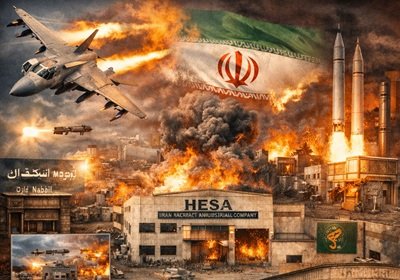
One of the most significant targets in the recent wave of strikes was the Iran Aircraft Manufacturing Industrial Company, widely known by its acronym HESA.
Located in Shahin Shahr in Isfahan Province, HESA is one of the central pillars of Iran’s domestic aerospace industry. The facility produces both aircraft and unmanned aerial vehicles used by the Iranian military.
According to satellite imagery taken on March 2, multiple buildings within the complex sustained visible damage following the strike. Analysts studying the imagery reported structural destruction across several manufacturing areas, indicating that the attack likely disrupted production operations.
HESA operates under the authority of the Ministry of Defense and Armed Forces Logistics, which oversees much of Iran’s defense industry. The facility has played a key role in producing several well-known drone models used by Iranian forces and allied groups.
Among these are the Ababil and Shahed series of drones, which have gained international attention due to their widespread use in conflicts across the Middle East and beyond.
The United States Government first imposed sanctions on HESA in 2008, citing the company’s involvement in Iran’s military aviation and drone programs. Since then, the company has remained a focal point of international concern regarding Iran’s unmanned aerial vehicle capabilities.

Importance of Iran’s Drone Industry
Iran’s drone program has expanded dramatically over the past decade, transforming the country into one of the leading producers of unmanned aerial vehicles in the region.
Iranian drones are valued for their relatively low cost and their ability to perform reconnaissance, strike, and surveillance missions. Several models are capable of carrying explosive payloads or functioning as loitering munitions, often referred to as “kamikaze drones.”
The Shahed-series drones, in particular, have become widely known for their use in regional conflicts and asymmetric warfare. Their long range and low production cost make them an attractive option for states and non-state actors seeking to challenge technologically superior opponents.
By targeting facilities involved in drone production, military planners appear to be attempting to reduce Iran’s ability to export or deploy these systems.
Such strikes could also disrupt the supply chains supporting allied groups across the Middle East that rely on Iranian drones for reconnaissance and attack operations.
Strikes on Internal Security Infrastructure
In addition to targeting industrial facilities, the combined forces also struck several sites associated with Iran’s internal security apparatus.
On March 6, attacks targeted law enforcement command centers and paramilitary bases believed to play roles in maintaining domestic order. These included police stations in Kurdistan Province and West Azerbaijan Province, both located in northwestern Iran.
Two Basij Resistance Force bases in Tehran Province were also reportedly struck during the operation.
The Basij is a paramilitary organization closely linked to the Islamic Revolutionary Guard Corps and plays a central role in enforcing the government’s authority during periods of civil unrest.
Basij units are often deployed to suppress protests, patrol urban areas, and support other security forces during crises. Their presence is considered essential to maintaining internal stability in Iran.
Attacks on IRGC Positions
Additional strikes reportedly targeted positions belonging to the Islamic Revolutionary Guard Corps in several western Iranian provinces.
These locations included sites in Ilam Province, Kermanshah Province, and Lorestan Province.
These provinces lie along Iran’s western frontier and host numerous military installations responsible for monitoring regional security and coordinating operations involving allied militias in neighboring countries.
The IRGC serves as one of the most powerful institutions within Iran’s political and military structure. Beyond its role as an elite military force, it oversees intelligence operations, strategic weapons programs, and numerous economic enterprises.
Because of its broad influence, the IRGC is often viewed as the backbone of the Iranian state’s security apparatus.
Strategy Behind the Strikes
Military analysts believe the strikes were designed to achieve several strategic objectives simultaneously.
First, targeting drone production facilities and defense-industrial companies aims to weaken Iran’s ability to manufacture and deploy unmanned aerial systems.
Second, striking internal security infrastructure could complicate the Iranian government’s efforts to maintain domestic order during periods of political tension.
Third, attacks on IRGC positions may limit the organization’s operational capabilities and reduce its ability to coordinate military activities both inside and outside Iran.
Together, these actions represent a multifaceted strategy intended to degrade Iran’s military strength while also increasing pressure on the government internally.
Impact on Iran’s Domestic Stability
Iran’s leadership has long relied on a complex network of security institutions to maintain control over the country. These institutions include the IRGC, the Basij, and the national law enforcement command.
During times of political unrest, these organizations work together to suppress protests and maintain order.
By targeting facilities associated with these groups, the strikes could disrupt coordination between security forces and reduce their operational readiness.
Although it remains unclear how much damage was inflicted on specific installations, even limited disruptions could complicate the government’s ability to respond quickly to domestic crises.
Escalating Regional Tensions
The recent wave of strikes reflects the broader escalation currently unfolding across the Middle East.
Tensions between Iran, Israel, and the United States have been rising steadily amid a series of military confrontations, cyber operations, and diplomatic disputes.
Each side accuses the others of destabilizing the region and threatening international security.
As the conflict evolves, military operations increasingly target infrastructure and industrial facilities rather than traditional battlefield formations.
Such strikes can have long-term strategic consequences, particularly when they disrupt weapons production and logistical networks.
Global Implications
The targeting of Iran’s defense industry and internal security infrastructure carries implications far beyond the immediate conflict.
Iran’s drone technology has become a significant factor in global security debates, particularly as unmanned systems become more accessible and widely used.
Efforts to disrupt Iran’s drone manufacturing capacity may influence how other countries approach the proliferation of unmanned weapons systems.
At the same time, the strikes could deepen geopolitical divisions as global powers take sides in the growing confrontation.
An Uncertain Path Ahead
As the situation continues to develop, the long-term consequences of these operations remain uncertain.
While the strikes may temporarily weaken Iran’s defense infrastructure, they could also provoke retaliatory actions or escalate tensions further.
The Middle East has often been shaped by cycles of confrontation and response, with each action triggering new developments.
For now, the recent strikes underscore the fragile nature of regional stability and the complex interplay between military operations, domestic politics, and international alliances.
What happens next will depend not only on the actions of the countries directly involved but also on how global powers respond to an increasingly volatile geopolitical environment.