

Collector backs RDT, urges end to relay fast
By Doruvu Paul Jagan Babu: Assistant Chief Editor

Anantapur – Andhra Pradesh: District Collector Dr. Vinod Kumar extended support to the ongoing Save RDT movement, emphasizing the need to protect the Rural Development Trust (RDT), which has served the poor for decades. He assured that the concerns raised would be brought to the attention of both the state and central governments.
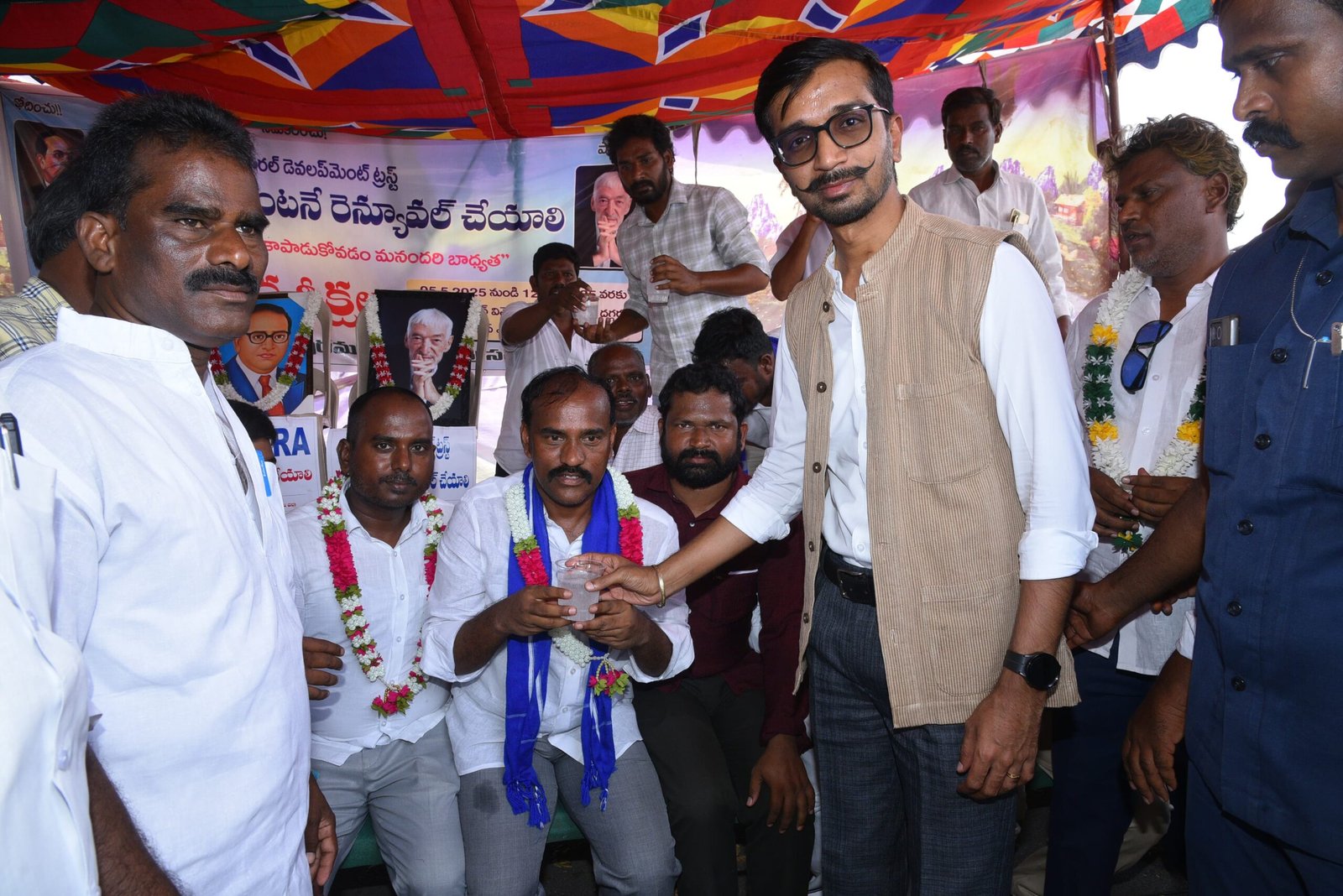
Collector visits hunger strike camp
On the eighth day of the relay hunger strike led by All-Party Committee JAC Convener Saake Hari, Collector Vinod Kumar visited the protest site and personally offered lemon juice to Saake Hari, urging him to end his fast. The hunger strike is in protest against the withholding of foreign funds to RDT, which activists believe will hinder services to the poor.
“Majority support RDT’s people-centric work,” says Collector
Addressing the gathering, Dr. Vinod Kumar noted that there is widespread public support for RDT, which has played a critical role in the upliftment of marginalized communities. “There is nothing wrong if the majority of people want the RDT, which has been working for the poor, to continue in the same spirit. I have conveyed these sentiments to the Chief Minister and will also raise this matter with the Central Government,” he assured.

All-Party leaders express gratitude, warn of continued agitation
JAC leaders including KP Raju, Kotla Gangadhar, Krishna Reddy, Obulesu, Sugamanchi Srinivasulu, and TP Ramanna expressed confidence in the district administration and thanked the Collector for his proactive role. They warned, however, that if the RDT’s services face any obstruction, they would intensify the movement by uniting all parties, caste associations, public welfare groups, progressives, socialists, and RDT well-wishers to formulate further action plans.
Broad support from civil society and activist groups

The protest witnessed participation from a wide spectrum of civil society organizations and individuals, including: Writers Association Kothapalli Suresh Babu; Artists Group Tarimela Raju and team; Divyangula Hukkal Porata Samiti’s Shafi; SC/ST Rights Groups Bandaru Kullaiyappa; Reservation Employees Federation R Narayana Nayak; RTI Activists Onnurappa and Harinath Reddy; AISA’s Vemana; Land Rights Gopalakrishna.
Call to save RDT from funding restrictions
Participants reiterated that the foreign funding restrictions on RDT could cripple essential welfare and developmental activities.
They called for immediate intervention from both the State and Centre to ensure that RDT’s services continue unhindered, especially in rural and tribal areas.