

5 Big Concerns in HPV Vaccine Controversy: RPC Chief Meda Srinivas Raises Serious Safety Questions
By Doruvu Paul Jagan Babu: Assistant Chief Editor

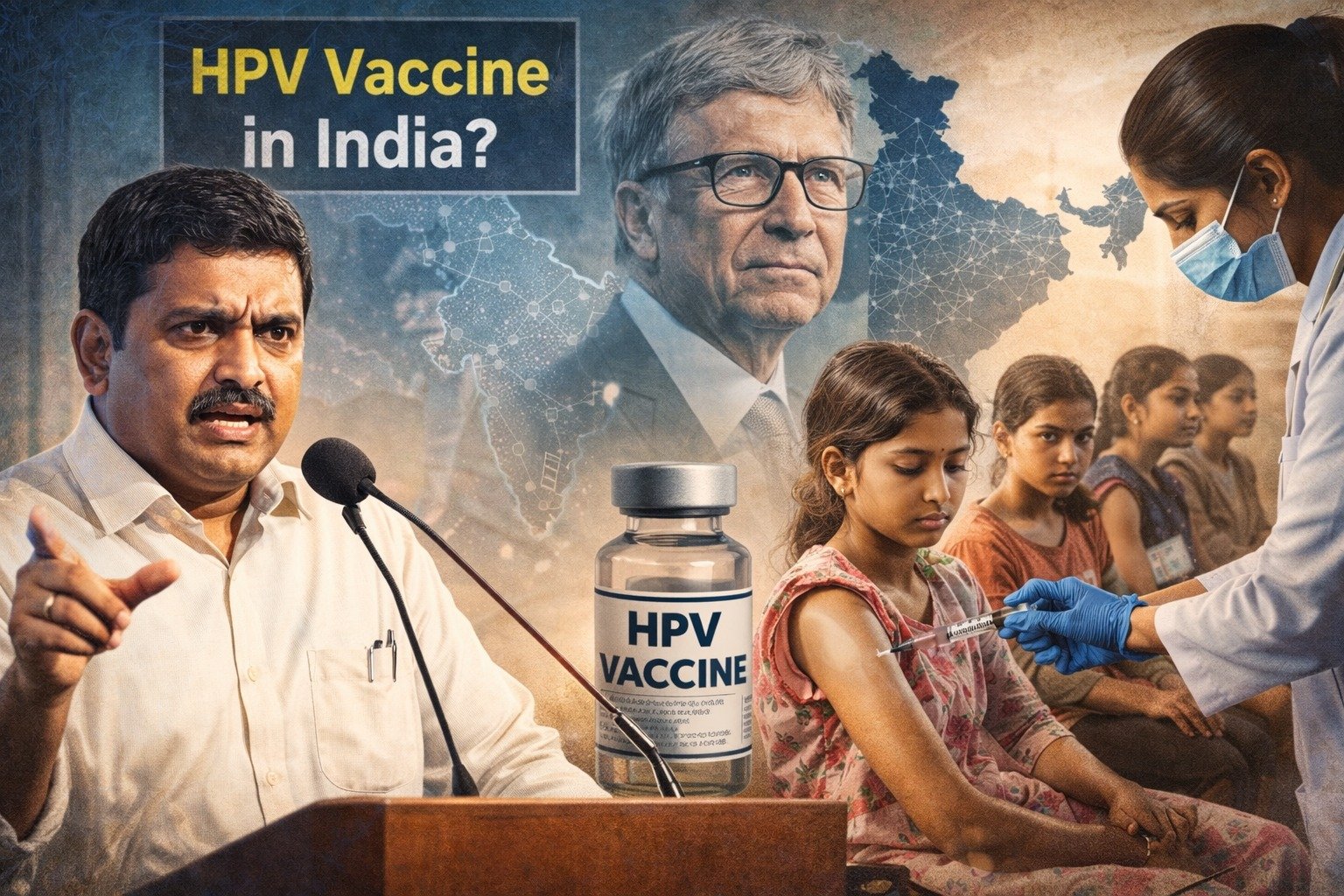
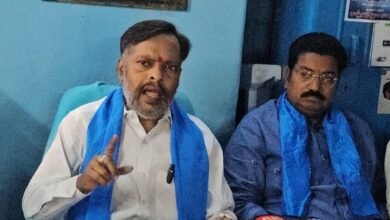
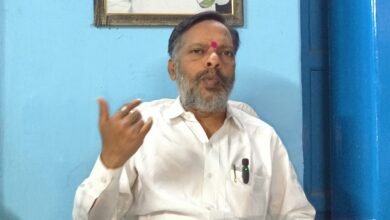
Rajahmundry: Rashtriya Praja Congress (RPC) Founding President Meda Srinivas on Sunday raised concerns over the introduction and promotion of the HPV vaccine for girls in India, urging authorities to provide greater transparency regarding its safety, clinical trials, and long-term health impact.
Speaking at a party meeting held at the RPC headquarters, Srinivas questioned the circumstances under which the vaccine is being promoted and called on the Central and State governments to address public apprehensions through clear scientific communication and accountability.
Call for clarity on vaccine trials and safety HPV
Srinivas said there are doubts among sections of the public about whether comprehensive clinical trials have been conducted before promoting the Human Papillomavirus (HPV) vaccine in India.
He stated that governments should ensure complete awareness and transparency about the vaccine’s safety, testing process, and potential side effects before implementing large-scale vaccination programmes.
“Public confidence can only be ensured when scientific information is shared openly and the people are fully informed,” he said.

Questions on free vaccination initiative
The RPC leader also questioned why the vaccine is reportedly being offered free of cost in certain programmes in India, urging the authorities to clarify the rationale and funding mechanism behind such initiatives.
He argued that governments must clearly explain the purpose and public health strategy behind the programme to avoid misinformation and speculation.
Reference to past controversies
Srinivas referred to earlier debates surrounding HPV vaccine trials conducted in parts of India, including reports from tribal areas in Khammam district during 2009 when concerns were raised about consent procedures and alleged adverse health incidents.
Although authorities had stated that the deaths reported at the time were not linked to the vaccine, the issue had generated widespread public debate and led to questions about ethical procedures in clinical trials.
Need for scientific review and public assurance
The RPC leader also cited ongoing discussions among some researchers and health experts globally regarding potential side effects of vaccines containing certain adjuvants and other components.
He called for independent scientific studies and transparent review mechanisms to evaluate long-term effects, if any, before expanding vaccination programmes.
Srinivas suggested that governments consider issuing clear guidelines and assurances regarding the monitoring of vaccine safety and responsibility in the event of any adverse effects.
Demand for public awareness campaigns
He urged the health authorities to conduct extensive public awareness campaigns to educate families about cervical cancer prevention, the role of HPV vaccination, and the scientific evidence supporting its use.
According to him, building trust among the public is essential to ensure that health initiatives achieve their intended goals.
Meeting participation
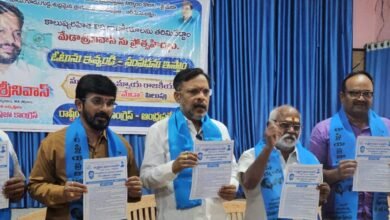
The meeting was presided over by RPC senior leader Simma Durga Rao. Several party members, including DV Ramanamurthy, Dudde Trinad, Vardhanapu Sarath Kumar, Gudla Sai Durga Prasad, Basa Sonia, Challa Siva Durga Prasad, Kakara Prasad, Masa Praveen, Mekala Kiran Kalyan, Kandiwalasa Ramana, Kolli Satyanarayana, Kotipalli Kesava Rao, Simhadri Tilak, K Gopi, and Nirmala Ruth, were present.
Party representatives said the discussion was intended to highlight the need for transparency and public engagement in major health policy decisions.