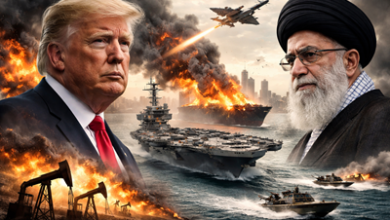




WAR-REPORT: The entry of the Houthi movement into the broader Middle East conflict marks a significant and potentially dangerous turning point in an already volatile region. What was once a localized struggle in Yemen has now evolved into a component of a wider geopolitical confrontation, with implications that extend far beyond the Arabian Peninsula.
The Houthis, formally known as Ansar Allah, have transformed from a regional insurgent group into a strategic actor capable of influencing international trade routes, energy security, and military calculations. Their involvement introduces new uncertainties, raising pressing questions about escalation, regional stability, and the potential for a wider war.

As tensions intensify, policymakers and analysts are grappling with a critical question: what comes next?
Table of Contents
ToggleFrom Local Insurgency to Regional Actor
The Houthis emerged in the early 2000s as a political and religious movement rooted in northern Yemen. Over time, they evolved into a formidable military force, capitalizing on internal divisions, weak governance, and regional rivalries.
Their takeover of Yemen’s capital, Sana’a, in 2014 marked a decisive shift, triggering a prolonged civil war that drew in regional powers. Since then, the group has demonstrated increasing military sophistication, including the use of ballistic missiles, drones, and naval capabilities.

Their ability to adapt and expand has been a defining feature of their strategy. What began as a domestic conflict has gradually taken on regional dimensions, with the Houthis positioning themselves as part of a broader axis aligned against Western and allied interests in the Middle East.
Why the Houthis Entered the Wider Conflict
The Houthis’ decision to actively engage in the broader Middle East confrontation is driven by a combination of ideological, strategic, and political factors.
1. Strategic Alignment
The group has long aligned itself with forces opposed to Western influence in the region. By joining the wider conflict, the Houthis strengthen their position within this network, enhancing both their legitimacy and their leverage.

2. Domestic Consolidation
External engagement can serve to unify internal factions and reinforce the group’s authority within Yemen. By framing their actions as part of a larger struggle, the Houthis seek to bolster domestic support and distract from internal challenges.
3. Regional Influence
Participation in a broader conflict elevates the Houthis’ status from a local actor to a regional player. This shift increases their bargaining power in any future negotiations, both within Yemen and beyond.

The Red Sea: A Strategic Battleground
One of the most immediate consequences of Houthi involvement has been the escalation of tensions in the Red Sea. This critical maritime corridor serves as a vital link between Europe, Asia, and the Middle East, facilitating a significant portion of global trade.
Houthi attacks on commercial shipping and naval vessels have disrupted these routes, creating ripple effects across the global economy. Shipping companies have been forced to reroute vessels, increasing costs and transit times.
The Red Sea’s strategic importance cannot be overstated. Any sustained disruption has the potential to affect global supply chains, energy markets, and international commerce.
A New Kind of Warfare
The Houthis have demonstrated a capacity for asymmetric warfare that complicates traditional military responses. Their use of drones, missiles, and fast-attack boats allows them to target high-value assets with relatively low-cost systems.
This approach creates several challenges:
- Difficulty of Detection: Small, mobile platforms are harder to track and neutralize.
- Cost Imbalance: Defending against low-cost attacks often requires expensive countermeasures.
- Psychological Impact: Even limited attacks can create significant uncertainty and fear.
This form of warfare is particularly effective in maritime environments, where vast areas and heavy traffic make comprehensive security difficult.
Regional Reactions: Containment or Escalation?
The Houthis’ actions have prompted varied responses from regional and international actors.
Military Measures
Naval deployments have increased, with efforts focused on protecting shipping lanes and deterring further attacks. Airstrikes targeting Houthi positions have also been reported, aimed at degrading their capabilities.
Diplomatic Efforts
At the same time, diplomatic channels remain active. There is recognition that a purely military approach may not resolve the underlying issues driving the conflict.
Diverging Interests
Not all actors share the same priorities. While some emphasize immediate security concerns, others are more focused on long-term stability and conflict resolution.
This divergence complicates coordination, increasing the risk of fragmented or inconsistent responses.
The Risk of Escalation
The involvement of the Houthis introduces new escalation dynamics into an already complex conflict.
Horizontal Escalation
The conflict could spread geographically, drawing in additional actors and expanding into new theaters.
Vertical Escalation
The intensity of the conflict could increase, with more advanced weaponry and larger-scale operations.
Unintended Consequences
Miscalculations or accidental incidents could trigger broader confrontations, particularly in congested and contested areas like the Red Sea.
Each of these scenarios carries significant risks, both for regional stability and for global security.
Global Economic Implications
The economic impact of Houthi actions is already being felt across multiple sectors.
Shipping and Trade
Disruptions in the Red Sea have forced companies to adopt longer and more expensive routes. This increases costs for goods and contributes to inflationary pressures.
Energy Markets
The Middle East remains a critical hub for global energy supplies. Any instability in the region has immediate repercussions for oil and gas prices.
Insurance and Risk
Rising security concerns have led to increased insurance premiums for vessels operating in affected areas, further adding to costs.
These economic effects highlight the interconnected nature of modern global systems, where regional conflicts can have far-reaching consequences.
The Humanitarian Dimension
Amid the strategic and economic considerations, the humanitarian impact of the conflict must not be overlooked.
Yemen is already facing one of the world’s most severe humanitarian crises, with millions in need of assistance. Escalation risks worsening these conditions, further straining limited resources.
Civilian populations are often the most affected, bearing the brunt of violence, displacement, and economic hardship.
Addressing these challenges requires not only immediate relief efforts but also long-term solutions aimed at stability and development.
Possible Future Scenarios
As the situation continues to evolve, several potential trajectories can be identified:
1. Limited Containment
Efforts to secure key areas and protect critical infrastructure succeed in preventing further escalation, allowing the conflict to stabilize.
2. Prolonged Instability
The conflict persists at a lower intensity, with periodic flare-ups and ongoing disruptions.
3. Regional Expansion
The involvement of additional actors leads to a broader and more complex conflict.
4. Diplomatic Breakthrough
Negotiations result in agreements that reduce tensions and address underlying issues.
Each scenario presents its own challenges and opportunities, underscoring the uncertainty of the current moment.
Strategic Calculations: Balancing Risks and Objectives
For policymakers, the challenge lies in balancing competing priorities:
- Ensuring security without provoking escalation
- Protecting economic interests while managing costs
- Pursuing stability without compromising strategic objectives
This requires careful coordination, clear communication, and a willingness to adapt to changing circumstances.
Lessons from the Past
History offers valuable insights into the dynamics of similar conflicts. In many cases, initial assumptions about quick resolutions have proven overly optimistic.
Prolonged conflicts often result from a combination of miscalculation, underestimation of adversaries, and the complexity of regional dynamics.
Understanding these lessons is essential for avoiding repeating past mistakes.
The Role of International Cooperation
Addressing the challenges posed by the Houthis’ involvement will require coordinated international efforts.
Security Cooperation
Joint operations and intelligence sharing can enhance the effectiveness of responses.
Diplomatic Engagement
Multilateral frameworks provide platforms for dialogue and negotiation.
Economic Measures
Sanctions, incentives, and aid can influence behavior and support stability.
Effective cooperation depends on alignment of interests and sustained commitment.
Our Media Opinion : An Uncertain Path Forward
The entry of the Houthis into the broader Middle East conflict represents a significant escalation with far-reaching implications. It adds complexity to an already intricate situation, introducing new variables that must be carefully managed.
What comes next will depend on a range of factors, including strategic decisions, regional dynamics, and the ability of international actors to coordinate their responses.
While the risks are considerable, so too are the opportunities for diplomacy and conflict resolution. The challenge lies in navigating this uncertain landscape in a way that minimizes harm and promotes stability.
In the end, the trajectory of the conflict will be shaped not only by military actions but by the choices made in pursuit of peace.