

Dr. Rajkumar: The Voice, The Vision, The Vanguard of Kannada Cinema
Story By Samir Kr. Singh: Editor-In-Chief

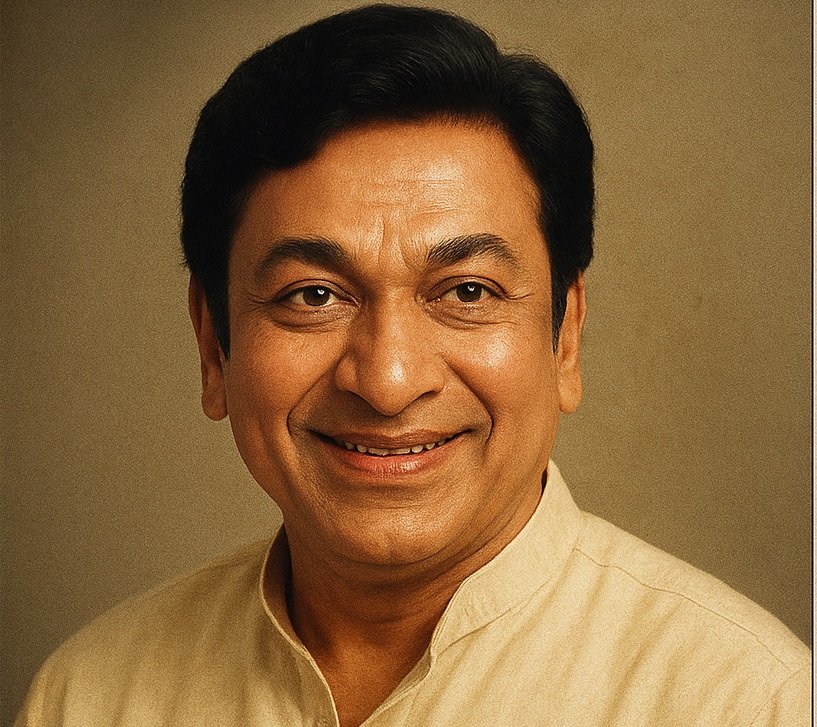
Bengaluru :In the history of Indian cinema, a few performers transcend the boundaries of box-office metrics to become living institutions. For Kannada film audiences, that institution was—and remains—Dr. Rajkumar: actor, singer, cultural icon, and a guardian figure affectionately known as Annavaru (the elder brother). Nearly two decades after his passing, the resonance of his work continues to shape the creative DNA of Karnataka’s film industry and its collective conscience. This is not merely the story of a star; it’s the chronicle of a man who became the moral centre of a region’s cinematic imagination, and the benchmark against which generations of performers measure themselves.
Early Roots of a Phenomenon
Born Singanalluru Puttaswamayya Muthuraju on April 24, 1929, in Gajanur near the Karnataka–Tamil Nadu border, Rajkumar’s first schooling was the stage. His father, Puttaswamayya, was a theatre artist, and the young boy absorbed the rhythms of Yakshagana and the rigor of company theatre while traveling with drama troupes. Those itinerant years taught the fundamentals: voice projection without amplification, discipline without excuses, and the kind of audience reading that can turn a shivering village night into an ovation. From that crucible of live performance, he carried into cinema a precision of gesture and an instinctive ear for dialogue that would set him apart.

It was a time when the modern Kannada film industry was still finding its voice. When opportunities arrived, they were often fleeting, and the jump from stage to screen was not guaranteed. Yet in 1954, with “Bedara Kannappa”, Rajkumar found both his launchpad and his motif: a role anchored in devotion, duty, and uprightness, performed with sincerity so tactile that it silenced skepticism. The film’s popular success did more than introduce a new leading man; it told the audience what this new identity of Kannada cinema could look like—rooted, dignified, and emotionally lucid.
The Making of “Annavaru”
As lead offers grew, so did Rajkumar’s range. He would move with ease from mythological epics to social dramas, from muscular adventure to mellow romance, never losing the stillness at the center of his performances. Films like “Bhakta Kanakadasa,” “Satya Harishchandra,” and “Bhakta Prahlada” sharpened his devotional screen image, while socially conscious hits such as “Kasturi Nivasa” (1971) and “Bangaarada Manushya” (1972) addressed the anxieties and aspirations of a changing Karnataka—rural migration, ethical business, and the meaning of home.
If mythologies gave him halo, the social dramas gave him spine: a moral clarity articulated in understated dialogue and expressive silence. Audiences read into his characters a durable promise—that integrity could prevail without arrogance, that compassion could coexist with strength. It wasn’t mere acting; it was moral instruction disguised as entertainment.

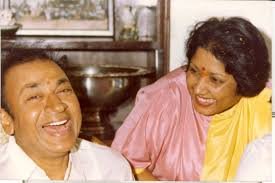
The sobriquet Annavaru did not arrive from publicity campaigns; it was conferred by audiences who felt guarded by his presence. In a film culture where heroism often leaned on bravado, Rajkumar’s screen code was distinct: he avoided smoking and drinking scenes, kept profanity at bay, and maintained a posture of respect towards women characters. Whether dictated by personal conviction or crafted for public example, the code became contagious, guiding the tenor of mainstream Kannada cinema for decades.
The Singer Who Carried a State in His Throat
Rajkumar’s voice—warm, rounded, resonant—was the other half of his onscreen authority. He was not a star who occasionally sang; he was a trained vocalist who happened to be a star. His film songs were never throwaway interludes. They carried story and character forward, often distilling the film’s moral kernel. Ballads like “Huttidare Kannada Nadalli Hutta Beku” (If one must be born, let it be in Kannada land) became more than melodies; they were declarations of cultural affection.

His triumph as a playback singer was consecrated with the National Film Award for Best Male Playback Singer for “Naadamaya” from “Jeevana Chaitra” (1992)—a recognition that placed him in rare company: a pan-Indian actor-singer applauded by the nation’s toughest jury. To older listeners, his singing evoked the theatre tent; to newer ones, it sounded like a fatherly assurance delivered through radio static. In both cases, the voice functioned like a bridge between Kannada’s classical sensibilities and cinema’s popular forms.
The Canon: A Throughline of Character and Craft
Cataloguing Rajkumar’s filmography is to map Kannada cinema’s evolution from the 1950s to the early 2000s. Among the standouts:
-
“Kasturi Nivasa” (1971): A parable about wealth, dignity, and loneliness, remembered for its heartbreaking crescendo and the actor’s masterclass in graceful restraint.
-
“Bangaarada Manushya” (1972): A film that sent urban youth back to the soil, not as nostalgia but as economic and ethical aspiration; it anchored a movement and minted a myth.
-
“Gandhada Gudi” (1973): An ode to Karnataka’s forests, pairing Rajkumar with Vishnuvardhan to create an evergreen two-hero dynamic that fans would celebrate for generations.
-
“Babruvahana” (1977): A mythological tour de force, spotlighting his ability to differentiate characters through voice and body language within the same narrative tapestry.
-
“Shankar Guru” (1978): A triple role in a mainstream entertainer, demonstrating not only versatility but the energy to hold and modulate three distinct character arcs.
-
“Jeevana Chaitra” (1992): The elder statesman phase—reflective, musical, persuasive—bringing him the National Award for singing and reaffirming his box-office appeal.
These and dozens of other titles cemented a durable template: character-driven narratives anchored by ethical dilemmas, set to music that carried moral ballast. In the process, Rajkumar did for Kannada cinema what MGR did for Tamil, and NTR for Telugu—without ever converting his cultural capital into a political career.
A Star Who Said No to Politics
In a film culture where stardom and electoral politics often travel together, Rajkumar’s refusal to enter politics is central to his legend. He believed his influence was most responsibly exercised through storytelling and personal example. The decision insulated his image from partisan tides and preserved a singular kind of trust: fans across ideologies could project their values onto him without contradiction. This neutrality wasn’t indifference; it was a disciplined choice to treat cinema as a civic platform without turning it into a party stage.
Family as Film School, Film as Family
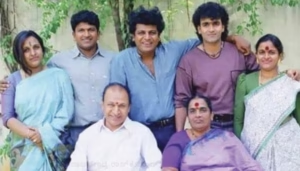
The Rajkumar household is its own studio of traditions. His wife, Parvathamma Rajkumar, became a formidable producer and distributor, shepherding projects that reinforced the family’s quality bar and ethics. Their sons—Shiva Rajkumar, Raghavendra Rajkumar, and Puneeth Rajkumar—each carved distinctive careers, with Puneeth eventually becoming an icon in his own right. But lineage alone does not guarantee loyalty. What the audience respected was the continuity of craft and conduct from one generation to the next. In an industry where volatility is constant, the Rajkumar family offered continuity—an inheritance of discipline, voice training, and a particular clarity about the audience’s cultural pulse.
2000: The Abduction That Tested a State
On a July night in 2000, bandit Veerappan abducted Rajkumar from his farmhouse, plunging Karnataka into dread and disbelief. For 108 days the state held its breath as negotiators walked a tightrope. Bengaluru wore its fear like a shroud; theatres dimmed, public life slowed, and every bulletin was a collective vigil. When Rajkumar was finally released in November that year, the homecoming felt less like a personal relief and more like a social reset. He went on camera to counsel calm and discourage vengeance—again choosing his voice as balm over bluster. The episode confirmed the depth of the bond: this was not merely fan devotion; it was filial.
Awards, But More Than Awards
Dr. Rajkumar received the Dadasaheb Phalke Award—Indian cinema’s highest honor—mid-1990s, a formal imprimatur on what viewers already knew. The state had earlier decorated him with the Karnataka Ratna, among other distinctions. Yet the decoration that mattered most to fans was the one he wore every day: an unblemished public comportment that made him a rare figure of trust. In an age of gossip columns and paparazzi flashbulbs, Rajkumar’s life remained—by design—quiet. The absence of scandal was not sterilized PR but a lifestyle of guardrails that he seldom breached.
April 12, 2006: A Farewell that Shook the City
Rajkumar passed away on April 12, 2006. Bengaluru erupted in grief that sometimes spilled into unrest, a chaotic testimony to the scale of his influence. The city’s arteries were choked with mourners; many wept not for a star but for a relative they had never met. The state conducted the final rites with the full weight of public ceremony, and a memorial would later rise to mark a life larger than marquee letters could hold. The aftermath forced introspection: How does a society honor grief without letting it turn brittle? In the days that followed, leaders, artists, and common citizens seemed to return to Rajkumar’s own example—discipline, restraint, respect.
The Rajkumar Ethic
Beyond the role choices and the chartbusters lies an ethic that can be summed up in five habits:
-
Discipline: From early call times to vocal training, he treated cinema like a craft shop, not a shrine to his own reflection.
-
Respect: Co-stars, technicians, journalists—everyone got dignity. The set was a commons, not a courtroom.
-
Cultural Anchoring: He wore Kannada language and culture not as a costume but as skin; songs and dialogues were vehicles of preservation, not mere props.
-
Public Responsibility: No alcohol or smoking on screen, no gratuitous violence, and a conscious awareness of the audience’s moral intake.
-
Privacy as Principle: In the age-old tension between celebrity access and personal boundaries, he chose boundaries—and turned them into a lesson on balance.
These habits infiltrated the industry, codifying a kind of “Rajkumar Standard” that directors, writers, and actors still cite when arguing for dignity on the page and decency on the screen.
Influence on the Craft: The Actor’s Toolkit
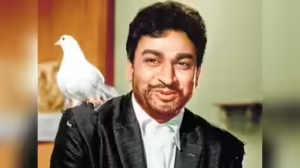
Ask veteran directors to parse his performances and they will talk about micro-calibrations: the measured lift of the eyebrow before a line lands, the half-beat pause that makes a moral argument feel earned rather than preached, the melodic phrasing that turns dialogue into recitative without sounding sing-song. As a singer, he mastered breath control that allowed sustained emotional notes without vocal strain—a skill traceable to stage drills and classical training.
Technicians recall that he understood lenses and blocking as fluently as he understood character arcs. He could adjust a performance to a wide shot without flattening it, and then turn intimate in a close-up without overacting. That technical literacy made him an editor’s ally and a cinematographer’s favorite, saving time while enriching the coverage.
Kannada Pride, Indian Canvas
While firmly rooted in Karnataka’s soil, Rajkumar was never parochial in his ambition. He wanted Kannada cinema to converse with the rest of India, not compete through noise. This is why films like “Bangaarada Manushya” read today as development narratives as much as domestic dramas. His nationalism was cultural rather than political: strengthen the local language, dignify the farmer and the worker, push for education, and let cinema uplift without sermonizing.
The songs he voiced—in particular the ones praising the Kannada language and land—were love letters with civic instruction. School functions across Karnataka still play them; children who never saw him on the big screen can hum refrains that he popularized, learning regional pride as a melody long before it becomes a thesis.
After the Curtain: A Legacy That Works Overtime
What happens to a film industry after it loses its north star? In Kannada cinema’s case, the answer has been a creative diversification that nonetheless bows to Rajkumar’s grammar. New-age filmmakers experiment with form and theme, but few jettison the decency clause. Actors who embrace anti-hero complexity still pay tribute to the older ethos by preserving a core of empathy. Even star vehicles find room for families, farmers, and workers, not as clichés but as repositories of dignity. In an age of pan-Indian spectacles and streaming disruption, that continuity is no small feat.
The institutional legacy carries on in foundations, memorials, and awards in Rajkumar’s name. But the more vivid legacy is visible in everyday practice: the way a newcomer greets a lightman; the way a producer budgets for music and training; the way a lyricist treats Kannada as treasure and not just a toolkit for hooks.
The Rajkumar–Parvathamma Partnership
In conversations about his career, one name recurs with gravitational pull: Parvathamma Rajkumar. She was not a background figure; she was a force—curating scripts, enabling launches, defending standards. This partnership underwrote the steadiness of Rajkumar’s journey. If his screen presence offered assurance to the audience, her off-screen stewardship provided assurance to the industry that a Rajkumar film stood for certain guarantees: fairness, punctuality, and a refusal to cut ethical corners to make a deadline.
The House That Songs Built
There is a reason so many Karnataka households keep a Rajkumar devotional or patriotic cassette in their keepsake boxes. Those songs are not just nostalgic souvenirs; they are intergenerational bridges. Grandparents who saw “Satya Harishchandra” in single-screen theatres passed down the tracks to parents who watched “Shankar Guru” in the vibrant 70s, who then introduced “Jeevana Chaitra” to the cable-TV generation. Through those songs, Rajkumar remains a current, not just a memory—carrying the region’s linguistic and moral signatures onward.
The Eternal Present Tense of Rajkumar
Legends don’t retire; they remain in the present tense. There is always a new restoration premiering on television, a birthday marathon on radio, a film festival panel invoking his methods, or a young singer attempting a Rajkumar classic on a reality show. Every such moment reactivates the old pact between star and state: he gave Karnataka the confidence to see itself with kindness and clarity, and in return Karnataka keeps his memory in active service.
Why He Still Matters
In an age where celebrity turnover is rapid and controversies are currency, Rajkumar’s relevance rests on three pillars:
-
Ethical Stardom: He demonstrated that box-office dominance does not require moral compromise; audiences will reward decency if it is delivered with craft.
-
Cultural Stewardship: He modeled how to celebrate regional identity without antagonizing others, keeping pride both radiant and generous.
-
Craftsmanship: He proved that rigorous training—in voice, body, and camera literacy—outlasts trend cycles.
For an industry negotiating the tectonics of pan-Indian releases and global streaming platforms, these lessons remain vital. The Kannada film renaissance of recent years stands not apart from Rajkumar’s influence but upon it.