

A U.S.-Imposed Oil Blockade on Cuba Fuels Energy Scarcity
By Samir Singh 'Bharat': Editor In Chief

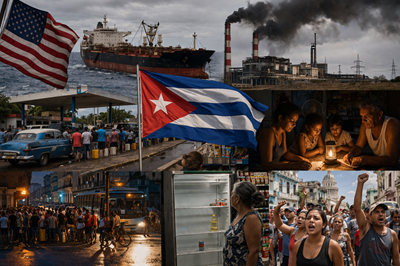
WAR-REPORT : Cuba is currently facing one of the most severe energy shortages in its recent history, a crisis that has been significantly exacerbated by restrictions on oil imports linked to longstanding United States sanctions. The tightening of these measures, often described by Cuban authorities and analysts as a de facto oil blockade, has had far-reaching consequences for the island nation. It has not only disrupted energy supplies but has also intensified an already fragile humanitarian situation, contributing to growing dissatisfaction among the Cuban population.
At the center of the crisis lies Cuba’s heavy dependence on imported fuel. Unlike countries with abundant domestic energy resources, Cuba relies extensively on external suppliers to meet its energy needs. For years, Venezuela served as a primary source of subsidized oil shipments, providing Cuba with a degree of stability in its energy sector. However, economic and political challenges in Venezuela have led to a significant reduction in these supplies, leaving Cuba increasingly vulnerable to external pressures.
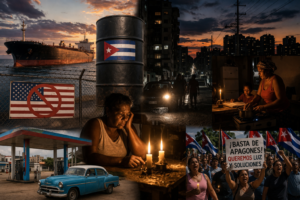
Cuba Energy Crisis: What Is Happening Now
The impact of United States sanctions has further complicated this situation. In recent years, Washington has intensified efforts to restrict Cuba’s access to international energy markets by targeting shipping companies, insurers, and financial institutions involved in transporting oil to the island. These measures have created a climate of risk and uncertainty, discouraging many potential suppliers from engaging with Cuba. As a result, fuel deliveries have become irregular, insufficient, and often delayed.
The consequences of this disruption are visible across nearly every sector of Cuban society. Electricity generation, which depends heavily on fuel oil and diesel, has been particularly affected. Power outages have become increasingly frequent and prolonged, with some regions experiencing blackouts lasting several hours each day. These outages disrupt daily life, hinder economic activity, and place additional strain on essential services such as hospitals, schools, and public transportation.
The healthcare system, long regarded as one of Cuba’s strengths, is now under significant pressure due to the energy crisis. Hospitals require a steady supply of electricity to operate critical equipment, preserve medications, and maintain basic sanitary conditions. Frequent power interruptions compromise these functions, forcing medical staff to rely on backup generators that themselves depend on scarce fuel supplies. This situation has raised concerns about the quality and reliability of healthcare services, particularly in rural and underserved areas.

The energy shortage has also had a profound impact on food production and distribution. Agriculture in Cuba relies on fuel for irrigation, transportation, and processing. With limited access to diesel and other fuels, farmers face difficulties in planting, harvesting, and transporting crops. This has contributed to reduced agricultural output and increased food shortages, further aggravating the humanitarian situation. Urban areas, which depend on regular deliveries of food from rural regions, have been especially affected.
Transportation systems across the country have been severely disrupted as well. Public buses, freight vehicles, and private transportation all depend on fuel, and shortages have led to reduced services and longer wait times. In many cities, commuters face significant challenges in reaching their workplaces, schools, or healthcare facilities. The decline in transportation efficiency has also affected the distribution of goods, leading to delays and increased costs.
Economic activity in Cuba has slowed considerably as a result of the energy crisis. Industries that rely on consistent power supply, such as manufacturing and tourism, have been particularly hard hit. Factories have been forced to reduce production or shut down temporarily, leading to job losses and decreased income for workers. The tourism sector, a vital source of foreign currency for the country, has also been affected by unreliable electricity and reduced services, making Cuba a less attractive destination for international visitors.
The cumulative effect of these challenges has been a significant deterioration in living conditions for many Cubans. Access to basic necessities such as food, clean water, and healthcare has become more difficult, particularly for vulnerable populations. Inflation and shortages have eroded purchasing power, making it increasingly difficult for families to meet their daily needs. In this context, frustration and discontent have grown among the population.
Public expressions of dissatisfaction have become more visible in recent months. While Cuba has historically maintained strict controls on political dissent, the severity of the current crisis has led to a rise in protests and public criticism. Citizens have taken to the streets in various parts of the country to demand better living conditions, reliable electricity, and improved access to essential goods. These demonstrations, although limited in scale, reflect a broader sense of frustration and urgency.
The Cuban government has acknowledged the challenges posed by the energy crisis and has taken steps to mitigate its impact. Efforts have been made to diversify energy sources, including increased investment in renewable energy such as solar and wind power. Authorities have also implemented measures to ration fuel and prioritize its use for critical sectors. However, these efforts have faced limitations due to financial constraints, infrastructure challenges, and the ongoing impact of external sanctions.
In addition to domestic measures, Cuba has sought to strengthen its international partnerships to secure alternative sources of fuel. Countries such as Russia, Mexico, and Algeria have provided some assistance in the form of oil shipments and financial support. However, these contributions have not been sufficient to fully offset the reduction in supplies from traditional sources or to overcome the barriers created by U.S. sanctions.
The broader geopolitical context plays a significant role in shaping the current situation. The United States has long maintained a policy of economic pressure on Cuba, aimed at promoting political change. Critics argue that these measures disproportionately affect ordinary citizens by restricting access to essential resources, while supporters contend that they are necessary to hold the Cuban government accountable. Regardless of the perspective, the impact of these policies on Cuba’s energy sector and humanitarian conditions is undeniable.
International organizations and humanitarian groups have expressed concern about the situation in Cuba. They have called for measures to ensure that the Cuban population has access to essential goods and services, emphasizing the importance of separating humanitarian considerations from political objectives. Some have advocated for the easing of restrictions on fuel and other critical supplies to alleviate the immediate crisis.
The long-term implications of the current situation are significant. Prolonged energy shortages could lead to further economic decline, increased migration, and greater social instability. The ability of the Cuban government to manage these challenges will depend on a combination of internal reforms, external support, and changes in the international environment.
At the same time, the crisis has highlighted the need for structural changes within Cuba’s energy system. Reducing dependence on imported fossil fuels and investing in sustainable energy sources could enhance resilience and reduce vulnerability to external shocks. However, achieving this transition will require substantial investment, technological expertise, and time.
The current crisis also underscores the interconnected nature of energy, economics, and social stability. Disruptions in one area can quickly cascade into others, creating a complex web of challenges that are difficult to address in isolation. In Cuba’s case, the energy shortage has not only affected economic output but has also had profound social and humanitarian consequences.
As the situation continues to evolve, the experiences of ordinary Cubans remain at the center of the crisis. For many, daily life has become a struggle to secure basic necessities and cope with ongoing uncertainty. The resilience of the population is evident in their ability to adapt to challenging conditions, but the limits of this resilience are being tested.
Our Media Opinion, the tightening of restrictions on Cuba’s access to oil has played a critical role in deepening the country’s energy crisis. This, in turn, has exacerbated existing humanitarian challenges and contributed to growing domestic discontent. Addressing this situation will require a multifaceted approach that considers both immediate needs and long-term solutions. While the path forward remains uncertain, the urgency of the crisis underscores the importance of coordinated efforts to alleviate suffering and promote stability in Cuba.