

Coal Dust to Glamorous Dreams: Amitabh Bachchan’s Early Working Journey
By Samir Singh "Bharat" : Chief Editor

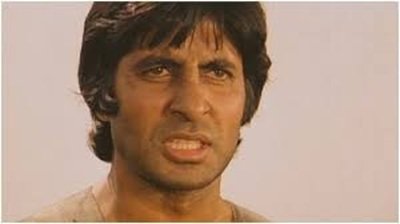
Special Report : Amitabh Bachchan, widely regarded as one of the greatest actors in Indian cinema, did not begin his professional life under studio lights or on glamorous film sets. Long before the “angry young man” persona was etched into the collective imagination of millions, and decades before audiences around the world would chant his iconic dialogues, Amitabh’s working life began in a world very far removed from fame — deep within the coal belt of eastern India.
Today, when we celebrate the towering legacy of Amitabh Bachchan — from his debut in Saat Hindustani (1969) to his reign over decades of Indian cinema — it’s important to revisit his formative years. The story of his early professional life is a testament not just to his eventual stardom, but to the grit, humility, and real-world experience he carried into the world of movies. A chapter of his life that remains relatively unknown is his association with the coal mines of Dhanbad, Raniganj, and Asansol in the 1960s, where a young Amitabh Bachchan first tasted the rigours of work far removed from academic life and artistic aspiration.


A Formative Beginning: From Allahabad to Calcutta
Amitabh Bachchan was born on 11 October 1942 in Allahabad (now Prayagraj), Uttar Pradesh, into the family of the distinguished poet Harivansh Rai Bachchan and theatre-involved mother Teji Bachchan. His upbringing was intellectual and culturally rich, rooted in literature, poetry, and the arts. After schooling at Sherwood College in Nainital, and then at Kirori Mal College, University of Delhi, where he earned a Bachelor of Science degree, Bachchan was well positioned for a life shaped by ideas and creativity. However, after completing his studies in the early 1960s, he faced the practical challenge that confronts many young graduates — finding meaningful work and economic stability.
Like many of his contemporaries, Amitabh found that the path to a creative career was neither easy nor immediately open. Opportunities in theatre and cinema were limited, and breaking into the film industry was (and continues to be) extremely competitive. Thus, in 1962, he accepted a job that was grounded not in poetry or performance but in the gritty, demanding world of industrial work.


Bachchan secured employment in Calcutta (now Kolkata) with the coal department of a company that operated across India’s eastern coalfields. This position would shape his early professional identity and, in many ways, inadvertently prepare him for the discipline, resilience, and emotional range that would later define his acting. As he himself has recounted, this was his first job before joining the movies — and it was a role that immersed him literally and metaphorically into the depths of Indian coal country.
Into the Coalfields: Dhanbad, Raniganj, and Asansol
During the 1960s, the coalfields of eastern India — including the Dhanbad region in Jharkhand and the Raniganj–Asansol belt in West Bengal — were among the most active and challenging industrial landscapes in the country. These regions were known for intensive coal mining operations, characterized by harsh working conditions, long hours, and the omnipresent danger that comes with extracting one of the country’s most vital natural resources.

It was into this world that Bachchan ventured as part of his job in the coal department. Although he was not a miner in the traditional sense — he was employed in a corporate coal department based out of Calcutta — his duties frequently took him to the coalfields themselves. This meant being stationed in, and travelling through, areas such as Dhanbad and Raniganj/Asansol, where coal extraction was not merely an industrial activity but the defining feature of the local culture and economy.
Rising early, navigating rough terrain, witnessing the backbreaking toil of miners, and engaging with the logistics of coal handling and supply all contributed to Bachchan’s understanding of labour far removed from his academic past. His engagement with the coalfields provided him with a rare insight into the life of India’s industrial workforce, a world often overlooked by intellectual circles or the urbane middle class.
The experience was formative. In later years, he would recall this phase with sincerity, acknowledging that many scenes in his 1979 film Kaala Patthar drew from his own experiences during this period.

Life Lessons from the Coal Belt
Working in and around coalfields in Dhanbad and the Raniganj-Asansol region was demanding. The physical environment itself was unforgiving — dust-laden air, intense heat, and the constant risk of accidents were part of daily life. The coal industry has historically been fraught with hazards: mine collapses, methane gas buildups, and infrastructure challenges. While Bachchan was primarily employed in administrative functions — notably within the coal department of his company — he was frequently present at mining sites, coordinating operations and learning the practicalities of industrial coal work.
These early professional years taught him several invaluable lessons:
-
Humility in the face of hard labour: To see first-hand the efforts of miners — men and women who risked their lives daily — was to gain a profound respect for physical labour.
-
Empathy and human complexity: These regions were populated by workers whose lives revolved around coal. Many were deeply resilient, noble in their endurance, and grounded in community — qualities that later helped Bachchan portray characters with emotional depth and social realism.
-
A strong work ethic: Labouring, overseeing operations, and navigating tricky logistical challenges reinforced the importance of discipline and persistence — traits that would become hallmarks of his professional life in cinema.
By the mid- to late-1960s, Bachchan’s experiences in the coalfields had not only grounded him in the realities outside urban India but also shaped his worldview, making him acutely aware of the socio-economic diversity that defines the nation.
Transitioning Toward Cinema
Despite the pragmatism of his early work, the world of cinema continued to beckon. In 1969, Bachchan made a bold decision that would change his life forever — he resigned from his job in the coal department and moved to Bombay (now Mumbai) to pursue acting full-time. His departure from the coalfield job was not a rejection of that experience; rather, it was a transition informed by the confidence and maturity he had gained while working hard in a demanding industrial context.
His first break came with Saat Hindustani (1969), directed by Khwaja Ahmad Abbas, where he was cast as one of seven protagonists. The film, which dealt with the liberation of Goa from Portuguese rule, marked Amitabh’s entry into Bollywood. The role was modest by later standards, but it was the beginning of a meteoric rise that would see Bachchan become one of India’s most iconic actors. Yet, his coalfield experience was never far from his mind. A decade later, in 1979, he starred in Kaala Patthar, a Yash Chopra-directed film that depicted the grim reality of coal miners in the wake of the Chasnala mining disaster near Dhanbad. The film drew heavily from his own experiences working in and around these coalfields. Amitabh himself acknowledged that many scenes in the film were inspired by what he witnessed during his early professional life in the coal department.

The Legacy of Those Early Years
Amitabh Bachchan’s journey from coalfields to cinema stages is remarkable not only because of its dramatic contrast but because of what it reveals about resilience, adaptability, and empathy.
His work in Dhanbad, Asansol, Raniganj, and surrounding coalfields wasn’t a detour — it was a grounding force that endowed him with a rare authenticity. Many of his later cinematic characters — especially those that struggled against social injustices, economic hardship, or personal anguish — carried echoes of the strength and complexity he observed in coal miners and industrial workers.
Moreover, Bachchan’s willingness to share these experiences later in life — including on social platforms and talk shows — has helped demystify the early struggles of one of India’s most celebrated actors. His candid reflections remind us that before the glamour, before the awards, before the global recognition, there was a young man learning about life amid the coal dust of eastern India.
A Journey Woven with Real-World Threads
Amitabh Bachchan’s early working journey in the coalfields of Dhanbad and the Raniganj-Asansol region in the 1960s is a chapter of his life that deepens our appreciation of his later artistic achievements. It reveals a formative period defined by exposure to hard labour, human endurance, and the economic realities of industrial India. These experiences enriched his perspective, shaped his approach to his craft, and continue to resonate in his work decades later.
In tracing this journey — from the coal dust of eastern India to the bright lights of Bollywood — we find not just a narrative of success, but a narrative of connection to ordinary lives, of enduring respect for labour, and of the belief that every chapter of life, no matter how unglamorous, contributes to the making of a legend.