


Benin Attack: JNIM Escalates Violence in Benin 2026
By Samir Singh 'Bharat': Editor In Chief

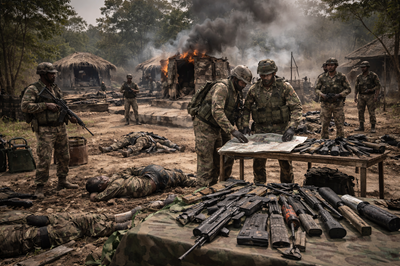
WAR-REPORT : The al-Qaeda-affiliated group Jama’at Nusrat al-Islam wal-Muslimin (JNIM) has carried out a series of coordinated attacks on key military positions in northern Benin, marking the most significant escalation of jihadist violence in the country since April 2025. These operations represent a troubling development for Benin, which until recent years had largely been insulated from the widespread insurgency affecting much of the Sahel region. The attacks not only highlight the growing reach of extremist groups but also underscore the evolving nature of security threats along West Africa’s coastal frontier.
JNIM Attack in Benin: What Happened
According to multiple reports from regional security sources, JNIM fighters targeted several army outposts in Benin’s northern departments, particularly in areas bordering Burkina Faso and Niger. These regions, characterized by dense forests, porous borders, and limited state presence, have increasingly become vulnerable to cross-border incursions by militant groups. The attackers reportedly employed a combination of tactics, including ambushes, coordinated assaults, and the use of improvised explosive devices, demonstrating a level of sophistication that has raised concerns among security analysts.

The scale and coordination of the attacks suggest careful planning and a high degree of operational capability. In several instances, militants struck multiple positions simultaneously, overwhelming local defenses and forcing security forces to withdraw or regroup. Casualty figures have not been officially confirmed, but initial estimates indicate that both military personnel and civilians may have been affected. The destruction of infrastructure and the seizure of equipment further underscore the severity of the assaults.
JNIM, which operates across several countries in the Sahel, has steadily expanded its area of operations over the past few years. Originally concentrated in Mali, the group has extended its influence into Burkina Faso and Niger, exploiting weak governance, local grievances, and difficult terrain. The recent attacks in Benin appear to be part of a broader strategy aimed at pushing southward into coastal West Africa, where governments are generally more stable but increasingly under pressure from insurgent activities.
Benin’s northern regions have long been considered a buffer zone between the relatively stable coastal states and the conflict-affected Sahel. However, this buffer has been eroding as militant groups intensify their efforts to establish footholds in new territories. The attacks by JNIM indicate that Benin is no longer merely at risk of sporadic incursions but may be facing a more sustained and organized threat.

The implications of this shift are significant. For Benin, the immediate challenge lies in securing its northern borders and protecting vulnerable communities. The government has already taken steps to reinforce its military presence in the region, deploying additional troops and increasing patrols. However, the effectiveness of these measures will depend on the ability to address the underlying factors that enable militant groups to operate, including limited infrastructure, economic marginalization, and local grievances.
At the same time, the attacks highlight the limitations of a purely military response. While security operations are essential for containing immediate threats, they must be complemented by broader efforts to strengthen governance, improve public services, and build trust between the state and local populations. Without such measures, there is a risk that militant groups could exploit dissatisfaction and recruit new members from affected communities.
The regional dimension of the threat further complicates the situation. JNIM operates across national boundaries, taking advantage of the lack of coordination and capacity among neighboring states. This makes it difficult for any single country to effectively counter the group’s activities. As a result, there is a growing recognition of the need for enhanced regional cooperation, including intelligence sharing, joint operations, and coordinated strategies.
Organizations such as the Economic Community of West African States (ECOWAS) and the African Union have emphasized the importance of collective action in addressing the spread of extremism. However, translating these commitments into effective action remains a challenge, particularly given the varying levels of capacity and political will among member states. The situation in Benin underscores the urgency of strengthening these mechanisms and ensuring that they are adequately resourced and implemented.
International partners also play a crucial role in supporting efforts to counter the jihadist threat. Countries such as France and the United States have historically been involved in security initiatives in the Sahel, providing training, equipment, and intelligence support. While their presence has evolved in recent years, their expertise and resources remain important for building local capacity and enhancing regional security.
The humanitarian impact of the attacks cannot be overlooked. In addition to the immediate loss of life and damage to infrastructure, such incidents often lead to displacement and disruption of livelihoods. Communities in northern Benin, many of which already face economic challenges, may find it increasingly difficult to sustain themselves in the face of ongoing insecurity. This, in turn, can create conditions that further exacerbate instability and hinder development efforts.
Education and healthcare services are particularly vulnerable in conflict-affected areas. Schools may be forced to close due to security concerns, depriving children of access to education and increasing the risk of long-term social consequences. Similarly, healthcare facilities may struggle to operate effectively, limiting access to essential services and exacerbating public health challenges.
The psychological impact of the attacks is also significant. Fear and uncertainty can have lasting effects on communities, eroding social cohesion and undermining confidence in state institutions. Addressing these issues requires not only security measures but also efforts to support affected populations and promote resilience.
From a strategic perspective, the attacks in Benin may signal a broader shift in JNIM’s operational priorities. As pressure increases in traditional strongholds such as Mali and Burkina Faso, the group may be seeking to diversify its activities and establish new areas of influence. Coastal West Africa, with its economic significance and relative stability, presents an attractive target for such expansion.
This raises important questions about the future trajectory of the conflict in the region. If militant groups succeed in establishing a sustained presence in countries like Benin, it could fundamentally alter the security landscape of West Africa. This would have implications not only for regional stability but also for international security, given the potential for these groups to exploit new opportunities for recruitment, financing, and operations.
In response to the recent attacks, Benin’s government has reiterated its commitment to maintaining security and protecting its citizens. Officials have emphasized the importance of vigilance and cooperation, both within the country and with regional partners. At the same time, there is a recognition that addressing the threat will require a long-term and multifaceted approach.
Public communication and transparency are key components of this effort. By providing accurate information and engaging with communities, authorities can help to build trust and counter misinformation. This is particularly important in the context of modern conflicts, where information plays a critical role in shaping perceptions and influencing outcomes.
The role of local communities should not be underestimated. In many cases, they are the first line of defense against extremist activities, providing valuable information and support to security forces. Empowering these communities through inclusive policies and development initiatives can enhance their resilience and reduce the appeal of militant groups.
Looking ahead, the situation in Benin will likely remain fluid and challenging. The recent attacks have underscored the need for sustained attention and resources to address the evolving threat. While there are no easy solutions, a combination of security measures, regional cooperation, and socio-economic development offers the best chance of achieving long-term stability.
Our Media opinion, the coordinated attacks by JNIM on northern Benin represent a significant escalation in the country’s security challenges. They highlight the expanding reach of jihadist groups and the increasing vulnerability of coastal West African states. Addressing this threat will require a comprehensive and coordinated response that goes beyond immediate security concerns to address the underlying drivers of instability. The stakes are high, not only for Benin but for the broader region, as the outcome of this struggle will shape the future of security and development in West Africa.