


Iran Rejects 3 Powerful US Demands, Major Missile Red Line Exposed
By Samir Singh 'Bharat' : Editor-in-Chief

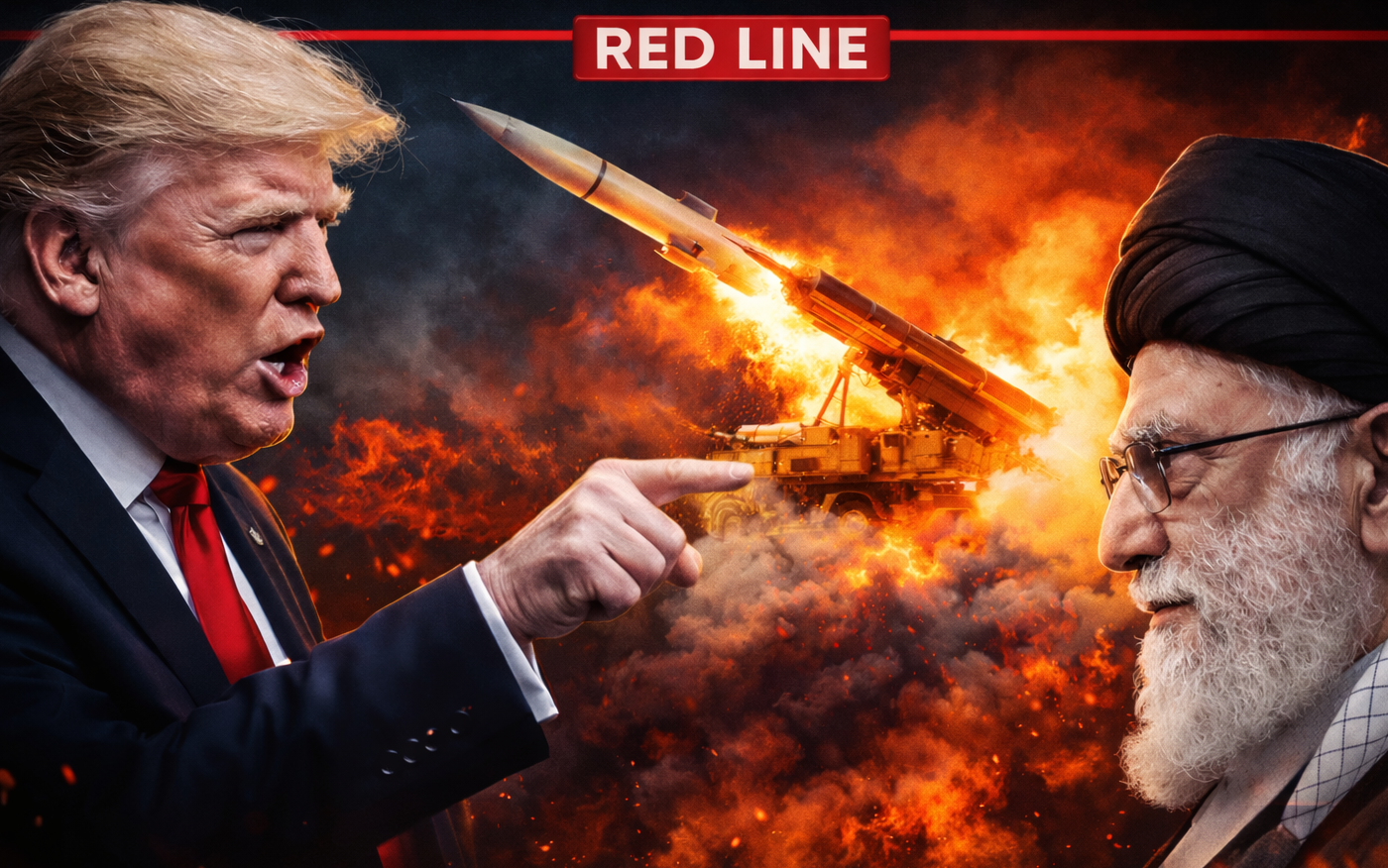
WAR-REPORT : Iranian officials are forcefully rejecting renewed American overtures to negotiate limits on Tehran’s ballistic missile program, signaling that the issue remains firmly outside the scope of any potential diplomatic compromise. The firm stance comes amid heightened rhetoric from Washington and deepening mistrust between the two longtime adversaries.
In remarks broadcast by Al Jazeera on February 13, Iranian Defense Council Secretary Ali Shamkhani described Iran’s missile capability as a “firmly established” pillar of the country’s defense doctrine. He emphasized that ballistic missiles constitute a core element of Iran’s deterrence architecture and therefore fall within what he called Iran’s “defense red lines.”
According to Shamkhani, it is “natural” that a nation’s fundamental defense components would remain outside political negotiations. His comments amount to one of the clearest official rejections to date of U.S. suggestions that missile constraints should accompany any broader diplomatic framework addressing Iran’s nuclear activities or regional conduct.
Missiles as the Backbone of Iranian Deterrence
Tehran’s position reflects a deeply rooted strategic calculation. For decades, Iran has relied on asymmetric tools and missile development to offset what it views as overwhelming conventional military disadvantages vis-à-vis the United States and Israel. Iranian leaders consistently argue that their ballistic missile program is defensive, not offensive, and designed to deter aggression rather than provoke it.
Iran’s conventional air force is widely considered outdated, relying heavily on aircraft acquired before the 1979 revolution or sourced from limited foreign suppliers. In contrast, Iran’s investment in missile and drone technologies has yielded an expanding arsenal capable of reaching regional adversaries. Officials in Tehran often frame this shift as a rational response to sanctions, isolation, and perceived external threats.

Shamkhani’s remarks suggest that Iranian policymakers are drawing a deliberate distinction between negotiable and non-negotiable domains. Nuclear policy, while politically sensitive, has historically been subject to negotiation, as evidenced by the 2015 agreement. Missile capabilities, by contrast, are treated as the bedrock of national defense and therefore non-negotiable.
Nuclear Flexibility—But With Limits
Despite rejecting missile talks, Tehran has not categorically ruled out discussions on its nuclear program. However, Iranian officials have offered no concessions approaching Washington’s longstanding demand of zero uranium enrichment. Nor have they signaled willingness to revert fully to the restrictions imposed under the 2015 Joint Comprehensive Plan of Action (JCPOA), the multilateral nuclear accord reached during the Obama administration.
The JCPOA, formally titled the Joint Comprehensive Plan of Action, placed temporary constraints on Iran’s enrichment levels, stockpile size, and centrifuge development in exchange for sanctions relief. The agreement did not address Iran’s ballistic missile program, a gap that critics in Washington and allied capitals have long cited as a major flaw.

Iranian officials now appear to be reinforcing that division: nuclear matters may be subject to technical negotiation; core deterrent capabilities are not.
Analysts note that this framing allows Tehran to maintain a semblance of diplomatic openness while protecting what it views as strategic essentials. By categorizing missiles as a defense “red line,” Iranian leaders are signaling that even a revived nuclear deal would not open the door to broader disarmament talks.
Strategic Rethink Unlikely in the Near Term
Iran’s refusal to entertain missile limitations is not merely rhetorical. Any meaningful change to its defense doctrine would require a comprehensive reassessment of national security priorities—a process that could take months or years, if it occurred at all.
Former commander of the Islamic Revolutionary Guard Corps, Mohammad Ali Jafari, underscored this strategic emphasis in public remarks in October 2025. He stated that Iran deliberately prioritized missile and drone development over modernizing its air and ground forces in order to counter what he described as the superior capabilities of the United States and Israel.
Jafari’s comments reflected a broader consensus within Iran’s security establishment: missiles and drones serve as force multipliers, compensating for conventional weaknesses while offering a credible means of imposing costs on adversaries. In practical terms, agreeing to curtail missile capabilities would mean relinquishing the primary instrument through which Iran projects deterrence.
For Iranian hardliners, such a move would be tantamount to strategic self-disarmament.
U.S. Pressure and Rising Friction
The renewed diplomatic friction unfolds against a backdrop of escalating U.S. warnings and sanctions pressure. American officials have repeatedly emphasized that Iran’s missile program poses a threat to regional stability, particularly given its potential to carry nuclear warheads if weaponization were pursued.
Although U.S. policymakers have not ruled out diplomacy, they have insisted that any sustainable agreement must address not only nuclear enrichment but also delivery systems and regional military activities. From Washington’s perspective, separating missiles from nuclear talks leaves a critical security gap.
Tehran, however, views these demands as an attempt to expand the negotiating agenda beyond what was originally agreed under the JCPOA framework. Iranian officials frequently argue that missile restrictions were never part of the 2015 accord and therefore should not be retroactively imposed as a precondition for sanctions relief.
Digital Frontlines: Starlink and the Protest Wave
Complicating the geopolitical standoff are recent revelations concerning covert U.S. assistance to Iranian protesters. According to U.S. officials cited by the The Wall Street Journal, approximately 6,000 Starlink satellite internet terminals were smuggled into Iran during a recent wave of nationwide unrest.
The terminals, developed by SpaceX under its Starlink satellite network, reportedly enabled protesters to bypass government-imposed internet shutdowns. Iranian authorities had enacted a nationwide blackout on January 8, a move widely interpreted as an effort to prevent demonstrators from coordinating gatherings and sharing evidence of the regime’s crackdown.
Satellite connectivity allowed activists and medical professionals to maintain communication with each other and the outside world. Iranian doctors, using Starlink access, told The Times on January 17 that the government’s crackdown had resulted in 16,500 deaths and approximately 330,000 injuries—figures that, if accurate, would represent one of the most severe internal crackdowns in the Islamic Republic’s history.
The Iranian government has not publicly confirmed those casualty numbers, but the scale of reported violence has drawn international condemnation and intensified scrutiny of Tehran’s domestic security tactics.
Regime Response: Seizures and Raids
In response to the proliferation of satellite internet equipment, Iranian security forces launched a sweeping operation on January 12, 2026, targeting homes in multiple cities. Authorities reportedly confiscated Starlink dishes and arrested individuals suspected of distributing or using the devices.
The aggressive campaign underscores the regime’s concern about losing informational control during periods of unrest. For decades, Tehran has relied on centralized control over telecommunications infrastructure to monitor dissent and limit coordination among protest movements.
The introduction of decentralized satellite internet represents a significant challenge to that model. Unlike traditional broadband or mobile networks, satellite-based systems are far more difficult for governments to disable entirely. By targeting hardware on the ground, Iranian authorities appear to be attempting to close this vulnerability.
Information Warfare and Sovereignty
From Tehran’s perspective, the reported smuggling of thousands of Starlink terminals constitutes direct foreign interference in domestic affairs. Iranian officials have long accused the United States of seeking regime change, and the introduction of communication tools during protests is likely to reinforce that narrative.
Washington, for its part, frames such actions as support for free expression and access to information. U.S. policymakers argue that enabling internet connectivity empowers civil society and counters authoritarian censorship.
This digital dimension adds another layer of complexity to already fraught U.S.-Iran relations. While missile negotiations revolve around traditional military deterrence, the Starlink episode highlights the growing importance of information warfare and technological leverage.
A Hardening Diplomatic Landscape
Taken together, Tehran’s refusal to negotiate missile limits and the unfolding digital confrontation suggest a hardening of positions on both sides. Iranian leaders appear intent on preserving strategic deterrence while resisting what they perceive as expanding American demands.
At the same time, U.S. officials are unlikely to abandon calls for broader constraints on Iran’s military capabilities. The result may be a prolonged diplomatic impasse, punctuated by sanctions, rhetorical escalation, and proxy tensions across the Middle East.
The central dilemma remains unresolved: how to reconcile Iran’s insistence on safeguarding its deterrent infrastructure with international concerns about regional stability and nuclear proliferation.
The Road Ahead
Any breakthrough would require bridging fundamentally different threat perceptions. For Iran, missiles are essential insurance against external aggression. For the United States and its allies, those same missiles amplify risk and uncertainty.
Moreover, the internal unrest and external technological interventions complicate the calculus. A government facing domestic instability may be even less inclined to compromise on national defense.
Diplomacy, if it resumes in earnest, will likely proceed on parallel tracks—technical discussions on nuclear parameters alongside ongoing disputes over missiles and regional behavior. Yet Shamkhani’s recent remarks indicate that Tehran has drawn a bright line around its ballistic missile program.
As long as that line remains in place, prospects for a comprehensive agreement addressing all dimensions of Iran’s military posture appear remote. The standoff illustrates not only the enduring mistrust between Tehran and Washington but also the evolving nature of modern conflict, where missiles and microchips, deterrence and digital networks, all converge in a single, high-stakes geopolitical contest.