

Russia Ukraine Peace Talks: 3 Strong Accusations from Lavrov Against US
By Samir Singh 'Bharat': Chief Editor
 war-times.com
Send an email
11 February 2026
war-times.com
Send an email
11 February 2026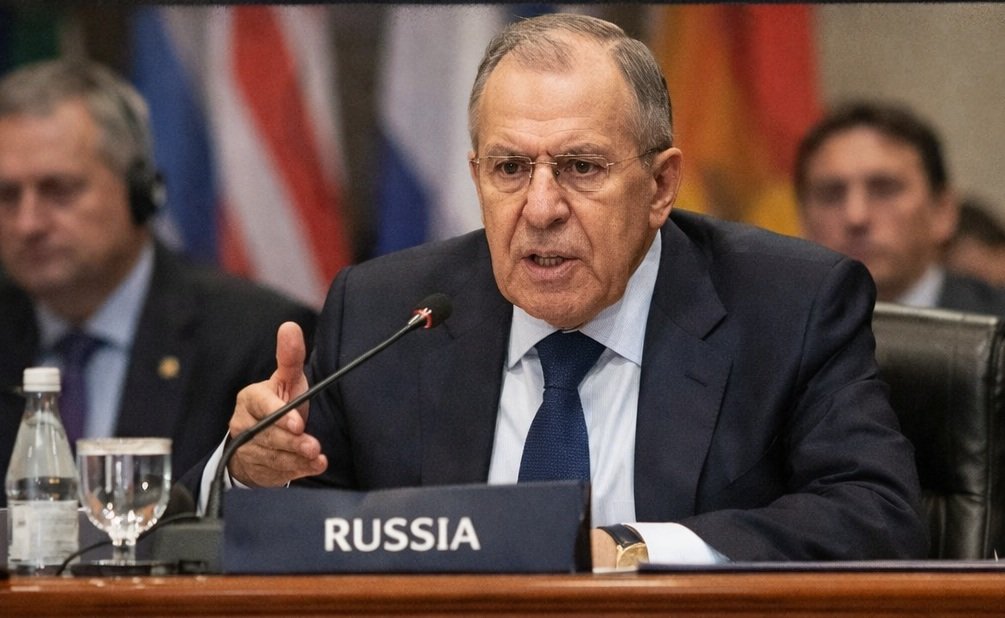
WAR-REPORT : Russian Foreign Minister Sergei Lavrov on February 10 once again placed responsibility on the United States for the continued stalemate in efforts to end Russia’s war against Ukraine, accusing Washington of obstructing diplomatic progress and preventing what he described as a realistic settlement. In his remarks, Lavrov also revived references to the spring 2022 negotiations in Istanbul, arguing that those talks had offered a viable framework for peace and using them to justify Moscow’s ongoing opposition to Ukraine receiving substantive security guarantees from Western countries.
Lavrov’s comments reflect a consistent line in Russian diplomacy over the past two years: that the war could have been resolved early on, but that Western intervention — particularly from the United States and the United Kingdom — allegedly discouraged Kyiv from accepting terms that Moscow considers reasonable. By invoking the Istanbul negotiations, Lavrov sought to reinforce the Kremlin’s narrative that Russia remains open to dialogue, while portraying Western governments as the principal obstacle to compromise.
Renewed Accusations Against Washington
Speaking publicly on February 10, Lavrov argued that Washington’s policies have directly contributed to prolonging the conflict. He claimed that the United States continues to supply Ukraine with advanced weapons, provide intelligence support, and encourage Kyiv to pursue battlefield gains rather than negotiations. According to Lavrov, these actions demonstrate that the United States is not interested in peace but instead seeks to weaken Russia strategically through a protracted conflict.
Lavrov asserted that meaningful progress toward a ceasefire or political settlement would require what he described as a shift in Western attitudes. He suggested that the United States exerts decisive influence over Ukrainian leadership and that without American approval, Kyiv would be unable to enter into serious negotiations. This claim echoes previous statements by Russian officials who have characterized Ukraine as operating under Western direction.
The Russian foreign minister framed the war not merely as a bilateral conflict between Moscow and Kyiv, but as part of a broader confrontation between Russia and the West. In this context, he argued that the United States bears responsibility for escalating tensions and for rejecting what he described as Russia’s legitimate security concerns.

Reinvoking the Istanbul Talks
Central to Lavrov’s February 10 remarks was his reference to the negotiations that took place in Istanbul in March and April 2022, shortly after Russia launched its full-scale invasion of Ukraine. Those talks represented one of the earliest serious diplomatic efforts to halt hostilities. According to various accounts from that period, the discussions included proposals for Ukrainian neutrality, limits on its military capabilities, and potential security guarantees from third-party states.
Lavrov contended that the Istanbul discussions had produced a draft agreement that could have ended the war within weeks of its outbreak. He claimed that Ukraine initially showed willingness to accept neutrality and to forgo joining NATO, but later withdrew from the draft framework under Western pressure. In particular, Lavrov suggested that the United States and the United Kingdom persuaded Kyiv to abandon negotiations in favor of continued military resistance.
While details of the Istanbul draft remain contested and incomplete, Russian officials have repeatedly portrayed it as evidence that Moscow was prepared to compromise. By revisiting this episode, Lavrov aimed to demonstrate that Russia’s current negotiating position is not new but rooted in proposals previously discussed with Ukraine.

However, Ukrainian officials have offered a different interpretation of the Istanbul talks. They have argued that Russia’s military actions, including alleged atrocities uncovered in areas such as Bucha, undermined trust and made it politically impossible to proceed with the draft agreement. Kyiv has also maintained that any agreement reached under conditions of military pressure would have been untenable and likely temporary.
Opposition to Security Guarantees for Ukraine
A key element of Lavrov’s argument on February 10 was his rejection of what he described as “meaningful security guarantees” for Ukraine. Moscow has consistently opposed Ukraine’s accession to NATO, viewing it as a direct threat to Russian national security. Lavrov reiterated that any settlement must address Russia’s long-standing concerns about NATO expansion and Western military infrastructure near its borders.
In the context of the Istanbul talks, Lavrov emphasized that proposals under discussion in 2022 did not include robust, binding security guarantees for Ukraine akin to NATO’s Article 5 collective defense commitment. Instead, the framework reportedly envisioned a form of neutrality in which Ukraine would refrain from joining military alliances while receiving more limited assurances from certain states.
Lavrov suggested that current Western discussions about providing Ukraine with long-term security commitments — whether through NATO membership, bilateral defense agreements, or other mechanisms — contradict the spirit of the Istanbul negotiations. He argued that such guarantees would effectively institutionalize Ukraine’s alignment with the West and perpetuate what Moscow sees as an anti-Russian orientation.
Russian officials have repeatedly stated that any durable peace must include formal recognition of Ukraine’s neutral status and restrictions on its military partnerships. Lavrov’s February 10 remarks indicate that Moscow continues to view this demand as a central precondition for negotiations.
Strategic Messaging and International Audience
Lavrov’s statements appear aimed not only at Western governments but also at a broader international audience. By blaming the United States for the lack of progress, Moscow seeks to position itself as a party willing to negotiate, while casting Washington as an impediment to peace. This narrative may resonate in parts of the Global South, where skepticism toward Western foreign policy is widespread.
Throughout the conflict, Russian diplomacy has emphasized themes of multipolarity, sovereignty, and resistance to Western dominance. Lavrov’s remarks fit within this broader messaging strategy. By invoking past negotiations and accusing the United States of derailing them, Moscow aims to reinforce the perception that it has been open to dialogue but thwarted by external interference.
At the same time, Lavrov’s rhetoric aligns with domestic messaging within Russia. Presenting the war as a confrontation with the United States rather than solely with Ukraine serves to justify the scale and duration of the conflict. It frames Russian actions as defensive measures in response to Western encroachment, rather than as aggression against a neighboring state.
Continued Diplomatic Deadlock
Despite periodic references to potential negotiations, there has been little concrete movement toward a ceasefire. Ukrainian officials have insisted that any settlement must include the restoration of Ukraine’s territorial integrity, including areas annexed by Russia in 2022. Kyiv has also called for accountability for alleged war crimes and for security guarantees to prevent future aggression.
Moscow, by contrast, has maintained that the territories it claims to have annexed are now part of the Russian Federation and not subject to negotiation. Russian leaders have also rejected the prospect of Ukraine joining NATO and have insisted on recognition of what they describe as new “realities on the ground.”
Lavrov’s February 10 remarks suggest that these fundamental differences remain unresolved. By reiterating Moscow’s opposition to meaningful security guarantees for Ukraine and by blaming the United States for the diplomatic impasse, he signaled that Russia’s core demands have not shifted significantly since 2022.
Broader Geopolitical Context
The timing of Lavrov’s comments comes amid ongoing military operations and sustained Western support for Ukraine. The United States and its allies have continued to provide financial assistance, weapons systems, and training to Ukrainian forces. This support has been framed by Western governments as essential to enabling Ukraine to defend its sovereignty and negotiate from a position of strength.
From Moscow’s perspective, however, such assistance reinforces its claim that the war is a proxy conflict with the West. Russian officials argue that Western involvement prolongs hostilities and reduces incentives for compromise. Lavrov’s explicit attribution of blame to the United States reflects this broader strategic framing.
At the same time, diplomatic efforts by third countries have periodically sought to explore potential pathways to peace. Initiatives from countries such as China, Türkiye, and others have called for ceasefires or negotiations, though none have yet produced a breakthrough. Lavrov’s renewed emphasis on the Istanbul talks may be intended to signal openness to mediation — but only within parameters consistent with Russia’s established positions.
Outlook for Negotiations
The prospects for near-term negotiations remain uncertain. Both sides continue to pursue military objectives, and mutual distrust remains high. Lavrov’s remarks underscore the persistent gap between Russian and Ukrainian positions, particularly regarding security guarantees and territorial status.
For Ukraine and its Western partners, meaningful security guarantees are seen as essential to ensuring that any ceasefire does not simply freeze the conflict and allow Russia to regroup. For Russia, however, such guarantees — especially those tied to NATO — are viewed as incompatible with its security interests.
As long as these fundamental disagreements persist, diplomatic progress is likely to remain limited. Lavrov’s February 10 comments reaffirm Moscow’s narrative that responsibility for the impasse lies primarily with Washington and its allies. Whether this framing will influence future diplomatic dynamics remains to be seen.
In the meantime, the war continues to shape the geopolitical landscape of Europe and beyond. Statements such as Lavrov’s illustrate not only the entrenched positions of the parties involved, but also the broader strategic contest underpinning the conflict. By revisiting the Istanbul talks and rejecting robust security guarantees for Ukraine, Russia signals that any future negotiations will likely revisit the same contentious issues that have so far prevented a comprehensive settlement.
war-times.com
Send an email
11 February 2026