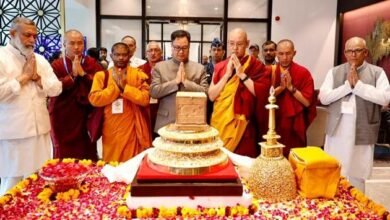


First Asian Buddhist Summit calls for unity, peace, and cultural revival
By Doruvu Paul Jagan Babu:Bureau Chief

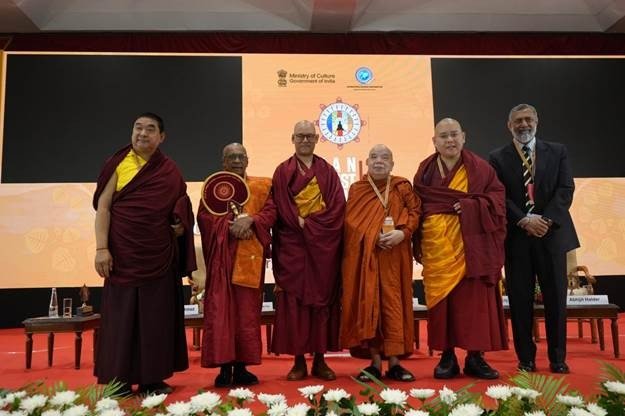
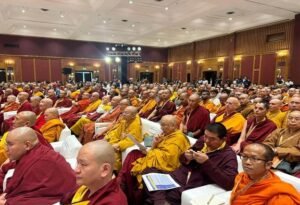
Delhi: At the inaugural Asian Buddhist Summit in New Delhi, Buddhist leaders, scholars, and delegates from 32 countries united to emphasize the critical role of Buddha Dhamma in fostering peace, unity, and cultural harmony across Asia. The summit, organized by the Ministry of Culture and the International Buddhist Confederation, highlighted the enduring relevance of Buddhist values in addressing global challenges and shaping ethical governance.

Buddhist teachings as a binding force
Speakers at the summit celebrated Buddhism’s influence across Asia, noting that its teachings on compassion, non-violence, and ethical integrity continue to serve as a foundation for unity. The Most Venerable Thich Thien Tam from Vietnam praised India’s commitment to Buddhism, underscoring its importance as a cultural bridge in strengthening Asian relations.
A call for peace amid global tensions

Most Venerable Waskaduwe Mahindawansa Mahanayake Thero from Sri Lanka stressed the summit’s responsibility to advocate for peace, contrasting it with a world increasingly troubled by violence. “We must generate compassion in our hearts and spread it globally,” he encouraged.
Passing wisdom to future generations
Ven. Khenpo Chimed of the Lumbini Development Trust advocated for an academic institution in the Himalayas dedicated to monastic education, ensuring that young generations inherit Buddhist wisdom and cultural values.

Preserving the Tibetan and Nalanda Traditions
In his address, Kyabje Yongzin Ling Rinpoche highlighted the Tibetan community’s efforts to spread Buddhism worldwide, advocating for the revival of the ancient Nalanda Tradition. He urged collaboration to preserve Tibetan culture and Buddhist teachings, supporting a unified spiritual vision.

The Delhi declaration: A vision for Asia’s future
The summit concluded with the Delhi Declaration, read by Abhijit Halder, Director General of IBC, outlining key goals for advancing Buddhist values across Asia. These include:
Strengthening Inter-AsianbBonds: Building relations based on the teachings of Buddha Dhamma to foster unity and peace.
Preserving Buddhist literature and heritage: Focusing on Pali literature, Buddhist philosophy, and historical art forms to retain cultural continuity.
Engaging youth in value-based society: Promoting initiatives that involve young people in Buddhist practices to cultivate ethical values.
Expanding Buddhist pilgrimage circuits: Connecting Asian Buddhist sites to support spiritual tourism and awareness of Buddhist heritage.
Recognizing scientific aspects of Buddhism: Emphasizing the relevance of Buddhist teachings in modern scientific and medical contexts.
Collective commitment to ethical and sustainable sevelopment: The summit underscored the role of Buddhist principles in guiding sustainable and compassionate development across Asia. As summarized by IBC’s Secretary General, Shatse Khensur Jangchup Choeden, the gathering aimed to inspire collective action toward a harmonious and prosperous future, rooted in Buddha’s teachings.