


Raj Kapoor’s question lingers: can purity survive in a corrupt world ?
By Samir Singh 'Bharat': Chief Editor

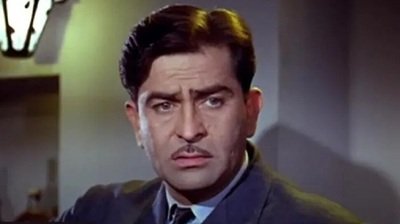
New Delhi : In the annals of Indian cinema, few films occupy the space of both reverence and controversy the way Ram Teri Ganga Maili does. Released in 1985, the film was not just another romantic drama; it was a socio-political commentary, a cinematic vision, and a director’s final bow before destiny intervened. The film became legendary for its bold imagery, soulful music, and the emergence of a new face—Mandakini. But behind its cinematic brilliance lay a story of creative conviction, financial risks, heated debates, and a master filmmaker’s relentless pursuit of truth in cinema.
Raj Kapoor’s Vision
By the early 1980s, Raj Kapoor was already a towering figure in Indian cinema. Having directed timeless classics such as Awaara (1951), Shree 420 (1955), Sangam (1964), and Bobby (1973), he was regarded as the “Great Showman of Indian Cinema.” Yet, the 1980s brought new challenges. His earlier project Prem Rog (1982) starring Rishi Kapoor and Padmini Kolhapure had revived his directorial reputation, but Kapoor was restless.
He wanted to make a film that was both romantic and allegorical, combining the innocence of love with the polluted realities of modern Indian society. His metaphor was bold: the sacred Ganga river, born pure in the Himalayas, becomes polluted as it flows through the plains—just as a pure-hearted village girl’s innocence is corrupted by society.
Thus, the title Ram Teri Ganga Maili (literally, Lord Ram, Your Ganges is Polluted) took shape. It was at once a religious invocation, a social critique, and a deeply personal story.
The screenplay was developed with Kapoor’s signature blend of romance and realism. On the surface, it told the love story of Narendra (played by Rajiv Kapoor), the son of a wealthy politician, and Ganga (Mandakini), a simple mountain girl. But underneath, it was a scathing critique of politics, corruption, and hypocrisy.

The metaphor was clear:
-
Ganga, the girl, represented purity.
-
Narendra, torn between love and family obligations, symbolized modern Indian youth.

-
The corrupt politicians, businessmen, and exploiters in the film embodied the forces polluting society.
Raj Kapoor envisioned the film as both entertaining and awakening. But he also knew it would require bold storytelling—and bold visuals.
Perhaps the most crucial decision in the film’s making was the casting of Ganga. Raj Kapoor had always had a sharp eye for discovering talent. From Nargis to Vyjayanthimala, from Dimple Kapadia in Bobby to Padmini Kolhapure in Prem Rog, Kapoor’s heroines often became household names.

For Ram Teri Ganga Maili, he needed someone fresh, innocent-looking, yet courageous enough to portray a role that demanded vulnerability. After auditioning dozens of girls, he discovered a 16-year-old named Yasmeen Joseph, who would later be known as Mandakini.
Mandakini’s fair Kashmiri looks and natural innocence struck Kapoor instantly. Despite initial hesitation about her bold scenes, Kapoor reassured her and her family that the role was symbolic, not exploitative. He renamed her “Mandakini” after another sacred river, giving her an identity forever tied to cinematic history.
For the male protagonist, Raj Kapoor made a decision that was both personal and professional—he cast his youngest son, Rajiv Kapoor. Rajiv had appeared in small roles earlier, but this was to be his big launch.
Raj Kapoor believed that pairing his son with a new heroine would recreate the magic of Bobby (1973), where Rishi Kapoor and Dimple Kapadia had taken the nation by storm. Rajiv Kapoor, though not as experienced as his brothers Rishi or Randhir, carried the legacy of the Kapoor family name.
Much of the film’s shooting took place in the pristine regions of Uttarakhand and Kashmir to capture the birth of the Ganga. The breathtaking waterfalls, snow-clad peaks, and riverbanks gave the film its natural beauty.
But shooting in the mountains was not easy. The crew often had to trek long distances with equipment. Weather unpredictability caused delays. Yet, Raj Kapoor’s insistence on authenticity pushed everyone to endure the hardships.
The Bold Scenes
The most talked-about aspect of the film was Mandakini’s bold scenes, especially the waterfall sequence where she appeared in a translucent white sari. In the conservative Indian society of the 1980s, this was nothing short of revolutionary.
Raj Kapoor defended his choice: “The Ganga is pure, even when naked. Why should we see vulgarity in purity?” For him, the scene was symbolic—the untouched innocence of nature. But the public and censors saw it differently, leading to controversies that would only fuel the film’s success.

The Political Satire
Apart from romance, the film had sharp political undertones. The character of Narendra’s father, a corrupt politician, reflected the rampant misuse of power in Indian politics of the time. Raj Kapoor was unafraid of criticism, even though some saw the film as a direct comment on the decaying moral fabric of the nation.
No Raj Kapoor film was complete without timeless music. For Ram Teri Ganga Maili, he turned to Ravindra Jain, a blind composer who had already proven his genius with films like Chitchor and Ankhiyon Ke Jharokhon Se.
The soundtrack became one of the film’s strongest assets. Songs like:
-
Sun Sahiba Sun
-
Ek Radha Ek Meera
-
Husn Pahadon Ka O Allah
-
Yaara O Yaara
Each song blended folk influences with classical depth, creating melodies that are still remembered today. Jain’s ability to capture innocence, longing, and devotion elevated the film’s emotional power.
The Controversies
The bold visuals and Mandakini’s portrayal became the epicenter of controversy. Critics accused Raj Kapoor of exploiting female beauty for commercial gain. Conservative groups protested the scenes, demanding cuts.
Censors initially suggested heavy edits, but Kapoor fought back. He argued that his intent was artistic, not vulgar. Finally, though some minor changes were made, most of the film remained intact.
The controversy, instead of damaging the film, only heightened curiosity. Audiences thronged theatres to witness what the debate was about.
When Ram Teri Ganga Maili released in 1985, it created a storm at the box office. It became the highest-grossing Hindi film of the year, running for weeks in packed theatres.
Audiences were mesmerized by Mandakini’s innocence, Rajiv Kapoor’s charm, the music, and the grandeur of Raj Kapoor’s direction. Critics were divided—some praised its symbolism, others dismissed it as sensationalism. But there was no denying its impact.
The film went on to win several Filmfare Awards, including Best Film and Best Director for Raj Kapoor.
Raj Kapoor’s Last Bow
Ram Teri Ganga Maili turned out to be Raj Kapoor’s last completed directorial venture. He passed away in 1988, before he could make his dream project Henna. In many ways, this film became his swan song—a final statement about purity, corruption, and the India he loved.
Nearly four decades later, Ram Teri Ganga Maili remains iconic for multiple reasons:
-
It immortalized Mandakini, who despite a short career, became a symbol of innocence and boldness.
-
It marked Rajiv Kapoor’s only major hit as a lead.
-
Its songs continue to be classics.
-
Its controversies remain part of Indian cinematic folklore.
But most importantly, it cemented Raj Kapoor’s legacy as a filmmaker unafraid to push boundaries, combining art with social commentary.
The making of Ram Teri Ganga Maili was not merely the making of a film; it was the culmination of Raj Kapoor’s lifelong philosophy of cinema as a mirror to society. Blending love, music, satire, and symbolism, the film stands as a testament to a director’s uncompromising vision.
Even today, when debates about censorship, women’s portrayal, and political corruption continue in Indian cinema, Ram Teri Ganga Maili feels relevant. The Ganga, after all, still flows—beautiful, eternal, and, sadly, polluted.
Raj Kapoor’s question lingers: can purity survive in a corrupt world?