


Washington, D.C. — U.S. President Donald Trump announced that he spoke with Russian President Vladimir Putin after the August 18 summit, initiating discussions to arrange a bilateral meeting between Putin and Ukrainian President Volodymyr Zelensky at an unspecified date and location. Trump added that he plans to hold a trilateral meeting with both leaders following their bilateral talks.
However, Russian officials presented a more cautious version of the call. Kremlin aide Yuri Ushakov told reporters that Putin and Trump merely “expressed support for the continuation of direct negotiations” between Russian and Ukrainian delegations and suggested possibly raising the level of representatives — stopping well short of endorsing leader-level talks.
Zelensky, for his part, reiterated after the summit that he is prepared to meet with Putin “without conditions.” He noted that Russia first proposed a bilateral meeting with Ukraine, followed by a trilateral session including the United States. He emphasized that territorial disputes should be discussed directly between himself and Putin.
Western Leaders Stress Security Guarantees at Summit
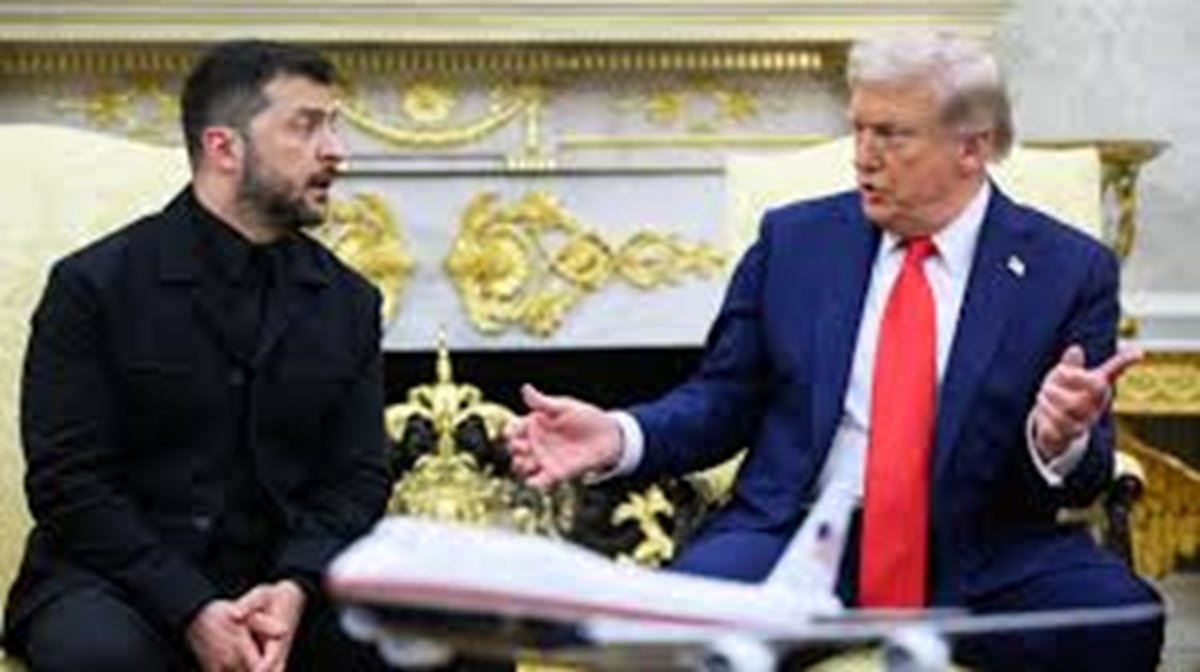
Ahead of Trump’s call with Putin, he hosted Zelensky at the White House before both joined a larger gathering of European leaders, including NATO Secretary General Mark Rutte, European Commission President Ursula von der Leyen, French President Emmanuel Macron, UK Prime Minister Keir Starmer, German Chancellor Friedrich Merz, Italian Prime Minister Giorgia Meloni, and Finnish President Alexander Stubb.
The leaders reaffirmed the need for strong security guarantees to ensure a just and lasting peace in Ukraine. Discussions covered:

-
Plans for future Ukrainian-Russian meetings,
-
NATO and EU support for Ukraine,
-
Frameworks for long-term security guarantees.

Trump described the meeting as constructive, saying Western diplomatic and security backing is “paving the way for peace.” Zelensky highlighted a breakthrough on humanitarian issues, stating he and Trump agreed to pursue an “all-for-all” exchange of prisoners of war and civilians, and to prioritize the return of Ukrainian children abducted by Russia.

Debate Over Security Guarantees
Western leaders stressed that any peace deal must include guarantees strong enough to deter future aggression. Von der Leyen, Meloni, and Starmer supported a system modeled on NATO’s Article 5, which obliges allies to respond collectively to attacks on one member.
Trump said his aim is to establish unspecified guarantees for Ukraine, suggesting the United States would provide coordination while Europe would bear most of the burden. His position left unclear the extent of Washington’s role.
Zelensky, at a joint press conference with Trump, insisted Ukraine requires both formal guarantees and continued military support — weapons, training, and intelligence — to maintain a strong defense. He noted Ukraine and its European partners already have a joint program to purchase U.S. weapons, framing a strong military as itself a form of security guarantee.
According to the Financial Times, Ukraine even proposed linking security guarantees to large-scale U.S. arms purchases. Documents reportedly showed Kyiv’s offer to buy $100 billion worth of U.S. weapons using European financing, and a $50 billion drone production deal involving Ukrainian companies. The details, however, remain vague.
Russia Rejects NATO-Linked Proposals
Russia has already pushed back against Western security proposals. Trump claimed that Putin signaled on August 15 that Moscow could accept some form of security guarantees as part of a peace deal.
But Russian Foreign Ministry spokesperson Maria Zakharova dismissed the idea outright, stating Moscow “categorically rejects” any plan involving a NATO presence in Ukraine — whether as a formal alliance mission or as contingents from individual NATO states. She warned such deployments would be considered legitimate military targets.
Western leaders stressed that no peacekeeping mission would be a formal NATO operation, but the Kremlin’s hard line reflects its longstanding opposition to Western troops on Ukrainian soil.
Talks of Ceasefire Amid Future Summits
At the August 18 gathering, Western leaders also floated the possibility of a ceasefire linked to future high-level meetings. Trump said all leaders present “would obviously prefer an immediate ceasefire while we work on a lasting peace” but acknowledged it is not yet in place. He argued a ceasefire would halt casualties “immediately.”
European leaders Macron and Merz also voiced support for Ukraine and Russia to consider a truce, potentially ahead of or following a Trump-Zelensky-Putin trilateral meeting.
Trump summed up the outlook by saying both Zelensky and Putin “can talk a little bit more” about ceasefire options during future direct talks.