

National conference urges redefining ageing with dignity and rights focus
By Doruvu Paul Jagan Babu: Assistant Chief Editor

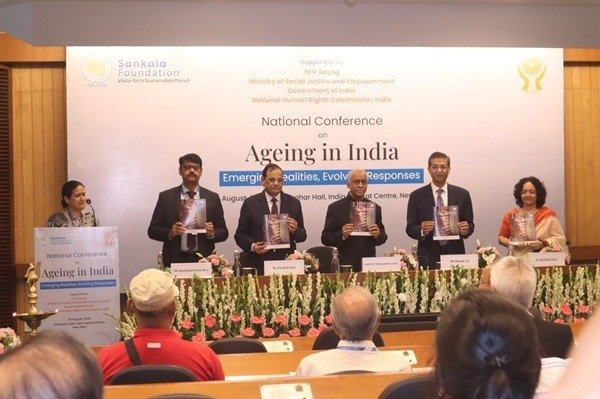
New Delhi: In a significant push toward elder rights and welfare, the National Human Rights Commission (NHRC), in collaboration with NITI Aayog and Union Ministries, held a national conference on August 1 addressing India’s rapidly ageing population and the urgent need for policy reforms rooted in tradition and dignity.
A cultural mandate for modern policy
NHRC Chairperson Justice V Ramasubramanian emphasized that India’s ancient ethos, reflected in Sangam literature and the Yajur Veda, already values the care of elders. He called for blending these traditions with contemporary policy frameworks to uphold the dignity and human rights of senior citizens.
Ageing without affluence: A growing concern
NHRC Secretary General Bharat Lal warned that by 2050, nearly 35 crore Indians will be elderly—one in every five citizens. He stressed the need for family- and community-based care models and cited recent NHRC advisories on elderly widows and protection during the pandemic.

Strengthening elderly care infrastructure
Dr. Vinod K Paul of NITI Aayog highlighted the critical role of empowering families and developing accessible healthcare. He underlined that robust healthcare and social security are cornerstones for elder welfare.
Learning from global and local models

Bharat Lal advocated for adapting successful care systems from countries like Japan and those in Scandinavia to suit Indian societal frameworks. Kerala’s palliative care model was cited as a potential national blueprint.
Technology and the silver economy
Speakers noted that with rising life expectancy, elderly citizens can remain productive contributors. Investments in digital healthcare, assistive technology, financial security, and long-term insurance were highlighted as essential to developing India’s ‘silver economy’.
Call for competitive federalism and local action
The conference stressed decentralization, urging local bodies to take larger roles in elder care. States must compete in innovating inclusive programmes for the aged.
Stakeholder dialogue and knowledge sharing
Over 300 participants including experts, bureaucrats, academics, and NGOs took part in four thematic sessions. Notable speakers included Dr. Kiran Bedi, Amarjeet Sinha, and international dignitaries like Korea’s Ambassador Lim Sang Woo.
Key message
The day-long deliberation concluded with a call to recognize elderly persons not as dependents, but as reservoirs of wisdom and contributors to national development. All stakeholders were urged to work toward inclusive, community-driven elder care initiatives.