


Davos aftermath: Andhra Pradesh’s economic strategy under scrutiny
By Doruvu Paul Jagan Babu: Assistant Chief Editor

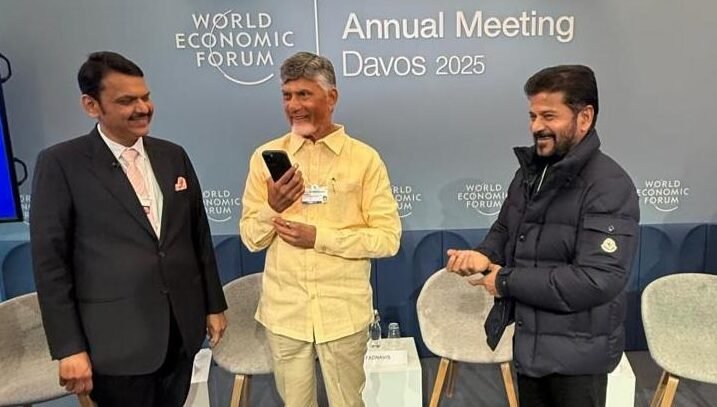
The recent Davos Business Conclave (World Economic Forum) has ignited a political debate in Andhra Pradesh, with the opposition parties questioning the coalition government’s ability to attract investments. While states like Maharashtra and Telangana reportedly secured significant commitments, Andhra Pradesh’s delegation, led by Chief Minister Nara Chandra Babu Naidu, returned without major investment deals. This has sparked discussions about the state’s economic strategies and its approach to global investor engagement.
Davos Conclave: A mixed bag for Indian states
The Davos Business Conclave serves as a global platform for states and nations to showcase their investment potential and forge international partnerships. This year, Maharashtra and Telangana emerged as frontrunners, reportedly securing substantial investment commitments. In contrast, Andhra Pradesh’s delegation did not announce any major deals, raising questions about its strategy and preparedness. While some view this as a setback, others argue that such events are more about networking and long-term relationship-building than immediate results.
Opposition voices concerns over investment strategy
The opposition leaders have criticized the coalition government for its perceived failure at Davos, accusing it of lacking a clear vision to attract investments. Opposition leaders argue that the state’s economic policies have not created a conducive environment for businesses, leading to missed opportunities. The opposition parties have echoed these sentiments, calling for greater transparency and a reevaluation of the state’s investment strategies. They have demanded accountability from the government, urging it to focus on tangible outcomes rather than symbolic gestures.

Government defends its approach, highlights long-term goals
In response to the criticism, the Chief Minister and his supporters have emphasized that the primary objective of Davos was to network and build relationships, not to secure immediate investment deals. They point out that many Memorandums of Understanding (MoUs) signed at such events often take time to materialize and that the state has previously attracted investments through other channels. The government has also highlighted ongoing efforts to improve infrastructure, streamline regulatory processes, and create a business-friendly environment, arguing that these measures will yield results in the long run.
Broader implications for Andhra Pradesh’s economic future

Andhra Pradesh’s performance at Davos has broader implications for its economic trajectory. The state, still recovering from the financial challenges posed by its bifurcation in 2014, relies heavily on investments to drive job creation, infrastructure development, and overall growth. The lack of major deals at Davos has raised concerns about the state’s competitiveness, particularly when compared to neighboring states like Telangana and Maharashtra. However, some experts caution against overreacting, noting that investment trends are influenced by multiple factors, including global economic conditions and sector-specific opportunities.
A path forward: Collaboration and strategic reforms
To address the current challenges, Andhra Pradesh needs a collaborative approach that involves both the government and the opposition. The state must focus on streamlining regulatory processes, offering competitive incentives, and ensuring political stability to attract investors. Building a strong narrative around the state’s potential and actively engaging with the global business community will also be crucial. The opposition, while holding the government accountable, should also contribute constructive ideas to strengthen the state’s economic policies. A united effort is essential to position Andhra Pradesh as a preferred investment destination.
The Davos Business Conclave has brought Andhra Pradesh’s economic strategies into sharp focus, highlighting both challenges and opportunities. While the opposition’s criticism underscores the need for greater accountability, the government’s emphasis on long-term goals and relationship-building offers a different perspective. Moving forward, a balanced approach that combines immediate action with strategic planning will be key to securing the state’s economic future. The Davos experience should serve as a catalyst for introspection and collaboration, ensuring that Andhra Pradesh remains competitive in the race for global investments.
The views expressed in this column are those of Ecclesiastes, the Omnivoyant Observer.