

7 Explosive Developments in Iran Political Crisis as Energy Infrastructure Strikes Intensify
By Samir Singh 'Bharat': Editor In Chief

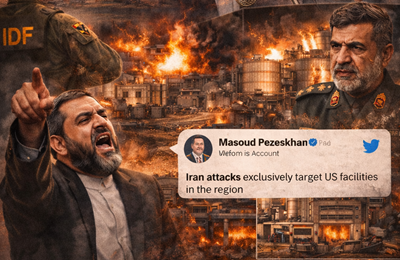
WAR-REPORT : Political tensions within Iran’s leadership have intensified after comments by President Masoud Pezeshkian sparked criticism from influential hardline figures. His remarks about Iran’s military actions in the Middle East have revealed deep divisions within the country’s political establishment at a time when Iran is facing external military pressure and internal economic difficulties.
At the same time, the conflict surrounding Iran has expanded further after Israeli forces launched a new wave of airstrikes targeting not only military facilities but also critical energy infrastructure. The attacks on oil refineries and storage facilities mark a major escalation in the ongoing confrontation between Iran and its adversaries.

Together, the political disagreements inside Iran and the growing military campaign against its infrastructure illustrate the complex and rapidly evolving crisis confronting the country.
Pezeshkian’s Controversial Statement
On March 7, Iranian President Masoud Pezeshkian issued remarks addressing Iran’s attacks on regional countries during the current conflict. His comments were intended to reassure neighboring states that Iran did not seek to target them directly.
Pezeshkian apologized to regional governments that had been affected by Iranian military operations since the beginning of the crisis. He emphasized that Iranian actions were aimed specifically at U.S. military installations located in those countries rather than the countries themselves.

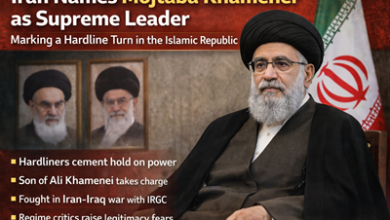
According to the president, Iran’s newly formed Leadership Council of Iran—which assumed responsibilities previously held by the late Supreme Leader Ali Khamenei—had instructed the country’s armed forces not to attack any state unless that state first launched an attack on Iran.
Pezeshkian attempted to clarify Iran’s position through a message posted on the social media platform X. In the post, he reiterated that Iran’s operations were directed exclusively against American military facilities rather than against host nations themselves.
His message was designed to calm tensions with Gulf states and other regional governments that host American bases.

Claims Disputed by Evidence
Despite the president’s assurances, analysts and international observers quickly questioned the accuracy of his claims.
Several recent Iranian operations appear to have struck locations that were not U.S. military facilities. One of the most widely cited examples occurred on March 3 when a drone attack targeted the Hayat Palace Hotel in Bahrain.
The hotel was not a U.S. military base, and the strike raised concerns that Iranian operations could affect civilian or commercial infrastructure.
Incidents like this have fueled skepticism among regional governments about Iran’s assertion that its military actions are limited to American targets.
Security experts argue that even when Iranian operations are intended to hit U.S. facilities, the use of drones and missiles in densely populated areas can still endanger surrounding infrastructure.
Long-Standing Iranian Strategy
Pezeshkian’s statement largely reflected a longstanding policy of the Iranian government rather than a new strategic direction.
For decades, Iranian leaders have warned Gulf states and other regional governments that hosting American military forces could make them targets during times of conflict.
Iran has frequently used the presence of U.S. bases in neighboring countries as justification for threatening or conducting military operations.
The strategy serves two main purposes. First, it seeks to deter the United States from launching attacks on Iran by raising the risk of regional escalation. Second, it aims to pressure Middle Eastern governments to distance themselves from Washington.
Iran and groups aligned with it have repeatedly used similar arguments to justify attacks on regional infrastructure that they claim is linked to U.S. military operations.
Backlash from Hardline Politicians
Despite reflecting an established policy, Pezeshkian’s remarks triggered a strong reaction from Iran’s hardline political faction.
Conservative lawmakers and influential figures criticized the president for apologizing to regional countries, arguing that the statement projected weakness at a time when Iran should demonstrate strength.
One of the most vocal critics was Hamid Rasaei, a hardline member of the Iranian parliament.
Rasaei described Pezeshkian’s comments as “weak, unprofessional, and unacceptable.” He argued that apologizing to regional states undermined Iran’s strategic position and could embolden its adversaries.
Rasaei also called on the Assembly of Experts, a powerful clerical body responsible for selecting Iran’s supreme leader, to accelerate the appointment of a new leader.
According to Rasaei, the installation of a new supreme leader would allow the country to dissolve the temporary Leadership Council currently overseeing Iran’s highest political authority.
Discontent Within the Revolutionary Guard
The backlash against Pezeshkian was not limited to politicians.
According to sources cited by Reuters, several senior commanders within the Islamic Revolutionary Guard Corps were also reportedly dissatisfied with the president’s remarks.
The Revolutionary Guard plays a central role in Iran’s political and military structure and is widely considered one of the most influential institutions in the country.
Hardline factions within the IRGC often favor a more confrontational foreign policy and are skeptical of statements perceived as conciliatory toward foreign governments.
An unnamed hardline figure reportedly close to the office of the late Ali Khamenei told Reuters that multiple senior commanders believed Pezeshkian’s apology could undermine morale within Iran’s armed forces.
Government Attempts to Contain the Fallout
Following the criticism, Pezeshkian’s office released an official summary of his speech in an apparent attempt to address the backlash.
The revised readout reiterated Iran’s long-standing position that its attacks are directed at U.S. military installations rather than host countries.
However, the new statement notably omitted the president’s earlier apology to regional states.
Observers believe this omission was a deliberate effort to calm critics within Iran’s political establishment.
By removing the apology while maintaining the broader message, the president’s office attempted to balance domestic political pressures with diplomatic messaging aimed at neighboring countries.
Escalation in the Military Campaign
While political tensions were unfolding within Iran, the military conflict surrounding the country was simultaneously expanding.
On March 7, the Israel Defense Forces carried out a new wave of airstrikes targeting Iranian oil production and storage facilities.
These attacks marked the first time during the current conflict that Israel had struck major energy infrastructure inside Iran.
The shift suggests a significant escalation in strategy, moving beyond military installations to targets that could affect Iran’s economic stability.
Strike on Tondgouyan Oil Refinery
One of the main targets was the Tondgouyan Oil Refinery, located in Shahr Rey in Tehran Province.
This refinery is one of the largest oil processing facilities in Iran and plays a crucial role in supplying fuel to the capital region.
The refinery had previously been targeted during the earlier 12‑Day War, indicating that it has long been considered a strategic objective.
Damage to the facility could significantly reduce Iran’s refining capacity and disrupt fuel supplies in one of the country’s most densely populated areas.
Attack on Shahran Oil Refinery
Another major target was the Shahran Oil Refinery, located within Tehran itself.
Before the strike, the facility was capable of storing roughly three days’ worth of fuel reserves for the city across more than eleven storage tanks.
Because of Tehran’s large population and heavy reliance on fuel for transportation and electricity generation, any disruption to this facility could have immediate consequences for daily life.
Like the Tondgouyan refinery, the Shahran facility had also been attacked during the earlier 12-Day War.
Additional Strikes on Oil Storage Facilities
Israeli forces also targeted oil storage sites in Karaj in Alborz Province.
Another storage installation in Tehran was struck during the same wave of attacks.
These facilities had not previously been targeted in the conflict, making the March 7 strikes the first recorded attacks against them.
By expanding the campaign to include energy infrastructure, Israeli planners appear to be aiming at Iran’s logistical and economic backbone.
Strategic Purpose of Energy Infrastructure Strikes
Israeli officials stated that the strikes were directed at facilities supporting Iran’s military industrial complex.
Energy resources play a central role in Iran’s defense sector. Fuel supplies are essential for operating military vehicles, aircraft, and logistics networks.
Oil revenues also provide a critical source of funding for Iran’s military programs.
By targeting refineries and storage sites, Israeli forces may be attempting to weaken Iran’s ability to sustain prolonged military operations.
However, attacks on energy infrastructure also carry broader economic consequences that affect civilian populations.
Impact on Iran’s Energy Crisis
The strikes come at a time when Iran is already struggling with a severe domestic energy crisis.
Since February 2025, many Iranian cities have experienced daily electricity blackouts due to shortages of fuel and aging power infrastructure.
Residents across the country have reported frequent power outages lasting several hours each day.
Disruptions to refineries and fuel storage facilities could intensify these shortages.
Reduced fuel supplies would limit electricity generation and increase pressure on already strained energy networks.
Consequences for Iranian Society
Energy shortages can have wide-ranging effects on everyday life.
Electricity outages disrupt transportation systems, communication networks, hospitals, and industrial production.
Businesses may be forced to close temporarily, while households struggle with limited heating, cooling, and lighting.
In a country already facing economic difficulties and international sanctions, prolonged energy shortages could deepen public frustration.
Although it is unclear how much damage the recent strikes caused, even partial disruptions could worsen the situation.
A Country Facing Multiple Pressures
Iran now faces a convergence of challenges.
Externally, it is confronting an expanding military campaign targeting both its defense industry and energy infrastructure.
Internally, political divisions are becoming more visible as different factions debate how to respond to the crisis.
The controversy surrounding President Pezeshkian’s comments highlights the difficulty of maintaining unity within Iran’s political system during times of conflict.
Some leaders advocate a more cautious approach aimed at avoiding further escalation with regional neighbors.
Others argue that Iran should project strength and resist any perception of compromise.
Uncertain Future
As the situation continues to evolve, the coming weeks may prove decisive for both Iran’s domestic politics and the broader regional conflict.
The debate within Iran’s leadership over foreign policy and military strategy could shape how the country responds to external pressure.
At the same time, the expansion of strikes against energy infrastructure suggests that the conflict may enter a more destructive phase.
Whether these developments lead to further escalation or renewed diplomatic efforts remains uncertain.
What is clear, however, is that Iran now stands at a critical moment—balancing internal political tensions with mounting external threats while attempting to preserve stability in an increasingly volatile region.