

Penicillin: The accidental discovery that revolutionized medicine and saved millions
By Doruvu Paul Jagan Babu: Assistant Chief Editor

A simple mistake led to one of the most groundbreaking discoveries in medical history. Penicillin, the world’s first antibiotic, was discovered by Alexander Fleming in 1928. This life-saving drug has since transformed medicine, preventing countless deaths from bacterial infections. Despite its monumental impact, penicillin journey from an accidental finding to a Nobel Prize-winning breakthrough was long and arduous.
Science and serendipity: The accidental breakthrough

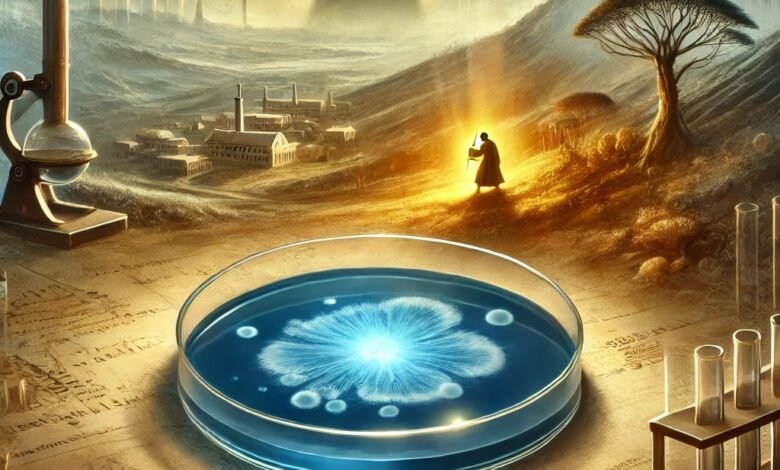
Scientific discoveries are built on meticulous experimentation, but sometimes mistakes lead to remarkable breakthroughs. Such was the case with penicillin. Alexander Fleming, while researching ‘staphylococci’ bacteria in 1928, inadvertently left bacterial cultures exposed overnight. When he returned, he noticed a blue mold had formed on one of the cultures, preventing bacterial growth. Further investigation revealed the mold contained a substance that killed harmful bacteria. He named it ‘penicillin’ after the Penicillium fungus from which it originated.
From discovery to medical marvel
Though Fleming identified penicillin’s antibacterial properties, it took 17 years of further research to develop it into a usable medicine. Howard Florey and Ernest Chain later refined the drug, making large-scale production possible. For their collective efforts, Fleming, Florey, and Chain were awarded the Nobel Prize in Medicine in 1945. This discovery marked the beginning of the antibiotic era, forever changing how infections were treated.


Impact on global health
Penicillin emerged as a miracle drug, effectively treating diseases like pneumonia, tuberculosis, and typhoid. It played a crucial role in World War II, saving countless soldiers from deadly infections. Recognized as one of the greatest discoveries in medical history, Time magazine listed Fleming among the 100 most influential people of the 20th century. The antibiotic was even hailed as the “Queen of Medicines.”

Fleming’s journey: From modest beginnings to scientific greatness
Born in Scotland in 1881, Fleming was the youngest of eight children in a farming family. Losing his father at an early age, he faced financial hardships but persevered. After working as a clerk to support himself, he resumed his education and later pursued medicine at St. Mary’s College, London. A skilled researcher and a talented athlete, he eventually dedicated his career to bacteriology, leading to his historic discovery.
Modern relevance: The evolution of antibiotics
While penicillin was once the frontline defense against bacterial infections, modern medicine has moved towards alternatives like amoxicillin. The overuse of antibiotics has also led to growing concerns over resistance, making it crucial to develop newer, more effective treatments. However, the discovery of penicillin remains a defining moment in medical science, underscoring the profound impact of scientific curiosity and perseverance.
Legacy of penicillin and the future of medicine
Alexander Fleming passed away on March 11, 1955, but his legacy continues to shape modern medicine. His accidental yet monumental discovery serves as a testament to the power of observation and scientific inquiry. The story of penicillin is not just about a medical breakthrough—it is a reminder that even the smallest oversight can lead to world-changing innovations.
M. Ram Pradeep’s article commemorating Alexander Fleming on his death anniversary